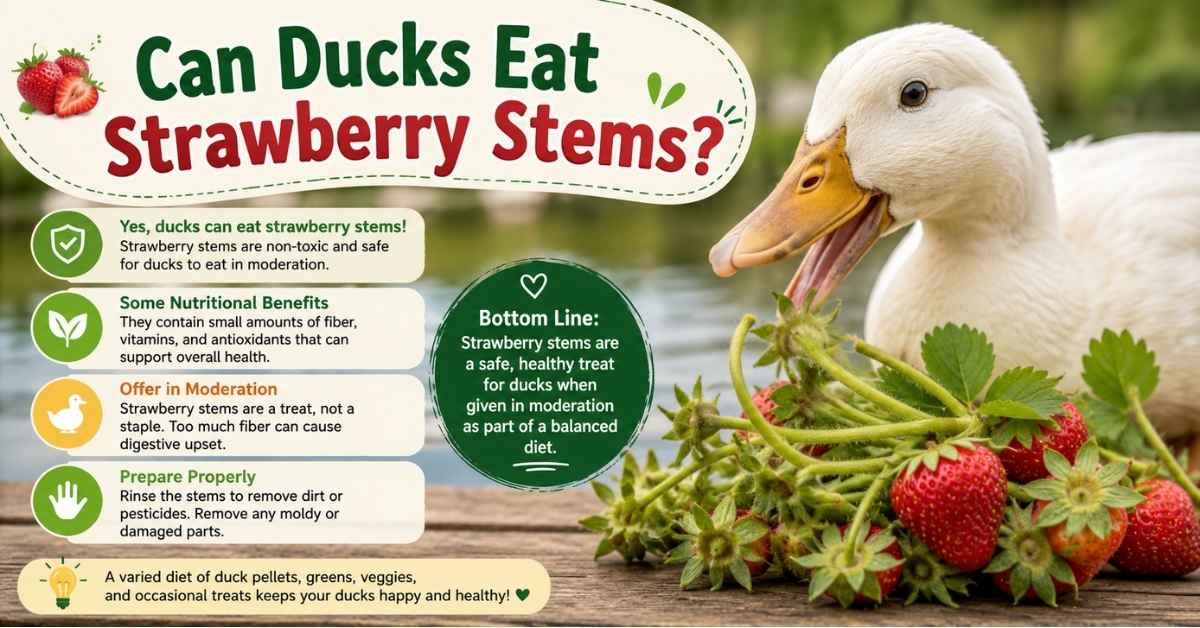
Can ducks eat strawberry stems? Yes, ducks can usually eat small soft strawberry stems in moderation without major problems, especially when the stems are fresh, clean, pesticide-free, and offered as occasional forage rather than a primary food source. However, strawberry stems are more fibrous and stringy than the fruit itself, which means preparation, duck age, and portion size still matter.
Many backyard duck owners discover ducks pecking at:
- strawberry stems
- berry tops
- leaves
- garden scraps
and immediately wonder whether the stems are dangerous. Since ducks swallow food differently than mammals and do not chew the same way humans do, concerns about:
- choking
- digestion
- crop issues
- fibrous plant material
are completely understandable.
The good news is that soft strawberry stems are generally less concerning than many owners fear. Still, there are important things to understand about:
- stem texture
- pesticide residue
- moldy plant material
- duckling safety
- balanced nutrition
before regularly feeding strawberry scraps to backyard ducks.
Quick Answer: Are Strawberry Stems Safe for Ducks?
Here is the short answer most duck owners are searching for:
| Question | Answer |
|---|---|
| Can ducks eat strawberry stems? | Yes, in moderation |
| Are strawberry stems poisonous to ducks? | Generally no |
| Can ducklings eat strawberry stems? | Only tiny soft pieces carefully |
| Are woody stems safe? | Less ideal |
| Should stems be chopped first? | Often helpful |
| Are moldy stems dangerous? | Yes |
| Should stems replace duck feed? | No |
Why Ducks Peck Strawberry Stems in Gardens
Many free-range ducks naturally explore berry plants while roaming.
Ducks Naturally Explore Soft Plant Material
Ducks investigate their environment through constant pecking. They naturally nibble:
- greens
- weeds
- stems
- leaves
- insects
Soft strawberry stems attract ducks because they are:
- low to the ground
- moist
- flexible
- easy to pull apart
Why Berry Gardens Attract Ducks
Strawberry gardens often contain:
- damp soil
- bugs
- shade
- soft vegetation
which naturally attracts curious ducks.
Some ducks become fascinated with berry beds simply because the area offers enrichment and exploration opportunities.
Do Ducks Actually Like Strawberry Stems?
Every flock behaves differently.
Some ducks:
- aggressively chase strawberries
- ignore stems completely
Others enjoy pecking:
- tops
- stems
- leaves
- nearby weeds
especially when free-ranging outdoors regularly.
Are Strawberry Stems Nutritious for Ducks?
Strawberry stems are not highly nutritious compared to balanced duck feed, but they can still function as occasional forage enrichment.
Nutritional Value of Strawberry Stems
Fresh strawberry stems may provide:
- fiber
- moisture
- trace nutrients
- natural plant compounds
They also encourage natural grazing and exploratory behavior.
Why Stems Are Different From Strawberries
Unlike the fruit itself, stems contain:
- less sugar
- more fiber
- tougher texture
- stringier plant material
This is why ducks usually tolerate soft stems better than dry woody stems.
Strawberry Plant Nutrition Comparison
| Plant Part | Main Benefit | Main Concern |
|---|---|---|
| Strawberry fruit | Hydration + antioxidants | Natural sugar |
| Strawberry stems | Fiber + forage enrichment | Fibrous texture |
| Processed snacks | Convenience | Poor nutrition |
Can Ducks Digest Strawberry Stems Properly?
Ducks Swallow Food Differently Than Humans
Ducks do not chew food the same way mammals do. They:
- grab food
- swallow quickly
- rely heavily on digestion afterward
Because of this, tough fibrous material may become harder to process.
Why Fibrous Plant Material Matters
Soft fresh stems are usually less concerning than:
- dried stems
- tough stems
- tangled plant fibers
Very fibrous material may become harder for some ducks to digest comfortably.
Are Strawberry Stems a Choking Risk?
Large tough stems may create more risk for:
- ducklings
- smaller ducks
- birds eating aggressively
Chopping stems into smaller pieces can help reduce potential problems.
When Stem Texture Becomes Problematic
Avoid feeding:
- woody stems
- dried-out stems
- moldy stems
- chemically treated stems
Fresh soft plant material is always safer than old fibrous scraps.
Which Parts of the Strawberry Plant Are Safest for Ducks?
Strawberry Fruit
Fresh strawberries are healthy occasional treats because they provide:
- hydration
- antioxidants
- vitamin C
- fiber
Strawberry Leaves
Small amounts of clean strawberry leaves are generally acceptable for healthy adult ducks.
Strawberry Tops
The Strawberry tops are usually less concerning in moderation, though they still contain fibrous material.
Strawberry Stems
Soft stems may be acceptable occasionally when:
- washed properly
- pesticide-free
- cut into manageable pieces
Moldy or Treated Plant Material
Spoiled or chemically treated plants create much bigger risks than the stems themselves.
Strawberry Plant Safety Table
| Plant Part | Safe or Unsafe | Important Notes |
|---|---|---|
| Fruit | Safe in moderation | Healthy treat |
| Leaves | Usually acceptable | Wash first |
| Soft stems | Small amounts | Chop if needed |
| Woody stems | Less ideal | Harder to digest |
| Moldy stems | Unsafe | Fungal contamination |
| Treated plants | Unsafe | Pesticide residue |
The Biggest Risk Most Duck Owners Miss: Pesticides
The stem itself is often not the biggest problem.
Why Chemical Residue Matters More
Commercial strawberry plants may contain:
- pesticides
- fungicides
- herbicides
- chemical residue
Ducks pecking directly from treated gardens may accidentally consume those chemicals.
Organic vs Commercial Strawberry Plants
Untreated homegrown plants are usually safer than heavily sprayed commercial plants.
Many experienced homesteaders only feed ducks:
- organic scraps
- washed stems
- untreated garden material
Should Strawberry Stems Be Washed First?
Yes. Washing helps remove:
- dirt
- bacteria
- insects
- pesticide residue
Clean forage is always safer.
Safe Garden Scrap Checklist
Before feeding stems:
- wash thoroughly
- remove moldy sections
- avoid treated plants
- cut large stems
- feed occasionally
Can Ducklings Eat Strawberry Stems?
Ducklings require much more caution than adult ducks.
Why Young Ducks Need Softer Foods
Baby ducks have:
- smaller digestive systems
- more sensitive stomachs
- higher choking risk
Large fibrous stems may become difficult for them to process safely.
Safer Ways to Introduce Plant Material
If offering stems to ducklings:
- chop into tiny soft pieces
- avoid tough fibers
- introduce gradually
- monitor digestion carefully
Starter feed should still remain the primary food source.
Signs a Duckling Is Struggling With Plant Material
Watch for:
- lethargy
- messy droppings
- appetite loss
- digestive upset
If symptoms appear, stop feeding plant material temporarily.
LEARN MORE: Can Ducks Eat Strawberry Leaves?
What Happens If Ducks Eat Too Many Strawberry Stems?
Even safe foods can become problematic in excess amounts.
Digestive Problems From Excess Fiber
Too much fibrous material may contribute to:
- loose droppings
- reduced appetite
- mild digestive discomfort
Why Moderation Still Matters
Balanced duck nutrition matters far more than occasional scraps.
Healthy ducks still need:
- quality waterfowl feed
- proper protein
- balanced nutrition
When Garden Grazing Becomes Excessive
Sometimes the biggest issue is not digestion but garden destruction.
Ducks may:
- trample berry beds
- uproot plants
- pull stems aggressively
- damage muddy gardens
especially during wet weather.
Will Ducks Destroy Strawberry Plants?
Many users searching this keyword secretly worry about their gardens too.
How Free-Range Ducks Behave Around Berry Beds
Ducks may:
- nibble stems
- peck berries
- scratch soil
- flatten plants
Some flocks barely touch strawberry plants while others create heavy damage quickly.
Why Some Ducks Cause More Damage Than Others
Behavior depends on:
- boredom
- hunger
- breed
- flock size
- available forage
Hungry ducks are much more likely to overgraze gardens.
Practical Ways to Protect Strawberry Plants
Common garden-protection strategies include:
- fencing
- raised beds
- rotational grazing
- supervised access
Garden Protection Strategies
| Garden Problem | Practical Solution |
|---|---|
| Ducks pulling stems | Garden netting |
| Plant trampling | Raised beds |
| Overgrazing | Rotational access |
| Mud damage | Controlled watering |
How Experienced Duck Owners Use Strawberry Scraps Safely
Long-time duck keepers usually treat strawberry stems as enrichment rather than important nutrition.
Feeding Trimmed Strawberry Tops and Stems
Trimmed scraps can become:
- occasional forage treats
- enrichment material
- sustainable garden waste reuse
This helps reduce waste while encouraging natural duck behavior.
Mixing Strawberry Scraps With Other Safe Greens
Many duck owners combine stems with:
- romaine lettuce
- kale
- duckweed
- chopped herbs
Variety creates more balanced enrichment.
Using Plant Material for Enrichment
Scattered greens encourage:
- foraging
- exploration
- activity
- reduced boredom
Many ducks enjoy searching through greens more than eating from bowls alone.
Better Greens and Plants for Ducks
Strawberry stems are acceptable occasionally, but easier-to-digest greens exist for regular feeding.
Better Greens for Frequent Feeding
Healthier routine greens include:
- romaine lettuce
- duckweed
- dandelion greens
- cucumbers
Greens Comparison Table
| Green | Main Benefit | Feeding Frequency |
|---|---|---|
| Romaine lettuce | Hydration | Frequent |
| Duckweed | Natural protein | Frequent |
| Strawberry stems | Forage enrichment | Occasional |
| Kale | Nutrient dense | Moderate |
Common Mistakes Duck Owners Make With Strawberry Scraps
Assuming All Plant Material Is Safe
Not every garden plant is duck-safe.
Always research unfamiliar plants carefully.
Feeding Moldy Stems
Moldy plant material may contain harmful fungal contamination.
Ignoring Pesticide Residue
Chemical residue creates one of the biggest hidden feeding risks.
Offering Tough Woody Stems
Older fibrous stems are harder to digest than fresh soft stems.
Letting Ducks Overgraze Gardens
Unlimited access may damage both:
- gardens
- nutrition balance
Replacing Balanced Feed With Scraps
Duck feed should always remain the nutritional foundation of a healthy flock.
Signs Your Ducks Need a Better Diet
Behavioral Signs
- aggressive scavenging
- feather pecking
- low energy
- excessive begging
Physical Signs
- obesity
- weak feather quality
- poor egg production
- messy droppings
Healthy balanced nutrition matters far more than occasional treats.
Frequently Asked Questions
Can ducks eat strawberry stems safely?
Yes. Small soft strawberry stems are generally acceptable in moderation for healthy adult ducks.
Are strawberry stems poisonous to ducks?
No. Strawberry stems are not considered highly toxic to ducks, though pesticide residue and mold still matter.
Can ducklings eat strawberry stems?
Ducklings should only receive tiny soft pieces carefully and in moderation.
Should strawberry stems be chopped first?
Yes. Chopping stems into smaller pieces may reduce choking and digestion concerns.
Can ducks choke on strawberry stems?
Large tough stems may become harder for some ducks to swallow comfortably.
Will ducks destroy strawberry plants?
Some ducks may overgraze or trample berry gardens if left unsupervised.
Are moldy strawberry stems dangerous?
Yes. Moldy stems may expose ducks to harmful fungal toxins.
What plants are toxic to ducks?
Some ornamental plants and nightshade-family plants may be dangerous. Always research unfamiliar plants before feeding.
Final Thoughts
Can ducks eat strawberry stems? Yes. Small soft strawberry stems are generally safe as occasional forage for healthy ducks when properly washed, chopped if necessary, and offered in moderation.
The biggest risks usually involve:
- pesticides
- moldy stems
- excessive fibrous material
- poor diet balance
Experienced backyard duck owners focus on:
- balanced waterfowl nutrition
- safe garden management
- supervised foraging
- practical moderation
Natural forage and garden scraps can become enjoyable enrichment for ducks, but quality duck feed should always remain the foundation of long-term flock health.