Can ducks eat avocado? The short answer is no. Avocado is not considered safe for ducks because it contains a natural toxin called persin, which can be harmful and potentially dangerous to birds. While some animals can tolerate avocado in small amounts, ducks and many other bird species are much more sensitive to its toxic compounds.
In this guide, we’ll explore why avocado poses a risk to ducks, which parts are most dangerous, signs of avocado poisoning, and healthier alternatives you can feed your flock instead.
Can Ducks Eat Avocado?
No, ducks should not eat avocado.
Veterinarians and bird experts generally recommend avoiding avocado entirely when feeding ducks. The fruit contains persin, a fungicidal toxin naturally found in various parts of the avocado plant.
Although the concentration varies, persin can be present in:
- The fruit flesh
- The skin
- The pit (seed)
- The leaves
- The bark
- The stems
Because it can be difficult to determine safe exposure levels, the best approach is simple: keep avocado away from ducks altogether.
Why Is Avocado Dangerous for Ducks?
The primary concern is a toxin called persin.
Persin helps protect avocado trees from fungal infections, but birds often react poorly to it. Ducks, chickens, parrots, canaries, and many other bird species are considered particularly sensitive.
What Is Persin?
Persin is a naturally occurring compound found in avocado plants. While humans can eat avocados safely, birds metabolize this toxin differently.
In susceptible birds, persin exposure may cause:
- Respiratory distress
- Weakness
- Heart complications
- Fluid accumulation
- Sudden illness
The severity often depends on the amount consumed and the bird’s overall health.
Which Parts of an Avocado Are Toxic to Ducks?
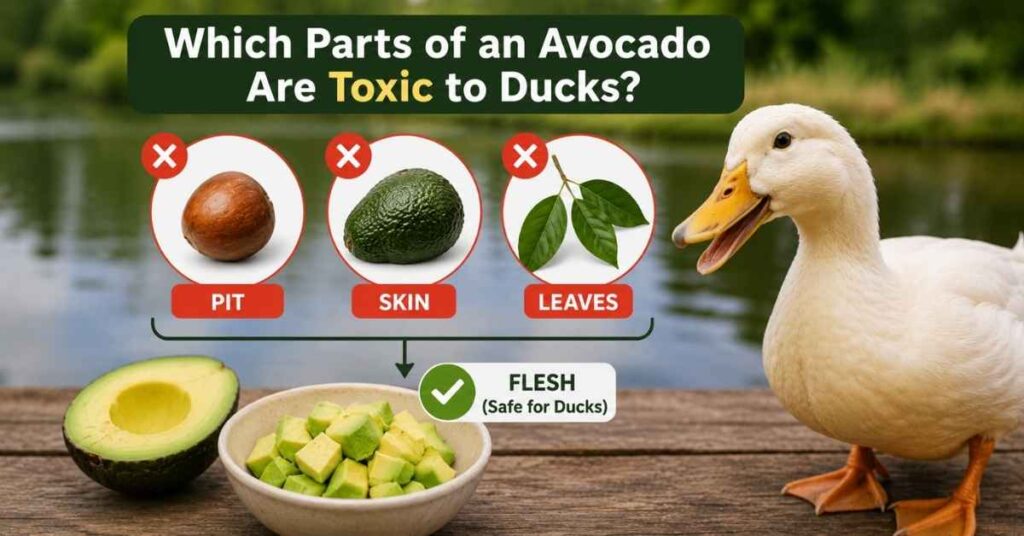
Many people assume only the pit is dangerous. However, several parts of the avocado can pose risks.
Avocado Flesh
Even though the flesh contains lower persin levels than other parts, it may still present a risk to ducks.
Avocado Skin
The skin generally contains higher concentrations of persin and should never be offered.
Avocado Pit
The pit is especially dangerous because:
- It may contain toxins.
- It creates a choking hazard.
- It can cause digestive blockages.
Avocado Leaves and Stems
Leaves and stems often contain the highest persin concentrations. Ducks should never have access to fallen avocado leaves from backyard trees.
Symptoms of Avocado Toxicity in Ducks
If a duck accidentally eats avocado, monitor it closely.
Symptoms may appear within hours and can vary depending on the amount consumed.
Common Signs of Avocado Poisoning
Watch for:
- Difficulty breathing
- Lethargy
- Loss of appetite
- Weakness
- Swelling
- Unusual behavior
- Reduced activity
- Sudden collapse in severe cases
Because birds often hide illness, early symptoms can be subtle.
What Should You Do If Your Duck Eats Avocado?
Accidents happen. If your duck consumes avocado, take action quickly.
Step 1: Remove Access
Prevent additional consumption immediately.
Step 2: Observe Closely
Monitor for symptoms over the next 24–48 hours.
Step 3: Contact a Veterinarian
If your duck shows any signs of illness, contact an avian veterinarian as soon as possible.
Step 4: Provide Fresh Water
Ensure your duck has access to clean drinking water while you monitor its condition.
Prompt veterinary care can significantly improve outcomes if toxicity develops.
Are Some Avocado Varieties Safer Than Others?
Not really.
Different avocado varieties may contain varying persin levels, but there is no reliable way to determine which type might be safe for ducks.
Popular varieties such as:
- Hass avocado
- Fuerte avocado
- Bacon avocado
- Reed avocado
all contain persin to some degree.
For that reason, experts recommend avoiding all avocado varieties.
Why Do Some People Say Their Ducks Eat Avocado Without Problems?
You may find anecdotal stories online from owners who fed avocado without noticing issues.
However, several factors explain these reports:
- The amount consumed may have been very small.
- The avocado variety may have contained lower toxin levels.
- Symptoms may not have been recognized.
- Individual birds can react differently.
A lack of immediate symptoms does not guarantee safety.
When safer foods are available, taking unnecessary risks isn’t worth it.
Safe Fruits Ducks Can Eat Instead
Fortunately, ducks can enjoy many nutritious fruits without the risks associated with avocado.
Healthy Fruit Options
Consider offering:
- Blueberries
- Strawberries
- Raspberries
- Watermelon
- Grapes (cut in half)
- Apples (without seeds)
- Pears
- Bananas
- Mango
- Papaya
These fruits provide vitamins, hydration, and enrichment.
Safe Vegetables for Ducks
Vegetables often make excellent treats for ducks.
Some favorites include:
- Peas
- Lettuce
- Kale
- Cucumber
- Zucchini
- Carrots
- Pumpkin
- Broccoli
- Swiss chard
Offering a variety of vegetables helps create a balanced diet.
What Should Ducks Eat Every Day?
Treats should never replace a duck’s primary nutrition.
A healthy duck diet should consist mainly of:
- Quality duck feed or waterfowl pellets
- Fresh drinking water
- Safe vegetables
- Occasional fruits
- Natural foraging opportunities
Balanced nutrition supports healthy feathers, strong eggshells, and overall wellbeing.
Learn more…. Can Ducks Eat Granola?
Foods Ducks Should Never Eat
Besides avocado, several other foods should stay off the menu.
Avoid Feeding Ducks:
- Avocado
- Chocolate
- Caffeine
- Alcohol
- Moldy foods
- Raw dried beans
- Salty snacks
- Sugary junk food
- Rotten produce
Keeping these foods away from ducks reduces the risk of serious health problems.
Avocado Safety at a Glance

| Avocado Part | Safe for Ducks? | Risk Level |
|---|---|---|
| Flesh | No | Moderate |
| Skin | No | High |
| Pit | No | High |
| Leaves | No | Very High |
| Stems | No | Very High |
Frequently Asked Questions
Can ducks eat avocado flesh?
No. Although avocado flesh contains lower persin levels than other parts of the plant, experts generally advise against feeding it to ducks.
Can ducks eat avocado skin?
No. Avocado skin contains higher concentrations of persin and can be toxic to ducks.
Can ducks eat avocado pits?
No. Avocado pits are dangerous because they contain toxins and can also cause choking or digestive blockages.
What happens if a duck eats avocado?
A duck may develop symptoms such as weakness, breathing difficulties, lethargy, or digestive issues. Severe reactions require immediate veterinary attention.
Can wild ducks eat avocado?
Wild ducks may occasionally consume unusual foods, but avocado is not considered a safe food source for them.
Are avocado trees dangerous for ducks?
Yes. Fallen leaves, fruit, stems, and pits from avocado trees may expose ducks to persin and should be kept out of their enclosure.
What fruits are safest for ducks?
Blueberries, strawberries, watermelon, grapes, bananas, apples without seeds, and pears are generally considered safe options.
Conclusion
So, can ducks eat avocado? No, ducks should not eat avocado. The fruit, skin, pit, leaves, and stems all contain varying levels of persin, a natural toxin that can harm birds. While some ducks may appear unaffected after eating small amounts, the potential risks outweigh any nutritional benefits.
Instead of offering avocado, choose safer treats like berries, peas, watermelon, lettuce, or kale. These options provide valuable nutrients without exposing your ducks to unnecessary danger. By sticking to duck-safe foods and a balanced feeding plan, you’ll help your flock stay healthy, active, and thriving for years to come.
If you’re building a complete duck feeding guide, consider exploring other common foods before adding them to your ducks’ diet. A little research can go a long way toward keeping your birds safe.