Can ducks eat onions? No, ducks should not eat onions. Onions contain sulfur compounds, including thiosulfate, which may damage a duck’s red blood cells and increase the risk of hemolytic anemia, particularly when consumed in large amounts or over time.
While a tiny accidental bite is unlikely to cause serious harm in many cases, onions should never be a regular part of a duck’s diet. If you’re raising backyard ducks or caring for ducklings, it’s much safer to offer nutritious vegetables such as peas, lettuce, cucumbers, carrots, and pumpkin instead.
This guide explains why onions are bad for ducks, what happens if a duck accidentally eats onion, whether cooked onions or green onions are any safer, and which foods make healthier alternatives for your flock.
Can Ducks Eat Onions? (Quick Answer)
If you’re looking for a simple answer, here it is:
No, onions are not recommended for ducks.
Whether they’re raw, cooked, dried, powdered, or mixed into leftovers, onions contain compounds that can negatively affect a duck’s health. Although the severity depends on the amount consumed and the individual bird, avoiding onions entirely is the safest choice.
The Short Answer
- Raw onions: ❌ Avoid
- Cooked onions: ❌ Not recommended
- Onion powder: ❌ Avoid
- Green onions (scallions): ❌ Best avoided
- Onion flakes: ❌ Not safe as a treat
Providing a balanced waterfowl diet with fresh vegetables and quality feed is a much healthier option.
Why Onions Are Not Recommended for Ducks
Onions belong to the allium family, which also includes:
- Garlic
- Shallots
- Chives
- Leeks
- Scallions
These vegetables contain natural sulfur compounds that may damage red blood cells when consumed in significant amounts.
Unlike leafy greens or vegetables that provide safe nutrition, onions offer very little benefit while introducing unnecessary health risks.
Is One Small Bite Dangerous?
A single tiny piece of onion does not automatically mean your duck will become seriously ill. However, because ducks vary in size and sensitivity, it’s impossible to define one universally safe amount.
If your duck accidentally eats a small piece:
- Stay calm.
- Remove any remaining onion.
- Observe your duck closely over the next 24–48 hours.
- Contact an avian veterinarian if unusual symptoms develop.
Why Are Onions Harmful to Ducks?

Understanding why onions are bad for ducks helps explain why poultry experts generally recommend avoiding them.
Understanding Thiosulfate and Sulfur Compounds
Onions naturally contain thiosulfate and other sulfur-containing compounds.
While these substances are harmless to many people, birds process certain compounds differently.
Repeated exposure or larger amounts may damage red blood cells, reducing their ability to carry oxygen efficiently throughout the body.
How Onion Toxicity Affects Red Blood Cells
Healthy red blood cells transport oxygen to organs and muscles.
When these cells become damaged, ducks may experience:
- Weakness
- Lethargy
- Reduced appetite
- Pale bill or mouth tissues
- Difficulty maintaining normal activity
In severe situations, significant red blood cell damage may contribute to hemolytic anemia, a condition that requires veterinary attention.
Why Ducks React Differently Than Humans
Humans and ducks have different digestive systems and metabolic processes.
A food that appears harmless for people may not be suitable for waterfowl.
For this reason, duck owners should avoid assuming that leftovers from the kitchen are automatically safe for their flock.
What Happens If a Duck Eats Onion?
One of the most common concerns is:
“What happens if my duck eats onion?”
The answer depends on:
- The amount consumed
- The duck’s size
- Overall health
- Frequency of exposure
Immediate Symptoms to Watch For
After eating onions, watch for signs such as:
- Loss of appetite
- Reduced activity
- Weakness
- Sleepiness
- Unusual droppings
- Less interest in food or water
Many ducks that accidentally consume a tiny amount may not show immediate symptoms, but monitoring is still important.
Signs of Onion Toxicity
If larger amounts are consumed or symptoms worsen, possible warning signs include:
- Pale mouth or bill
- Difficulty walking
- Labored breathing
- Increased weakness
- Collapse in severe cases
These symptoms require prompt veterinary advice.
When to Contact a Veterinarian
Seek professional help if:
- Your duck consumed a significant quantity of onion.
- Symptoms appear within the next day or two.
- Your duck stops eating or drinking.
- Breathing becomes difficult.
- Weakness continues to worsen.
Early treatment offers the best chance of recovery.
Symptoms and Recommended Action
| Symptom | Recommended Action |
|---|---|
| Small accidental bite | Observe carefully |
| Mild lethargy | Contact a veterinarian if symptoms continue |
| Pale bill or weakness | Veterinary examination recommended |
| Trouble breathing | Seek immediate veterinary care |
| Collapse | Emergency veterinary treatment |
Are All Types of Onions Unsafe?
Many owners wonder whether certain onion products are safer than others.
Unfortunately, the answer is generally no.
Can Ducks Eat Raw Onions?
Raw onions contain the highest concentration of their natural sulfur compounds.
Because of this, they should never be intentionally fed to ducks.
Can Ducks Eat Cooked Onions?
Cooking changes the texture and flavor of onions but does not completely remove the compounds that make them unsuitable.
For that reason, cooked onions are also best avoided.
Can Ducks Eat Onion Powder?
No.
Onion powder is highly concentrated and is commonly found in soups, sauces, seasoning mixes, and processed foods.
Even though only small amounts are used in recipes, onion powder should not be offered to ducks.
Can Ducks Eat Onion Flakes?
Dried onion flakes retain many of the same compounds present in fresh onions.
Like fresh onions, they should not be included in a duck’s diet.
Can Ducks Eat Green Onions (Scallions)?
Green onions, also called scallions, belong to the same plant family.
Although they may taste milder than mature onions, they are still considered unsuitable for ducks.
What About Shallots, Chives and Leeks?
Other members of the allium family—including shallots, chives, and leeks—should also be avoided.
Instead of experimenting with these vegetables, provide safer options that offer nutrition without unnecessary risks.
Can Ducklings Eat Onions?
Many new duck owners wonder whether ducklings can tolerate onions better than adult ducks. The answer is simple: no.
Why Young Ducks Are More Sensitive
Ducklings have developing digestive and immune systems, making them more sensitive to foods that adults may tolerate in very small accidental amounts.
Because ducklings are much smaller, even a small quantity of onion represents a larger proportion of their body weight.
For this reason, onions should never be intentionally included in a duckling’s diet.
Feeding Recommendations for Ducklings
Young ducks thrive on a balanced diet that includes:
- High-quality waterfowl starter feed
- Fresh, clean drinking water
- Finely chopped leafy greens in moderation
- Small amounts of safe vegetables introduced gradually
Avoid giving kitchen scraps until you know they are suitable for ducks.
Safe Starter Foods
Some beginner-friendly foods include:
- Peas
- Lettuce
- Cucumber
- Chopped pumpkin
- Carrots
- Duckweed (where appropriate)
These provide better nutritional value without the risks associated with onions.
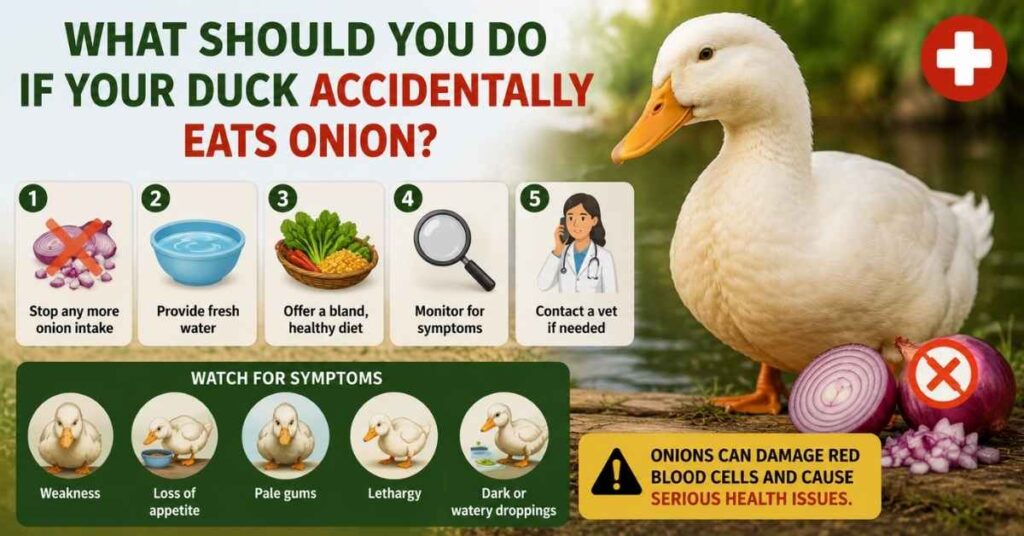
What Should You Do If Your Duck Accidentally Eats Onion?
Finding your duck eating an onion can be stressful, but staying calm helps you respond effectively.
Step 1: Stay Calm and Remove the Onion
Take away any remaining onion or food containing onion so your duck cannot eat more.
Step 2: Estimate the Amount Consumed
Try to determine:
- Was it just one small bite?
- Was it raw or cooked?
- Did it contain onion powder?
- Was it part of processed food?
This information may help your veterinarian if advice is needed.
Step 3: Monitor Your Duck
Over the next 24–48 hours, observe for:
- Reduced appetite
- Weakness
- Lethargy
- Pale mouth or bill
- Difficulty breathing
- Changes in behavior
Many ducks remain normal after a tiny accidental exposure, but observation is still important.
Step 4: Contact a Veterinarian if Necessary
Seek veterinary advice immediately if:
- Your duck consumed a large amount.
- Symptoms develop.
- The bird is very young, elderly, or already ill.
- You are unsure how much onion was eaten.
Quick action is always better than waiting for symptoms to worsen.
Learn More…. Can Ducks Eat Nuts?
Safe Vegetables Ducks Can Eat Instead
Instead of onions, choose vegetables that support a healthy duck feeding guide.
Leafy Greens
Excellent choices include:
- Romaine lettuce
- Kale (in moderation)
- Swiss chard
- Dandelion greens
These provide vitamins and minerals while adding variety to your ducks’ diet.
Root Vegetables
Cooked or finely chopped vegetables such as:
- Carrots
- Sweet potatoes
- Pumpkin
can be healthy occasional treats.
Fresh Garden Vegetables
Many ducks enjoy:
- Peas
- Cucumber
- Zucchini
- Bell peppers
- Corn (in moderation)
Introduce new foods gradually and avoid overfeeding treats.
Safe vs. Unsafe Vegetables
| Safe Vegetables | Avoid Feeding |
|---|---|
| Lettuce | Onions |
| Peas | Onion powder |
| Cucumber | Green onions |
| Pumpkin | Shallots |
| Carrots | Chives |
| Zucchini | Leeks |
Foods Ducks Should Never Eat
While onions receive much attention, they aren’t the only foods that should stay out of your flock’s diet.
Onions
All forms of onion should be avoided because of the potential effects of sulfur compounds.
Garlic in Large Amounts
Although opinions differ regarding small amounts, large quantities of garlic are generally not recommended for ducks due to its relationship to the allium family.
Chocolate
Chocolate contains compounds that are toxic to many animals and should never be fed to ducks.
Avocado
Some parts of the avocado plant contain compounds that may be harmful to birds.
Moldy Food
Spoiled food may contain harmful molds and toxins capable of causing serious illness.
Salty or Processed Foods
Highly processed foods often contain excessive salt, preservatives, fats, and seasonings that ducks do not need.
Fresh, natural foods are always the better choice.
Building a Healthy Diet for Ducks
A healthy diet is about more than avoiding harmful foods.
The Importance of Balanced Waterfowl Feed
Commercial waterfowl feed should remain the foundation of your ducks’ nutrition because it is formulated to meet their dietary needs.
Treats in Moderation
Vegetables and fruits should be viewed as occasional treats, not replacements for complete feed.
Too many treats may upset nutritional balance.
Fresh Water Every Day
Ducks need constant access to fresh, clean water, especially while eating.
Water supports digestion and helps prevent choking.
Seasonal Feeding Tips
Seasonal vegetables can add variety to your ducks’ diet.
During warmer months, fresh garden produce may be readily available, while winter feeding often relies more heavily on quality commercial feed and stored vegetables.
Common Feeding Mistakes Duck Owners Make
Avoiding common mistakes helps keep your flock healthier.
Feeding Too Many Kitchen Scraps
Not every leftover belongs in a duck’s feeding bowl.
Always research unfamiliar foods before offering them.
Assuming Human Foods Are Safe
Foods that are perfectly acceptable for people may not be appropriate for birds.
Overfeeding Treats
Even healthy vegetables should complement—not replace—a balanced diet.
Ignoring Nutritional Balance
Providing a variety of safe foods alongside quality feed helps support long-term health.
Frequently Asked Questions
Can ducks eat onions?
No. Ducks should not eat onions because they contain sulfur compounds, including thiosulfate, that may damage red blood cells.
Can ducks eat cooked onions?
No. Cooking does not eliminate the compounds that make onions unsuitable for ducks.
Can ducks eat onion powder?
No. Onion powder is concentrated and should be avoided.
Can ducks eat green onions?
No. Green onions (scallions) belong to the same allium family and are not recommended.
Can ducklings eat onions?
No. Ducklings are even more sensitive and should never be intentionally fed onions.
What happens if a duck eats onion?
A small accidental bite may not cause noticeable problems, but larger amounts can increase the risk of weakness, reduced appetite, and anemia. Monitor your duck closely and seek veterinary advice if symptoms appear.
How much onion is dangerous?
There is no universally safe amount. Because ducks vary in size and health, the safest approach is to avoid feeding onions altogether.
What vegetables are safest for ducks?
Healthy choices include peas, lettuce, cucumbers, carrots, pumpkin, zucchini, and other duck-safe vegetables offered in moderation alongside balanced waterfowl feed.
Final Thoughts
Can ducks eat onions? The safest answer is no. Although a tiny accidental bite may not always result in immediate illness, onions contain thiosulfate and other sulfur compounds that can harm ducks when consumed in sufficient amounts. Because the potential risks outweigh any nutritional benefits, onions should not be included in your flock’s regular diet.
Instead, focus on a balanced waterfowl feed supported by safe vegetables such as peas, lettuce, cucumbers, carrots, pumpkin, and zucchini. If your duck accidentally eats onion, remain calm, monitor it carefully over the next 24–48 hours, and contact an avian veterinarian if you notice weakness, pale tissues, breathing difficulties, or other concerning symptoms.
By choosing nutritious, species-appropriate foods and avoiding potentially harmful kitchen scraps, you can help your ducks stay healthy, active, and thriving throughout every stage of life.