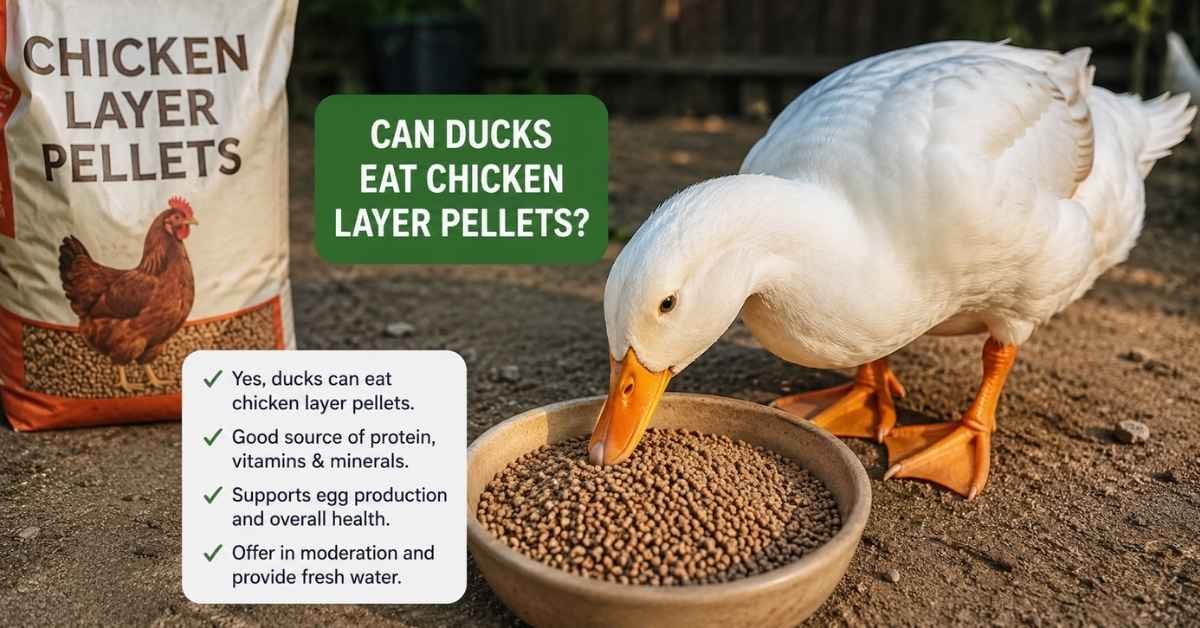
Can ducks eat chicken layer pellets? Yes, adult ducks can eat chicken layer pellets, but they are not always the best choice for every duck. Layer feed is formulated for egg-laying hens and contains higher levels of calcium than many ducks require.
While laying ducks can generally consume chicken layer pellets without issues, ducklings, growing ducks, and drakes may experience nutritional imbalances if layer feed becomes their primary diet for long periods.
Understanding the differences between duck feed and chicken feed helps keep your flock healthy and productive.
Quick Answer
If you’re looking for a simple answer, here’s what you need to know:
| Duck Type | Can Eat Layer Pellets? | Recommended Long-Term? |
|---|---|---|
| Ducklings | Yes, occasionally | No |
| Growing Ducks | Yes | Not Ideal |
| Adult Drakes | Yes | Limited Use |
| Non-Laying Ducks | Yes | Limited Use |
| Laying Ducks | Yes | Generally Acceptable |
For most mixed flocks, an all-flock feed or waterfowl feed is often a better solution than feeding everyone chicken layer pellets.
Why Duck Owners Ask This Question
Many backyard poultry keepers raise ducks and chickens together. Buying separate feed for each species can be expensive and inconvenient.
Common situations include:
- Running out of duck feed unexpectedly
- Keeping ducks and chickens in the same coop
- Looking for a single feed solution
- Trying to lower feed costs
- Receiving conflicting advice online
Most owners aren’t just asking if ducks can eat layer pellets. They’re really asking:
“Will feeding chicken layer pellets hurt my ducks?”
That’s a smart question because nutrition plays a major role in long-term bird health.
What Makes Chicken Layer Pellets Different From Duck Feed?
Understanding Layer Feed
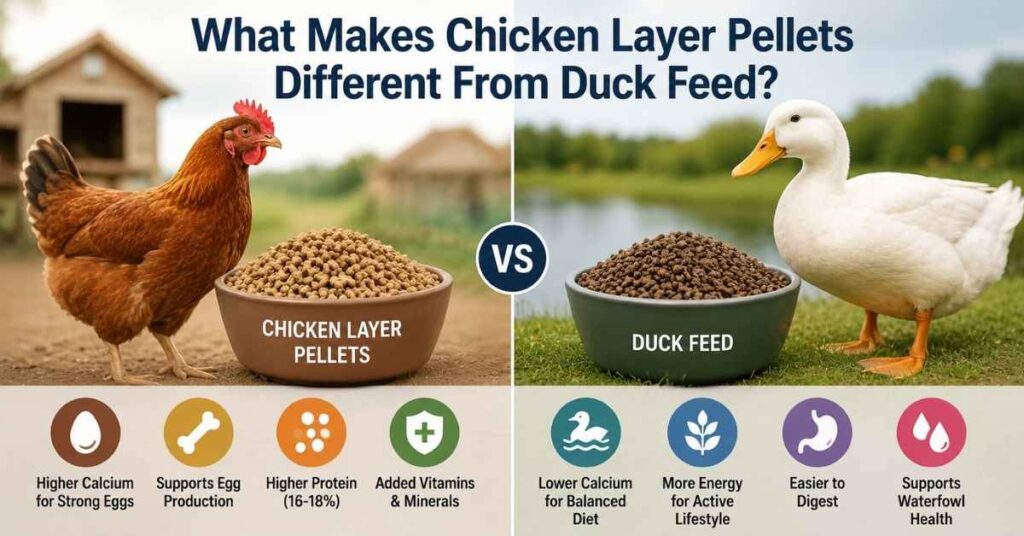
Chicken layer pellets are designed specifically for hens that produce eggs regularly. Egg production requires large amounts of calcium to build strong eggshells.
As a result, layer feed contains:
- Elevated calcium levels
- Balanced protein for laying birds
- Added vitamins and minerals
- Nutrients focused on egg production
Why Ducks Have Different Nutritional Needs
Although ducks and chickens are both poultry, they do not have identical dietary requirements.
Ducks generally require:
- More niacin
- Different calcium needs depending on life stage
- Balanced protein levels for growth
- Proper mineral ratios for waterfowl health
This is why a feed formulated for chickens isn’t always ideal for ducks.
The Three Nutrients That Matter Most
Calcium
The most important difference between layer feed and duck feed.
Protein
Protein supports muscle development, feather growth, and egg production.
Niacin
Ducks require more niacin than chickens. Inadequate niacin levels may contribute to leg weakness and growth problems in young ducks.
The Real Issue: Too Much Calcium
Why Layer Pellets Contain High Calcium
Laying hens require additional calcium to replace what they lose through daily egg production.
Most layer feeds contain significantly more calcium than feeds designed for growing birds.
What Excess Calcium Can Do
For birds that are not laying eggs, excessive calcium may contribute to:
- Nutritional imbalance
- Reduced mineral efficiency
- Potential kidney stress over time
- Unnecessary dietary supplementation
Which Ducks Are Most Vulnerable?
The ducks most likely to experience issues from long-term layer feed consumption include:
- Ducklings
- Growing ducks
- Adult drakes
- Non-laying ducks
Laying ducks generally benefit more from the additional calcium.
Can Ducklings Eat Chicken Layer Pellets?
Why Young Ducks Need Different Nutrition
Ducklings experience rapid growth during their first few months of life.
Their bodies require:
- Higher protein levels
- Adequate niacin
- Balanced minerals
- Proper growth nutrition
Layer pellets are not formulated with duckling development in mind.
Potential Growth Concerns
Long-term feeding of chicken layer pellets to ducklings may increase the risk of:
- Poor growth
- Skeletal issues
- Nutritional deficiencies
- Improper feather development
Better Feed Choices
For young ducks, consider:
- Waterfowl starter feed
- Duck grower feed
- Non-medicated flock raiser feed
What If Ducklings Accidentally Eat Layer Pellets?
Don’t panic.
A small amount is unlikely to cause harm. Problems generally arise when layer feed becomes the primary diet for extended periods.
Can Growing Ducks Eat Chicken Layer Pellets?
Nutritional Needs During Growth
Growing ducks require nutrients that support:
- Bone development
- Muscle growth
- Feather production
- Overall health
Layer pellets are designed for egg production rather than growth.
Short-Term vs Long-Term Feeding
A few days of layer feed is usually not a concern.
However, feeding growing ducks layer pellets for weeks or months may not provide optimal nutrition.
When to Transition
As ducks mature, switching to an appropriate grower or all-flock feed can help support healthier development.
LEARN MORE: Can Ducks Eat Carrots and Celery?
Can Adult Drakes Eat Chicken Layer Pellets?
Why Drakes Have Different Calcium Needs
Drakes do not lay eggs.
Because they don’t require additional calcium for eggshell formation, the elevated calcium content in layer feed provides little benefit.
Long-Term Considerations
Adult drakes can eat chicken layer pellets, but a balanced all-flock feed is generally a better option.
Better Feeding Strategy
Many experienced poultry keepers feed:
- All-flock feed as the primary ration
- Oyster shell separately for laying birds
This approach prevents drakes from consuming unnecessary calcium.
Can Non-Laying Adult Ducks Eat Layer Pellets?
Is It Dangerous?
Not usually.
For healthy adult ducks, occasional or short-term consumption of layer feed is generally safe.
Is It Ideal?
No.
A feed designed specifically for mixed flocks or waterfowl is often nutritionally superior.
Practical Recommendation
If layer pellets are the only feed available temporarily, adult ducks will typically tolerate them without issue.
Can Laying Ducks Eat Chicken Layer Pellets?
Why Calcium Matters
Producing eggs requires substantial calcium.
Without enough calcium, laying birds may experience:
- Thin eggshells
- Weak shell quality
- Reduced egg production
Are Layer Pellets Suitable?
For actively laying ducks, chicken layer pellets can often meet calcium requirements effectively.
When Duck Feed Is Better
Waterfowl-specific feeds may provide more appropriate levels of:
- Niacin
- Amino acids
- Vitamins
- Trace minerals
What Happens If Ducks Eat Chicken Layer Pellets Every Day?
Short-Term Effects
Most adult ducks experience no obvious problems.
Long-Term Effects
Potential concerns depend on the bird’s age and reproductive status.
Possible issues include:
- Excess calcium intake
- Nutritional imbalance
- Inadequate niacin
- Suboptimal growth in young birds
Who Is Most At Risk?
- Ducklings
- Juvenile ducks
- Drakes
- Non-laying adults
Laying ducks generally face fewer concerns.
The Best Feed for Ducks and Chickens Kept Together
The Mixed Flock Challenge
Many poultry owners keep:
- Chickens
- Ducks
- Geese
in the same environment.
Providing separate feeds can be difficult.
The Solution Used by Experienced Keepers
Many flock owners choose:
All-flock feed + separate oyster shell
This approach allows:
- Ducks to avoid excess calcium
- Hens to access supplemental calcium
- Simplified feeding management
All-Flock Feed vs Layer Feed
| Feed Type | Best For |
|---|---|
| Layer Feed | Egg-laying birds |
| All-Flock Feed | Mixed flocks |
| Waterfowl Feed | Ducks |
| Grower Feed | Young birds |
How to Read a Feed Label Before Feeding It to Ducks
Check Protein Levels
Protein supports:
- Growth
- Feather production
- Muscle development
Review Calcium Content
High calcium levels usually indicate a layer ration.
Examine Added Vitamins
Look for:
- Niacin
- Vitamin D
- Vitamin A
- Trace minerals
Understand Feed Purpose
Most feed bags clearly indicate whether they are intended for:
- Layers
- Growers
- Mixed flocks
- Waterfowl
Emergency Situation: You Ran Out of Duck Feed
Is Layer Feed Safe for a Few Days?
Yes.
For healthy adult ducks, short-term use is generally acceptable.
Temporary Feeding Options
Owners may also provide:
- Leafy greens
- Peas
- Lettuce
- Oats
- Appropriate poultry feed alternatives
What Not to Do
Avoid relying on treats as a complete feed replacement.
Ducks require balanced nutrition, not just calories.
LEARN MORE: Can Ducks Eat Chicken Layer Feed?
Common Feeding Mistakes Duck Owners Make
Assuming Ducks and Chickens Need Identical Diets
While similar, their nutritional requirements differ.
Ignoring Niacin Requirements
Niacin is particularly important for young ducks.
Feeding Based Solely on Convenience
Convenience should never outweigh nutritional quality.
Never Reading Feed Labels
Feed labels provide valuable information about protein, calcium, and intended use.
Practical Feeding Plans for Different Flock Setups
One Pet Duck
A dedicated waterfowl feed is often ideal.
Small Backyard Duck Flock
Duck feed or all-flock feed usually works well.
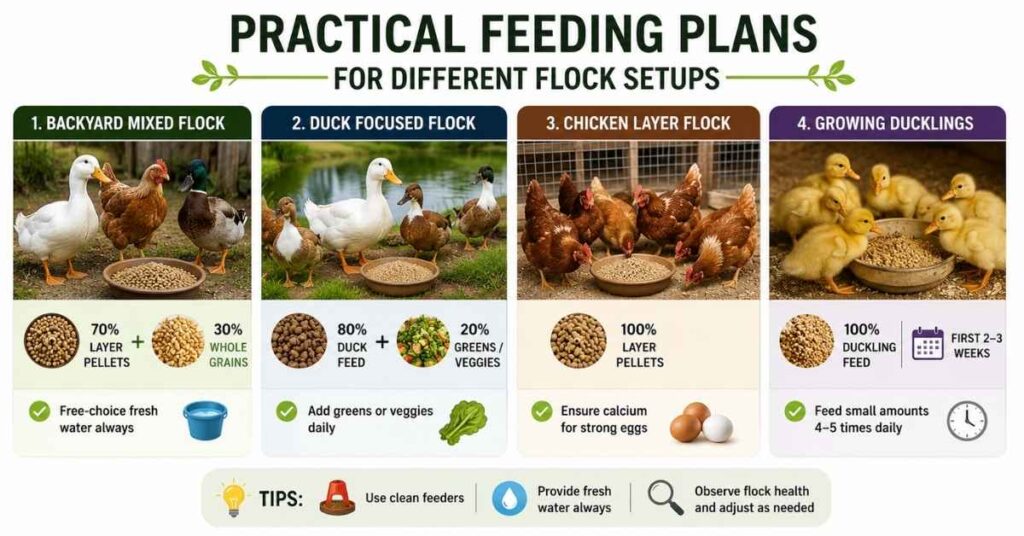
Mixed Flock
Many owners succeed with:
- All-flock feed
- Separate oyster shell
- Free-choice water
Free-Range Homestead Systems
Foraging can supplement nutrition but should not replace a balanced ration.
Signs Your Ducks Are Thriving on Their Diet
Healthy ducks typically show:
- Bright eyes
- Clean feathers
- Strong growth
- Good body condition
- Active behavior
- Consistent egg production
These indicators often reveal whether a feeding program is working effectively.
When You Should Switch Away From Layer Pellets
Consider changing feeds if:
- You raise ducklings
- Most birds are drakes
- Growth appears poor
- You notice nutritional concerns
- Better feed options become available
Choosing feed based on life stage usually produces the best results.
Frequently Asked Questions
Can ducks survive on chicken layer pellets?
Yes, many adult ducks can survive on chicken layer pellets, but survival and optimal nutrition are not the same thing. Better feed options often exist.
Can ducklings eat layer pellets in an emergency?
A small amount is unlikely to cause harm, but ducklings should be fed starter or grower feed whenever possible.
Can Pekin ducks eat chicken layer feed?
Yes, adult Pekin ducks can eat layer feed, though dedicated waterfowl feed may provide a better nutritional balance.
Can Muscovy ducks eat layer pellets?
Adult Muscovy ducks can consume layer pellets, especially if they are laying eggs.
What feed is best for ducks and chickens together?
Most experts recommend all-flock feed with separate oyster shell for laying hens.
Do ducks need more niacin than chickens?
Yes. Ducks generally require higher niacin levels, particularly during growth.
Can excess calcium hurt ducks?
Excess calcium is more concerning for ducklings, drakes, and non-laying ducks than for actively laying birds.
Is all-flock feed better than layer feed?
For mixed flocks, all-flock feed is often the most practical and nutritionally balanced option.
Final Verdict
Can ducks eat chicken layer pellets? Yes, adult ducks can eat chicken layer pellets, and laying ducks often benefit from the added calcium. However, ducklings, growing ducks, drakes, and non-laying ducks generally do better on waterfowl feed or all-flock feed formulated for broader nutritional needs.
If you keep a mixed flock, an all-flock feed paired with separate oyster shell is often the most effective long-term feeding strategy.