
Can ducks eat blueberries and raspberries? Yes, ducks can safely eat both blueberries and raspberries in moderation. These berries are packed with antioxidants, fiber, vitamins, and water, making them healthy treats for ducks and ducklings when prepared properly. While berries should never replace a balanced duck diet, they can be an excellent addition to your flock’s feeding routine.
Many backyard duck owners look for safe fruits to offer as treats. Blueberries and raspberries are among the healthiest options because they provide valuable nutrients while supporting natural foraging behavior. However, knowing how much to feed, how often to offer them, and how to prepare them safely is just as important as knowing they are safe.
Quick Answer: Are Blueberries and Raspberries Safe for Ducks?
| Question | Answer |
|---|---|
| Can ducks eat blueberries? | Yes |
| Can ducks eat raspberries? | Yes |
| Can ducklings eat them? | Yes, in small amounts |
| Are berries healthy for ducks? | Yes, as occasional treats |
| Can ducks eat frozen berries? | Yes, after thawing |
| How often should ducks eat berries? | 1–3 times weekly |
The key is moderation. Berries should complement a balanced duck feed, not replace it.
Why Duck Owners Worry About Feeding Berries
Duck owners often ask questions about fruit safety because many common human foods are not suitable for waterfowl. It is natural to wonder whether blueberries or raspberries contain anything that could upset a duck’s digestive system.
The good news is that both berries are considered safe fruits for ducks. Unlike processed snacks, sugary desserts, or salty foods, fresh berries contain natural nutrients that can support overall health.
Most ducks are naturally attracted to sweet fruits, which is why blueberries and raspberries are often enthusiastically accepted as treats.
Blueberries and Raspberries at a Glance

Both berries offer nutritional benefits, but they are not identical.
| Nutrient | Blueberries | Raspberries | Benefit for Ducks |
|---|---|---|---|
| Fiber | High | Very High | Supports digestion |
| Antioxidants | Very High | High | Supports overall health |
| Vitamin C | Moderate | High | Important nutrient |
| Water Content | High | High | Helps hydration |
| Natural Sugars | Moderate | Moderate | Energy source |
Which Berry Is Better?
There is no single winner.
Blueberries are known for their high concentration of anthocyanins, powerful antioxidants that give them their deep blue color.
Raspberries contain more fiber and vitamin C, making them an excellent addition to a healthy duck diet.
For most backyard ducks, offering a mixture of both berries provides the greatest nutritional variety.
Can Ducks Eat Blueberries?
Yes, ducks can eat blueberries safely.
Blueberries are one of the most nutrient-dense fruits available. They are rich in antioxidants, fiber, vitamins, and plant compounds known as polyphenols.
Benefits of Blueberries for Ducks
Blueberries provide several nutritional advantages:
- Antioxidants help protect cells from oxidative stress.
- Fiber supports digestive health.
- Vitamin K contributes to normal body functions.
- Potassium supports overall wellness.
Because blueberries are small and soft, they are also easy for most ducks to consume without preparation.
Many duck keepers notice that ducks quickly learn to recognize blueberries as a favorite treat.
Can Ducks Eat Raspberries?
Raspberries are also safe for ducks and can be an excellent source of nutrition.
Their soft texture makes them easy to eat, while their high fiber content supports healthy digestion.
Benefits of Raspberries for Ducks
Raspberries contain:
- Vitamin C
- Dietary fiber
- Potassium
- Antioxidants
- Beneficial plant compounds
These nutrients contribute to a healthy diet while providing enrichment and variety.
Because raspberries are delicate and naturally soft, they are generally easy for ducks and ducklings to consume.
LEARN MORE: Can Ducks Eat Blueberries?
Can Ducklings Eat Blueberries and Raspberries?
Yes, ducklings can eat blueberries and raspberries, but extra care is required.
Young ducks need nutrient-rich starter feed as their primary food source. Fruit should only be introduced as a small supplement.
Tips for Feeding Ducklings
- Crush blueberries before feeding.
- Cut raspberries into smaller pieces if necessary.
- Introduce fruit gradually.
- Always provide fresh water.
- Watch for digestive changes.
A small amount goes a long way for young birds.
Healthy duckling growth depends primarily on quality starter feed, not treats.
How Much Blueberries and Raspberries Should Ducks Eat?
One of the biggest mistakes duck owners make is feeding too many treats.
Even healthy fruits contain natural sugars. Excessive amounts can reduce a duck’s appetite for nutritionally complete feed.
Recommended Portions
| Duck Type | Suggested Portion |
|---|---|
| Ducklings | 1–2 small berries |
| Adult Ducks | Small handful |
| Flock Treat | Shared portion among flock |
Feeding Frequency
Offer berries:
- 1–3 times per week
- As occasional treats
- Alongside regular feed
This approach helps maintain balanced nutrition.
The Safest Way to Prepare Berries for Ducks
Preparation is simple but important.
Wash Thoroughly
Always rinse blueberries and raspberries before feeding them. This removes dirt, pesticide residue, and other contaminants.
Inspect for Mold
Never feed berries that are:
- Moldy
- Rotting
- Fermented
- Discolored
Spoiled fruit can cause digestive problems and may contain harmful toxins.
Serve Age-Appropriate Portions
Adult ducks can typically handle whole blueberries and raspberries.
Ducklings benefit from smaller pieces or crushed fruit.
Fresh, Frozen, or Dried Berries: Which Is Best?
Not all berries are equal when it comes to duck nutrition.
| Berry Type | Safe for Ducks? | Recommendation |
|---|---|---|
| Fresh | Yes | Best choice |
| Frozen | Yes | Thaw before feeding |
| Dried | Limited | Feed sparingly |
| Moldy | No | Never feed |
Fresh berries provide the best balance of hydration and nutrition.
Frozen berries can be useful when fresh berries are unavailable.
Dried berries contain concentrated sugars and should only be offered occasionally.
Common Berry Feeding Mistakes
Many problems occur not because berries are unsafe, but because they are fed incorrectly.
Feeding Too Many Berries
Fruit should remain a treat, not a staple food.
Ignoring Mold
Mold can develop quickly on berries, especially during warm weather.
Replacing Balanced Feed
Ducks need complete nutrition from quality feed, forage, and other appropriate foods.
Feeding Large Portions to Ducklings
Young ducks require smaller servings and careful supervision.
What Happens If Ducks Eat Too Many Berries?
A few extra berries are unlikely to cause serious problems, but excessive fruit consumption can create issues.
Possible effects include:
- Loose droppings
- Reduced appetite for regular feed
- Nutritional imbalance
- Excess sugar intake
Moderation remains the best approach.
Other Fruits Ducks Can Safely Enjoy
If your ducks enjoy blueberries and raspberries, they may also enjoy:
- Strawberries
- Blackberries
- Watermelon
- Apples
- Pears
- Bananas
- Cantaloupe
Providing a variety of safe fruits helps create enrichment while supporting natural feeding behaviors.
LEARN MORE: Can Ducks Eat Blueberries and Strawberries?
A Simple Berry Feeding Framework
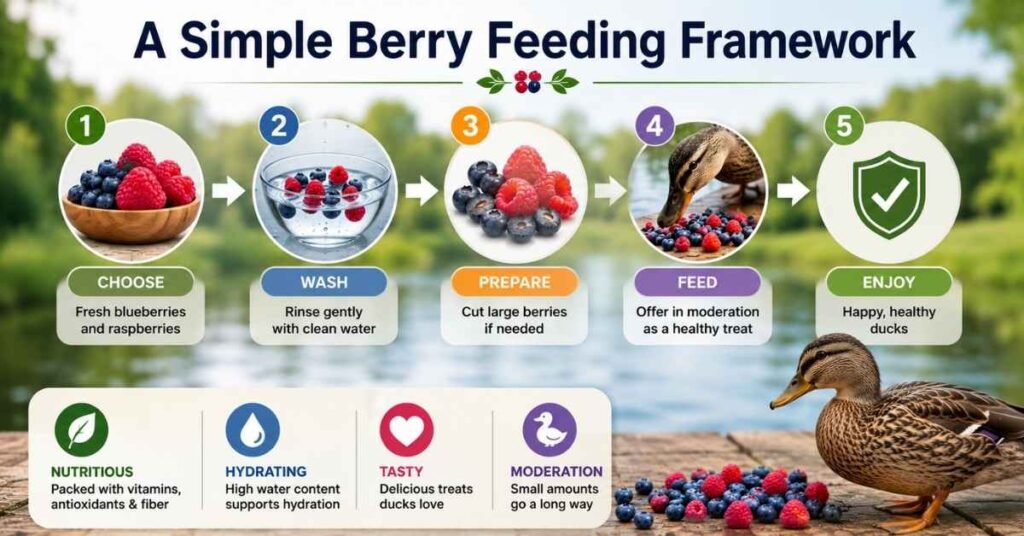
Many experienced duck keepers follow a simple routine before offering fruit.
The BERRY Method
B – Buy fresh berries.
E – Examine for mold and spoilage.
R – Rinse thoroughly.
R – Reduce size for ducklings.
Y – Yield only small portions.
This simple process helps ensure safe feeding practices.
Real-Life Feeding Example
Imagine a backyard flock of six adult ducks.
Instead of scattering a large bowl of berries, the owner offers a handful of mixed blueberries and raspberries after the ducks have already eaten their regular feed.
The ducks enjoy the treat, continue receiving balanced nutrition, and benefit from enrichment without overconsuming sugar.
This is a practical example of how berries should be incorporated into a healthy feeding routine.
Frequently Asked Questions About Can Ducks Eat Blueberries and Raspberries
Can ducks eat blueberries every day?
They can, but daily feeding is unnecessary. A few times per week is usually sufficient.
Can ducks eat raspberries every day?
Raspberries are safe, but moderation is still important.
Can ducks eat frozen blueberries?
Yes. Allow frozen blueberries to thaw before feeding.
Can ducks eat frozen raspberries?
Yes. Thawed raspberries are generally safe.
Can ducks eat raspberry seeds?
Yes. The tiny seeds found in raspberries are not considered harmful to ducks.
Which berry is healthier for ducks?
Both are excellent choices. Blueberries provide more antioxidants, while raspberries provide more fiber.
Are berries better than bread for ducks?
Absolutely. Fresh berries provide nutrients, while bread offers little nutritional value.
Final Verdict About Can Ducks Eat Blueberries and Raspberries
Blueberries and raspberries are safe, nutritious treats for ducks when fed in moderation. They provide antioxidants, fiber, vitamins, hydration, and enrichment while helping diversify a duck’s diet.
Whether you raise backyard ducks, care for ducklings, or simply want healthier alternatives to traditional treats, blueberries and raspberries are among the best fruits you can offer. Wash them thoroughly, serve appropriate portions, provide fresh water, and remember that treats should always support—not replace—a balanced duck diet.