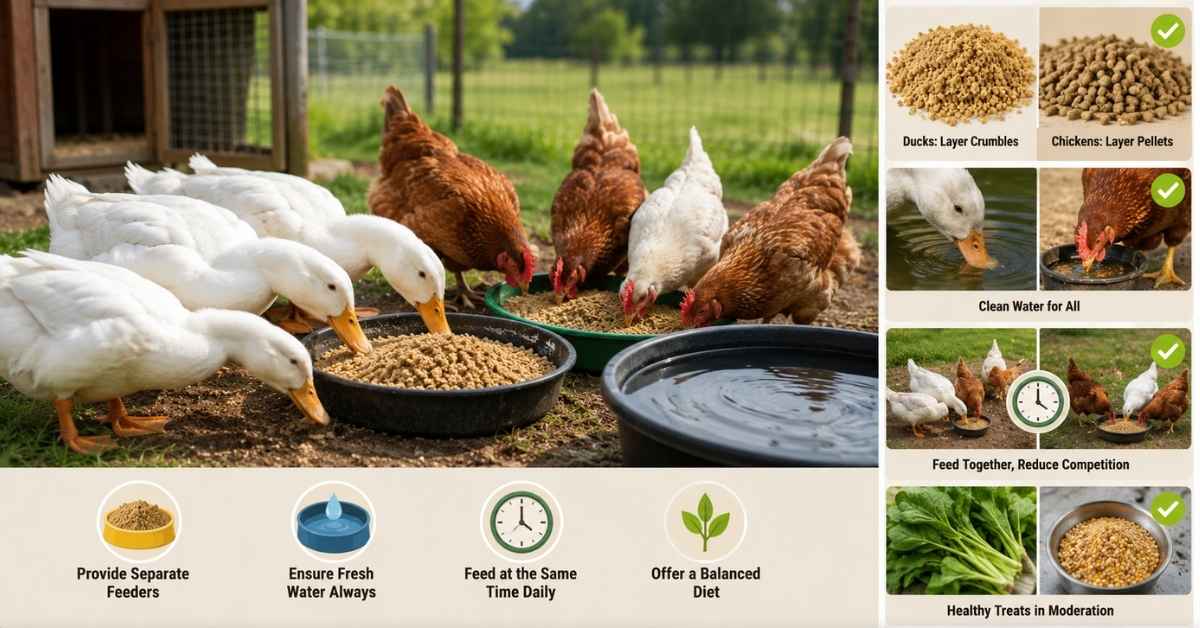
Can ducks eat chicken layer crumbles? Yes, ducks can eat chicken layer crumbles, but whether they should depends on their age, life stage, and nutritional needs. Adult laying ducks can generally consume chicken layer feed safely because they benefit from the additional calcium. However, ducklings, growing ducks, drakes, and non-laying ducks may not thrive on layer crumbles as a long-term diet due to differences in waterfowl nutrition, niacin requirements, and mineral balance.
If you keep a mixed flock of ducks and chickens, understanding how layer crumbles, duck feed, and all-flock feed differ can help you avoid costly feeding mistakes and keep every bird healthy.
Quick Answer: Is Chicken Layer Crumble Safe for Ducks?
The short answer is yes, but with limitations.
| Duck Type | Can Eat Layer Crumbles? | Safe Occasionally | Safe Long-Term | Better Option |
|---|---|---|---|---|
| Ducklings | Yes | Yes | No | Starter Feed |
| Growing Ducks | Yes | Yes | Not Ideal | Grower Feed |
| Adult Drakes | Yes | Yes | Limited | All-Flock Feed |
| Non-Laying Ducks | Yes | Yes | Limited | All-Flock Feed |
| Laying Ducks | Yes | Yes | Generally Acceptable | Waterfowl Feed or Layer Feed |
For most backyard poultry keepers, all-flock feed with separate oyster shell provides a better long-term solution than feeding chicken layer crumbles to every bird in the flock.
Why So Many Duck Owners End Up With Chicken Layer Crumbles
Many people searching “can ducks eat chicken layer crumbles” are facing a real-life situation rather than researching poultry nutrition for fun.
Perhaps you:
- Ran out of duck feed unexpectedly
- Keep ducks and chickens together
- Found layer crumble feed on sale
- Want a single feed for your entire flock
- Accidentally purchased the wrong feed
The hidden concern behind most searches is simple:
“Will my ducks be okay if they eat this?”
That concern is valid because ducks and chickens have similar diets, but they do not have identical nutritional requirements.
What Chicken Layer Crumbles Are Designed to Do
Why Layer Feed Exists
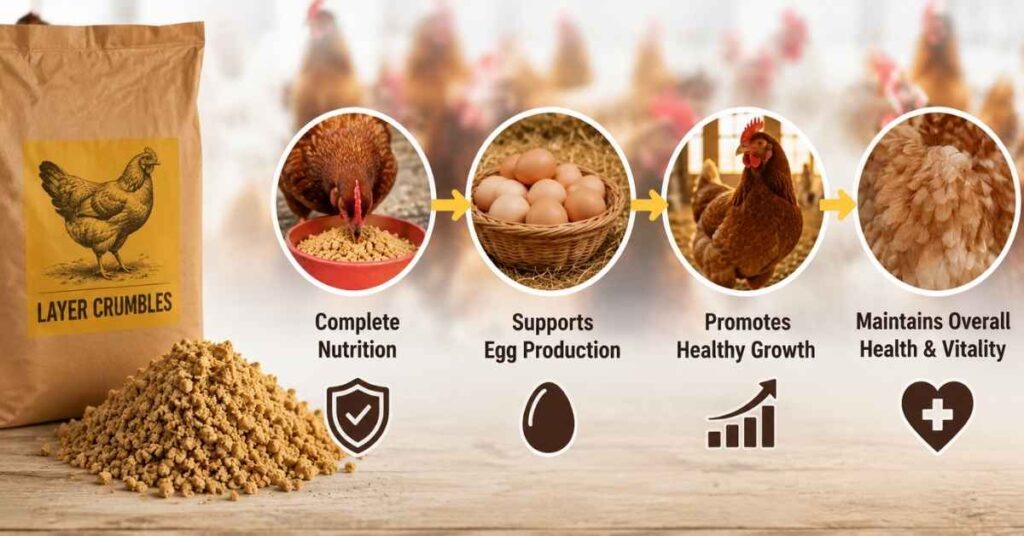
Chicken layer crumbles are specifically formulated for birds producing eggs on a regular basis.
Every eggshell contains a significant amount of calcium. To support consistent egg production, layer feed contains elevated calcium levels compared with starter feed, grower feed, or many all-flock feed formulas.
Without enough calcium, laying birds may develop:
- Thin eggshells
- Soft-shelled eggs
- Reduced egg production
- Mineral deficiencies
This is why layer feed exists in the first place.
How Crumbles Differ From Pellets and Mash
Many poultry owners wonder whether layer crumbles and layer pellets affect ducks differently.
The nutritional profile is often very similar. The primary difference is feed texture.
Crumbles
- Smaller particles
- Easier for young birds to eat
- Less pecking effort required
Pellets
- Larger compressed feed pieces
- Often reduce feed waste
- Popular with adult poultry
Mash
- Loose powder-like feed
- Can create more waste
- Less convenient for many keepers
For ducks, the nutritional content matters far more than whether the feed comes as crumbles or pellets.
What’s Inside a Typical Layer Crumble Feed?
Most layer crumble products contain:
- Protein
- Calcium
- Vitamins
- Minerals
- Amino acids
- Grain ingredients
The most important nutrient difference for ducks is usually calcium content.
Ducks and Chickens Do Not Need the Same Diet
At first glance, ducks and chickens appear to eat many of the same foods.
Both consume:
- Grains
- Seeds
- Insects
- Greens
- Commercial poultry feed
However, ducks have unique nutritional needs that many beginner poultry owners overlook.
The Importance of Niacin for Ducks
One of the most important nutritional differences is niacin.
Ducks generally require more niacin than chickens, especially during growth.
Adequate niacin supports:
- Leg development
- Joint health
- Mobility
- Healthy growth
A deficiency may contribute to:
- Weak legs
- Mobility issues
- Development problems
This is one reason why dedicated waterfowl feed often performs better than standard chicken feed for young ducks.
How Calcium Needs Change Throughout Life
Calcium requirements vary dramatically depending on the bird’s life stage.
A laying duck requires substantially more calcium than:
- A duckling
- A juvenile duck
- A drake
- A non-laying adult duck
This distinction explains why the answer to “can ducks eat chicken layer crumbles” is not the same for every duck.
The Calcium Question Most Articles Oversimplify
Many articles simply say:
“Layer feed contains too much calcium.”
While technically true, the situation is more nuanced.
Why Layer Crumbles Contain Extra Calcium
Egg production demands large amounts of calcium every day.
Layer feeds are designed to replace those losses efficiently.
Which Ducks Benefit From More Calcium?
Higher-calcium feeds can be useful for:
- Laying ducks
- Breeding females
- Ducks actively producing eggs
These birds utilize much of that calcium for eggshell formation.
Which Ducks May Be Getting Too Much?
The following birds generally have lower calcium requirements:
- Ducklings
- Growing ducks
- Adult drakes
- Non-laying ducks
For these birds, long-term reliance on layer feed may provide nutrients in proportions that are not ideal.
Calcium Risk by Duck Type
| Duck Type | Calcium Risk |
|---|---|
| Ducklings | High |
| Growing Ducks | Moderate |
| Drakes | Moderate |
| Non-Laying Ducks | Moderate |
| Laying Ducks | Low |
This table highlights why life stage matters when choosing poultry feed.
Can Ducklings Eat Chicken Layer Crumbles?
What Young Ducks Need Most
During the first weeks and months of life, ducklings experience rapid growth.
Their bodies need:
- Balanced protein
- Adequate niacin
- Essential vitamins
- Proper mineral levels
Because of these requirements, starter feed or waterfowl starter feed is generally a better option than chicken layer crumbles.
Potential Problems With Long-Term Feeding
Feeding ducklings layer crumbles as a primary diet may increase the risk of:
- Nutritional imbalance
- Poor growth
- Development issues
- Inadequate nutrient intake
What If They Accidentally Eat Layer Crumbles?
If ducklings consume a small amount of layer crumble feed, there is usually no reason to panic.
The concern is not occasional consumption.
The concern is using layer crumbles as their regular diet for extended periods.
Can Growing Ducks Eat Chicken Layer Crumbles?
As ducklings mature into juvenile ducks, their nutritional needs begin to shift. However, they still require a diet focused on healthy growth, not egg production.
Nutritional Priorities During Development
Growing ducks need:
- Quality protein for muscle development
- Balanced vitamins and minerals
- Adequate niacin
- Controlled calcium levels
While chicken layer crumbles can provide calories and protein, they are not specifically formulated for developing waterfowl.
Short-Term Feeding vs Long-Term Feeding
Many duck owners ask:
“Can growing ducks eat chicken layer crumbles every day?”
For a short period, layer crumbles are unlikely to cause immediate problems. However, feeding them exclusively for weeks or months may create nutritional imbalances because the feed was designed for laying hens rather than growing ducks.
Signs Feed May Not Be Supporting Growth Properly
Watch for:
- Slow growth
- Weak legs
- Poor feather quality
- Reduced activity
- Smaller body size than expected
If these issues appear, reassessing the feed program is worthwhile.
LEARN MORE: Can Ducks Eat Chicken Layer Feed?
Can Adult Drakes Eat Layer Crumbles?
Why Male Ducks Have Different Calcium Requirements
Unlike laying females, drakes do not produce eggs.
This means they have little use for the elevated calcium levels found in most layer feeds.
Is Layer Feed Harmful or Simply Unnecessary?
For most healthy adult drakes, layer crumbles are not immediately harmful. The larger issue is that the extra calcium provides no meaningful benefit.
A more balanced feed often makes more sense.
Better Feeding Strategy for Drakes
Many experienced poultry keepers use:
- All-flock feed
- Flock raiser feed
- Dedicated waterfowl feed
Then they provide oyster shell separately to laying birds that need additional calcium.
This prevents drakes from consuming nutrients they do not require.
Can Non-Laying Ducks Eat Chicken Layer Crumbles?
When It Is Usually Fine
Healthy adult ducks that are not laying eggs can generally eat chicken layer crumbles without obvious short-term issues.
Examples include:
- Seasonal non-layers
- Retired laying ducks
- Pet ducks
When It Stops Being the Best Choice
Long-term feeding becomes less ideal because the diet may provide more calcium than necessary while lacking the nutrient profile of a specialized duck feed.
Practical Recommendation
If layer crumble feed is already available, it can be used temporarily.
For long-term feeding, all-flock feed or waterfowl feed usually provides a more balanced nutritional foundation.
Can Laying Ducks Eat Chicken Layer Crumbles?
Why Laying Birds Need More Calcium
Every egg requires calcium to form a strong shell.
Without adequate calcium, laying ducks may experience:
- Thin eggshells
- Soft shells
- Reduced egg quality
- Lower production
Situations Where Layer Crumbles Work Well
Chicken layer crumbles can often meet the needs of:
- Actively laying ducks
- Breeding females
- Backyard layers
This is the group most likely to benefit from the extra calcium.
When Waterfowl Feed May Still Be Better
Even though laying ducks can eat chicken layer crumbles, many duck feeds provide:
- Better niacin levels
- Waterfowl-focused nutrition
- Improved nutrient balance
For optimal flock management, dedicated duck feed remains a strong option.
What Happens If Ducks Eat Chicken Layer Crumbles Every Day?
Short-Term Effects
For most adult ducks, daily consumption for a brief period typically causes no visible problems.
Long-Term Effects
Over time, continuous feeding may contribute to:
- Excess calcium intake
- Nutritional imbalance
- Reduced dietary variety
- Less-than-optimal nutrient ratios
The impact depends heavily on:
- Age
- Sex
- Egg production status
- Overall diet
Which Ducks Face the Greatest Risk?
The ducks most likely to experience problems from long-term layer feed use include:
- Ducklings
- Growing ducks
- Drakes
- Non-laying adults
Laying ducks generally tolerate layer crumbles much better.
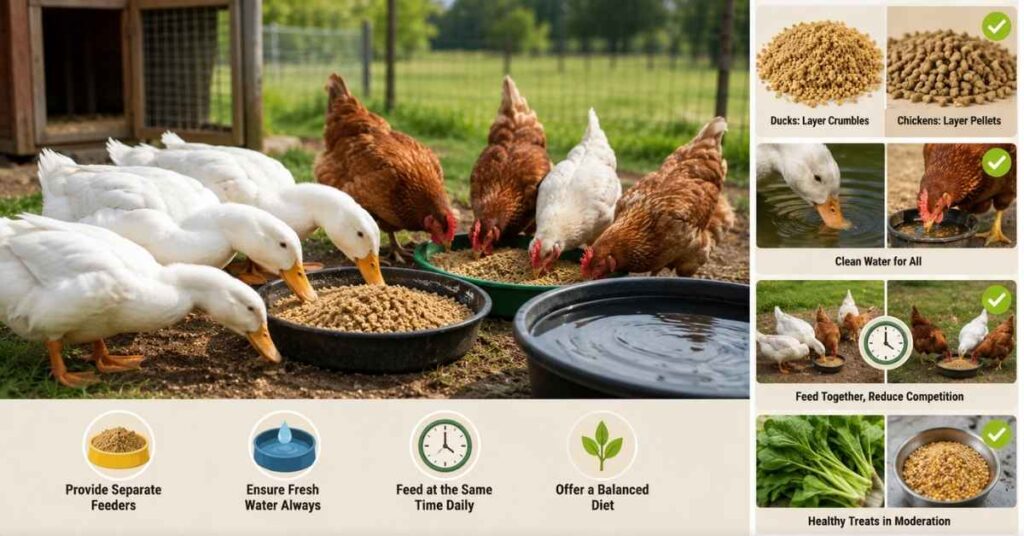
The Best Feeding Strategy for Ducks and Chickens Living Together
The Biggest Challenge in Mixed Flocks
Mixed flocks create a common problem:
Chickens and ducks share the same space but do not always share the same nutritional requirements.
Why One Feed Rarely Fits Every Bird Perfectly
Layer feed works well for hens and laying ducks.
It is less ideal for:
- Drakes
- Ducklings
- Juvenile birds
This creates a feeding dilemma for many backyard poultry owners.
The Feeding Method Experienced Keepers Prefer
Many successful mixed-flock owners use:
All-flock feed + free-choice oyster shell
This system:
- Supports ducks
- Supports chickens
- Prevents unnecessary calcium intake
- Simplifies feeding management
All-Flock Feed vs Layer Crumbles
| Feed Type | Best For |
|---|---|
| Layer Crumbles | Egg-Laying Birds |
| All-Flock Feed | Mixed Flocks |
| Waterfowl Feed | Ducks |
| Grower Feed | Young Birds |
| Flock Raiser Feed | Multi-Species Flocks |
How to Read a Feed Label Like an Experienced Poultry Keeper
Protein Percentage
Protein supports:
- Growth
- Feather production
- Muscle development
- Egg production
Always compare protein levels before selecting feed.
Calcium Percentage
High calcium percentages usually indicate a layer ration.
This is one of the most important numbers duck owners should examine.
Vitamins and Trace Minerals
Look for nutrients such as:
- Niacin
- Vitamin A
- Vitamin D
- Vitamin E
- Trace minerals
These nutrients play major roles in overall bird health.
Red Flags on Feed Labels
Be cautious if:
- Feed is designed exclusively for laying hens
- Calcium levels are unusually high
- The formula lacks waterfowl-specific nutrients
Emergency Feeding: When Layer Crumbles Are All You Have
Is It Safe for One Day?
Yes.
For healthy adult ducks, one day of layer crumbles is generally not a concern.
Is It Safe for a Week?
Most adult ducks tolerate short-term feeding without problems.
Temporary Feeding Options
Until proper duck feed is available, you can supplement with:
- Peas
- Leafy greens
- Lettuce
- Oats
- Appropriate poultry feeds
Common Emergency Feeding Mistakes
Avoid:
- Feeding only treats
- Using bread as a staple food
- Replacing balanced feed entirely
Emergency foods should supplement, not replace, proper nutrition.
Mistakes That Cause More Problems Than Layer Crumbles
Feeding Excessive Treats
Too many treats dilute essential nutrients.
Ignoring Niacin Requirements
Many duck owners underestimate the importance of niacin.
Switching Feeds Abruptly
Sudden feed changes can stress birds and increase feed refusal.
Assuming All Poultry Feed Is the Same
Different feeds are formulated for different purposes.
Reading feed labels matters.
Never Evaluating Flock Needs
Age, sex, production status, and species all influence nutritional requirements.
LEARN MORE: Can Ducks Eat Chicken Layer Pellets?
Real Feeding Scenarios and What Experienced Owners Do
Small Backyard Duck Flock
Most owners choose:
- Waterfowl feed
- All-flock feed
- Seasonal supplementation
Ducks and Chickens Sharing One Coop
The most common solution is:
- All-flock feed
- Separate oyster shell for layers
Free-Range Homestead Setup
Foraging provides supplemental nutrition but should not replace a balanced commercial ration.
Feed Shortages
Many experienced keepers temporarily use available poultry feed while transitioning back to their preferred ration as soon as possible.
Signs Your Ducks Are Thriving on Their Diet
Healthy ducks often display:
Healthy Feather Condition
Smooth, clean feathers indicate good nutrition.
Consistent Growth
Young birds should grow steadily.
Strong Egg Production
Laying ducks should produce eggs with normal shell quality.
Healthy Body Condition
Birds should neither appear excessively thin nor overweight.
Active Behavior
Healthy ducks are alert, curious, and active.
When It Is Time to Change Feeds
Consider switching feeds if you notice:
- Poor feather quality
- Slow growth
- Eggshell problems
- Reduced activity
- Nutritional concerns
A feed better suited to your flock’s life stage may improve overall health.
Choosing the Best Alternative to Chicken Layer Crumbles
Waterfowl Feed
Specifically formulated for ducks and other waterfowl.
All-Flock Feed
Excellent option for mixed-species flocks.
Flock Raiser Feed
Popular among backyard poultry keepers.
Grower Feed
Designed for developing birds.
Which Feed Is Best?
The answer depends on:
- Flock composition
- Bird age
- Production goals
- Management style
Frequently Asked Questions
Can ducks survive on chicken layer crumbles?
Yes, many adult ducks can survive on layer crumbles, but survival and optimal nutrition are not the same thing.
Can ducklings eat chicken layer crumbles?
Ducklings can consume small amounts, but starter feed is a much better choice.
Are layer crumbles better than pellets for ducks?
Nutritionally, they are often very similar. The primary difference is feed texture.
Can Pekin ducks eat chicken layer crumbles?
Adult Pekin ducks can eat layer crumbles, particularly if they are laying eggs.
Can Muscovy ducks eat layer crumbles?
Yes, adult Muscovy ducks can consume layer crumbles, though balanced waterfowl feed is often preferable.
What feed is best for ducks and chickens together?
Many poultry keepers recommend all-flock feed with separate oyster shell.
Can excess calcium hurt ducks?
Excess calcium is most concerning for ducklings, drakes, and non-laying ducks.
Is all-flock feed better than layer crumbles?
For mixed flocks, all-flock feed is often the more balanced option.
How long can ducks safely eat layer crumbles?
Adult ducks can generally tolerate short-term feeding, but long-term suitability depends on life stage and nutritional needs.
Final Verdict: Should You Feed Chicken Layer Crumbles to Ducks?
Can ducks eat chicken layer crumbles? Yes, ducks can eat chicken layer crumbles, but not every duck should rely on them as a primary diet. Laying ducks are usually the best candidates because they benefit from the additional calcium. However, ducklings, growing ducks, drakes, and non-laying ducks typically perform better on waterfowl feed, all-flock feed, or flock raiser feed.
If you manage a mixed flock, the most practical long-term strategy is often all-flock feed paired with separate oyster shell, allowing every bird to receive the nutrients it needs without unnecessary excesses.