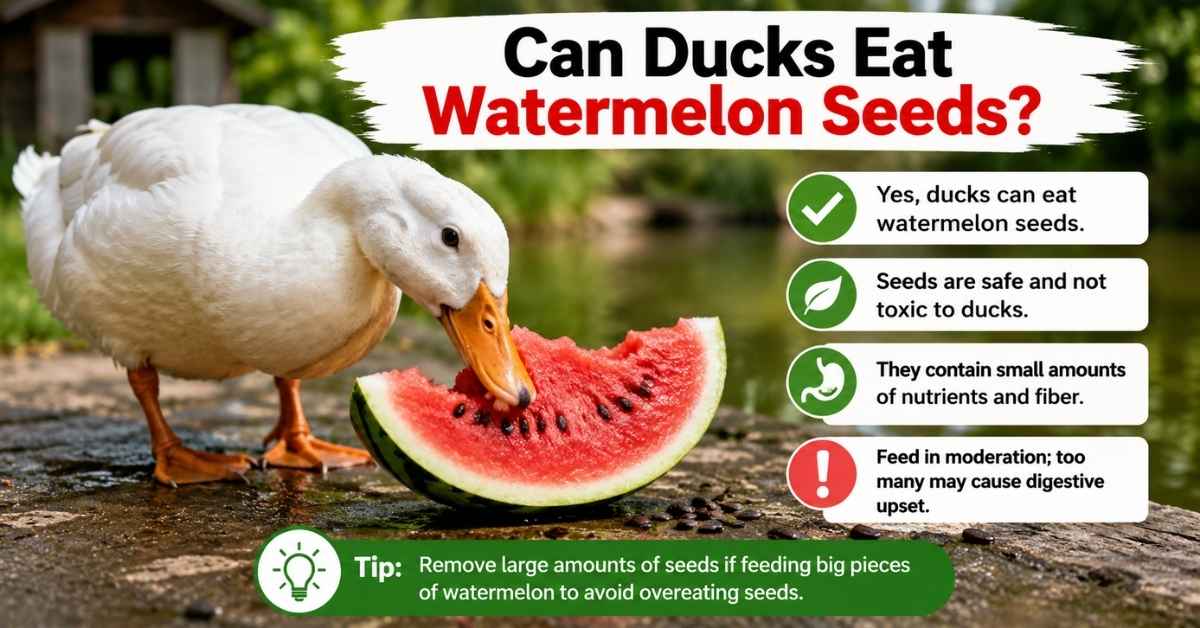
Can ducks eat watermelon seeds? Yes, ducks can safely eat watermelon seeds in moderation. Most adult ducks can digest small watermelon seeds without problems, and the seeds are not considered toxic to waterfowl. However, duck owners should still understand proper feeding practices, portion sizes, and special considerations for ducklings before offering watermelon seeds as a treat.
If you’ve ever shared watermelon with your backyard flock and wondered whether the seeds need to be removed, you’re not alone. Many duck keepers worry about choking hazards, digestion, and whether watermelon seeds are safe for ducks. The good news is that watermelon, including its seeds, can be part of a healthy and balanced duck diet when offered correctly.
Quick Answer: Are Watermelon Seeds Safe for Ducks?
| Question | Answer |
|---|---|
| Can ducks eat watermelon seeds? | Yes |
| Are watermelon seeds toxic? | No |
| Can ducklings eat watermelon seeds? | In small amounts with supervision |
| Should seeds be removed? | Usually not necessary for adult ducks |
| Can ducks digest watermelon seeds? | Yes, most can digest small seeds |
| Are watermelon seeds nutritious? | Yes, in moderation |
The key is treating watermelon as an occasional snack rather than a replacement for complete duck feed.
Why So Many Duck Owners Worry About Watermelon Seeds
Many people associate seeds with potential choking hazards or digestive issues. When it comes to ducks, those concerns are understandable because ducks have different feeding habits than humans.
The real concern behind the question isn’t just about watermelon seeds. Most duck owners are actually asking:
“Will feeding watermelon seeds harm my ducks?”
Fortunately, ducks naturally consume various seeds, grasses, insects, and plant materials while foraging. Small watermelon seeds are generally well within what healthy adult ducks can handle.
Are Seeds Really a Choking Hazard?
For adult ducks, watermelon seeds rarely create problems because ducks swallow food differently than mammals. However, very young ducklings may struggle with larger pieces of food, which is why age-appropriate feeding remains important.
Watermelon for Ducks: Which Parts Are Safe?
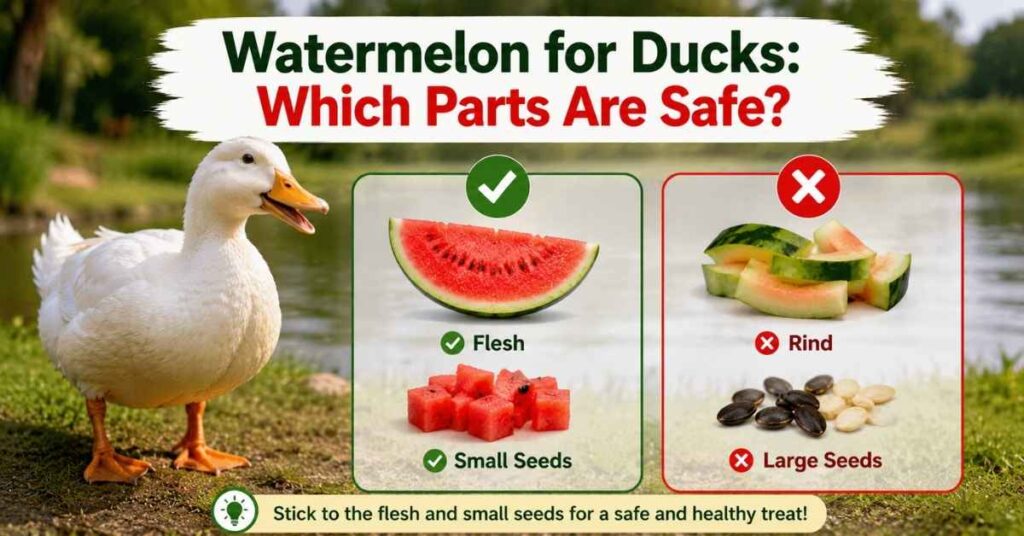
One of the biggest mistakes online articles make is discussing only the seeds. In reality, duck owners want to know about the entire fruit.
| Watermelon Part | Safe for Ducks? | Recommendation |
|---|---|---|
| Watermelon Flesh | Yes | Excellent treat |
| Watermelon Seeds | Yes | Safe in moderation |
| White Seeds | Yes | Generally harmless |
| Black Seeds | Yes | Safe for most adult ducks |
| Watermelon Rind | Yes | Feed in small amounts |
| Moldy Watermelon | No | Never feed |
The watermelon flesh contains valuable hydration and nutrients, while the seeds provide small amounts of protein and healthy fats.
Can Ducks Digest Watermelon Seeds?
One of the most searched questions is whether ducks can digest watermelon seeds.
The answer is generally yes.
Ducks possess digestive systems adapted to processing a wide variety of natural foods. In the wild, ducks regularly consume:
- Seeds
- Grains
- Aquatic plants
- Insects
- Small vegetation
Watermelon seeds are not significantly different from many of the seeds ducks encounter naturally.
When Seed Size Matters
Adult ducks can usually consume watermelon seeds without issue. Ducklings, however, may benefit from having larger seeds removed or crushed before feeding.
This simple step reduces risk and makes the food easier to consume.
Black Seeds vs White Seeds: Does It Matter?
Many duck owners notice that some watermelons contain black seeds while others contain soft white seeds.
Black Watermelon Seeds
Black seeds are mature watermelon seeds. They are safe for healthy adult ducks when fed in moderation.
White Watermelon Seeds
White seeds are immature seeds. These are generally softer and easier to consume.
Which Is Better?
Neither seed type is dangerous for adult ducks. The difference is primarily size and maturity rather than safety.
Nutritional Value of Watermelon Seeds for Ducks
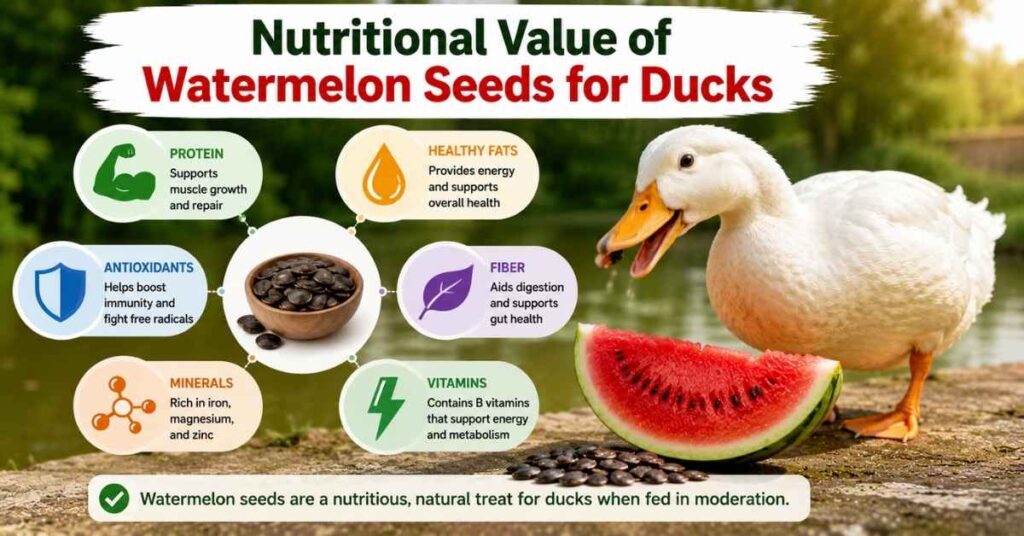
Watermelon seeds contain more nutrients than many people realize.
Nutrients Found in Watermelon Seeds
- Protein
- Healthy fats
- Magnesium
- Iron
- Zinc
- Trace minerals
While ducks should not rely on watermelon seeds as a major food source, these nutrients can contribute to dietary variety.
Why Seeds Are Still Treats
Even nutritious treats should remain a small part of a balanced duck diet. Ducks require complete nutrition from quality poultry feed, forage, and access to fresh water.
Is Watermelon Good for Ducks Overall?
Yes, watermelon is one of the most popular fruits for ducks.
Hydration Benefits
Watermelon contains a high percentage of water, making it especially useful during warm weather.
Natural Enrichment
Many backyard ducks enjoy pecking at watermelon pieces, which encourages natural foraging behavior and mental stimulation.
Nutritional Benefits
Watermelon provides:
- Vitamin C
- Potassium
- Hydration
- Natural plant compounds
These nutrients help make watermelon a healthy occasional treat.
LEARN MORE: Can Ducks Eat Blueberries and Raspberries?
Can Ducklings Eat Watermelon Seeds?
Ducklings require special attention whenever new foods are introduced.
Safe Feeding for Ducklings
If offering watermelon to ducklings:
- Use small portions.
- Remove larger seeds if necessary.
- Crush seeds when appropriate.
- Always provide fresh water.
- Monitor feeding behavior.
Common Mistake
A common mistake is assuming ducklings can eat exactly what adult ducks eat. While many foods are safe, preparation often matters more for younger birds.
How Much Watermelon Can Ducks Eat?
Even healthy treats should be fed responsibly.
Portion Guide
| Duck Type | Suggested Amount |
|---|---|
| Ducklings | Small pieces occasionally |
| Adult Ducks | Several bite-sized chunks |
| Backyard Flock | Shared treat portion |
Feeding Frequency
Watermelon should generally be offered:
- 1–3 times per week
- As a treat
- Alongside regular feed
This prevents nutritional imbalances and excessive sugar intake.
The Safest Way to Feed Watermelon to Ducks
A simple preparation process can help avoid most feeding problems.
Step 1: Wash the Watermelon
Cleaning the fruit helps remove dirt and potential contaminants.
Step 2: Check for Spoilage
Never feed watermelon that is:
- Moldy
- Fermented
- Rotting
- Discolored
Step 3: Cut Into Manageable Pieces
Smaller pieces are easier for ducks to consume and reduce waste.
Step 4: Provide Fresh Water
Fresh water should always be available during feeding.
Common Watermelon Feeding Mistakes
Even safe foods can become problematic when fed incorrectly.
Feeding Moldy Watermelon
Spoiled fruit may contain harmful toxins.
Leaving Fruit Out Too Long
Watermelon spoils quickly in hot weather.
Feeding Excessive Amounts
Too much fruit can reduce interest in nutritionally complete feed.
Ignoring Duckling Needs
Young ducks often require smaller, easier-to-eat portions.
What Happens If Ducks Eat Too Many Watermelon Seeds?
A few extra seeds are unlikely to cause problems.
However, excessive consumption of watermelon and treats in general may contribute to:
- Loose droppings
- Reduced appetite
- Nutritional imbalance
- Excess sugar intake
Moderation remains the safest approach.
LEARN MORE: Can Ducks Eat Watermelon?
Real-Life Feeding Scenario
Imagine a flock of six backyard ducks on a hot summer afternoon.
The owner cuts a watermelon into small sections and places it in a shaded area. The ducks eagerly consume the flesh and naturally ingest some seeds during feeding.
Because the watermelon is fresh, properly portioned, and offered alongside regular feed, the ducks receive enrichment, hydration, and variety without compromising their overall nutrition.
This is an excellent example of responsible treat feeding.
A Simple Watermelon Feeding Framework
The MELON Method
M – Make sure the watermelon is fresh.
E – Examine it for spoilage.
L – Limit portions.
O – Observe your flock.
N – Never replace balanced feed.
This simple framework helps prevent most common feeding mistakes.
Frequently Asked Questions About Can Ducks Eat Watermelon Seeds
Can ducks eat black watermelon seeds?
Yes. Black watermelon seeds are generally safe for healthy adult ducks.
Can ducks eat white watermelon seeds?
Yes. White seeds are immature seeds and are typically soft and easy to consume.
Can ducklings eat watermelon seeds?
Ducklings can eat small amounts, but removing larger seeds may be beneficial.
Can ducks digest watermelon seeds?
Most adult ducks can digest small watermelon seeds without problems.
Can ducks eat watermelon rind?
Yes, watermelon rind is generally safe when offered in moderation.
Can ducks eat seedless watermelon?
Absolutely. Seedless watermelon is safe for ducks and often easier to prepare.
Is watermelon healthy for ducks?
Yes. Watermelon provides hydration, vitamins, and enrichment when fed responsibly.
Final Verdict About Can Ducks Eat Watermelon Seeds
Watermelon seeds are safe for ducks and are not considered toxic. Healthy adult ducks can generally digest both black and white watermelon seeds without difficulty. Combined with the hydrating benefits of watermelon flesh, the fruit can make an excellent treat for backyard ducks.
The best approach is simple: offer fresh watermelon in moderation, supervise ducklings more carefully, avoid spoiled fruit, and ensure treats support a balanced duck diet rather than replace it. By following these guidelines, you can safely share watermelon with your flock while providing variety, enrichment, and nutrition.