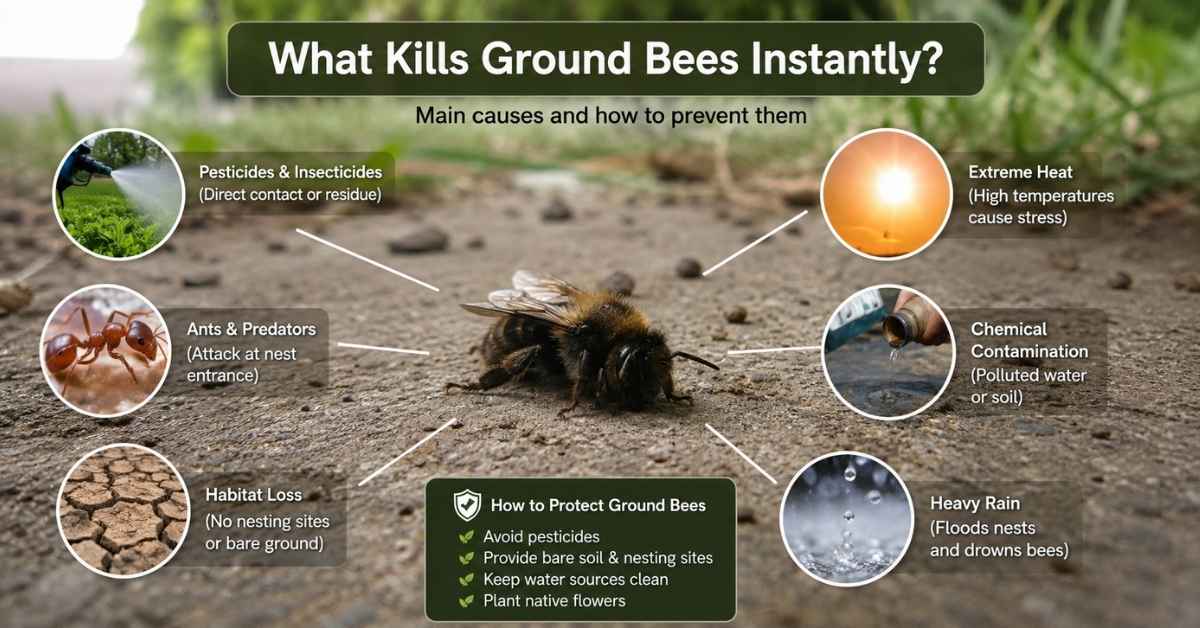
What kills ground bees instantly? In most cases, professional pest treatments and properly applied insecticidal dusts work faster than natural remedies. However, before choosing any treatment, it’s important to identify whether you actually have ground bees, mining bees, yellow jackets, or ground wasps, because many insects that nest in soil are commonly misidentified. In some situations, removal isn’t necessary because many ground-nesting bees are harmless pollinators that disappear naturally after a short nesting season.
If you’ve noticed small holes in your lawn, increased insect activity, or concerns about children and pets getting stung, this guide will help you determine what you’re dealing with, when removal makes sense, and how to prevent future infestations.
Quick Answer: What Kills Ground Bees Instantly?
The fastest removal options generally include:
- Professional pest control treatments
- Insecticidal dust products designed for ground nests
- Targeted liquid insecticide applications
Natural solutions such as vinegar, peppermint oil, cinnamon, and soapy water may help deter activity in some situations but rarely provide truly instant results.
The most important first step is confirming that the insects are actually ground bees rather than yellow jackets or ground wasps.
Before You Treat Anything: Are They Really Ground Bees?
One of the biggest mistakes homeowners make is assuming every insect emerging from the ground is a dangerous bee infestation.
Many online searches for “how to get rid of ground bees in yard” actually involve completely different insects.
Why Misidentification Is the Biggest Homeowner Mistake
Ground-nesting insects can look surprisingly similar.
Common possibilities include:
- Mining bees
- Ground bees
- Yellow jackets
- Ground wasps
- Cicada killers
Each requires a different management approach.
Ground Bees vs Yellow Jackets
| Feature | Ground Bees | Yellow Jackets |
|---|---|---|
| Aggression | Low | High |
| Pollination | High | Minimal |
| Sting Risk | Low | High |
| Nest Structure | Simple burrows | Large underground colonies |
| Ecological Value | Significant | Moderate |
Yellow jackets are often responsible for the most serious stinging incidents around homes.
Ground Bees vs Ground Wasps
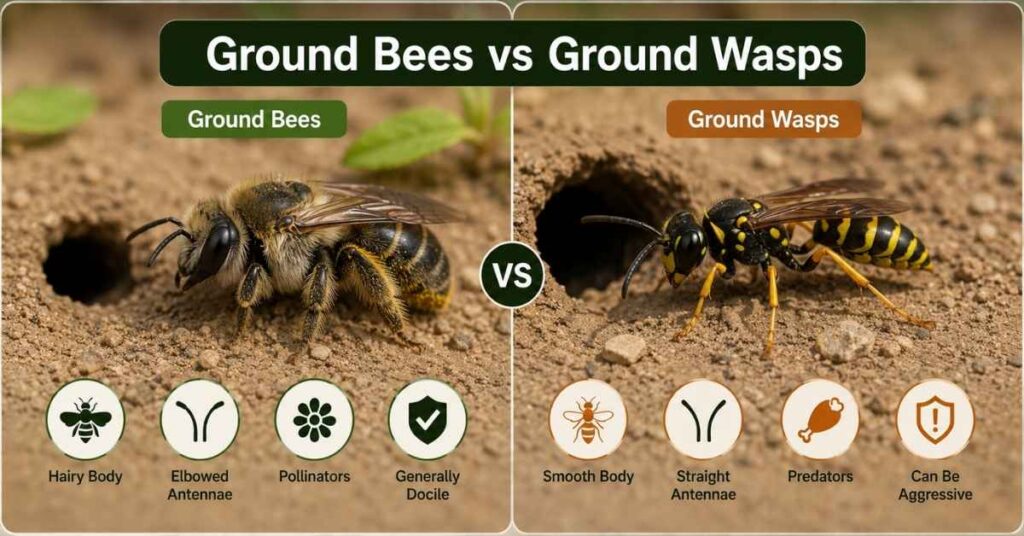
Ground wasps tend to be more defensive and predatory, while most ground bees focus on collecting pollen and nectar.
What Ground Bee Holes Look Like
Ground bee nests typically appear as:
- Small round holes
- Loose soil around entrances
- Scattered nesting sites
- Increased activity during spring
Large concentrations of holes often indicate mining bees, one of the most common types of ground-nesting bees.
Ground Bee Emergency Assessment
Not every situation requires immediate action.
Do You Need Immediate Removal?
Consider treatment when:
- Children frequently play near the nesting area
- Pets regularly disturb nests
- Family members have severe sting allergies
- The nesting area creates a safety concern
Situations Where Ground Bees Are Usually Harmless
In many cases, solitary ground bees:
- Ignore people
- Rarely sting
- Remain active for only a few weeks
- Provide valuable pollination
Child Safety Risk Assessment
Parents often search for what kills ground bees instantly because of concerns about children.
The actual risk depends on:
- Bee species
- Nest density
- Playground proximity
- Individual allergy concerns
Pet Safety Risk Assessment
Dogs are more likely than humans to encounter problems because they dig, sniff, and investigate nesting holes.
Fastest Ways to Get Rid of Ground Bees
Treatment Comparison Table
| Method | Speed | Effectiveness | Cost | Pet Friendly |
|---|---|---|---|---|
| Professional Treatment | Fast | High | Higher | Depends |
| Insecticidal Dust | Fast | High | Moderate | No |
| Liquid Insecticide | Moderate to Fast | High | Moderate | No |
| Soapy Water | Variable | Moderate | Low | Safer |
| Vinegar | Limited | Low | Low | Safer |
Professional Pest Control
Professional exterminators remain the most reliable option for large infestations.
Benefits include:
- Accurate species identification
- Proper treatment selection
- Reduced risk of repeat infestations
- Long-term prevention recommendations
Insecticidal Dust Treatments
Many pest-control professionals prefer dust formulations because they can reach underground nesting tunnels more effectively than surface sprays.
Liquid Insecticide Treatments
Liquid treatments may work well when applied appropriately but often require precise targeting of nest entrances.
Soapy Water Treatments
Many homeowners search for “will soapy water kill ground bees?”
Soap may affect insects by disrupting their protective outer coating, but results vary significantly depending on nest size and species.
Does Vinegar Kill Ground Bees?
Vinegar is one of the most commonly suggested DIY remedies online.
While vinegar may discourage activity temporarily, it is generally not considered one of the most effective options for eliminating established underground nests.
What Actually Works Overnight?
Many articles promise instant results, but reality is more complicated.
Methods With the Fastest Results
The quickest solutions usually involve:
- Professional intervention
- Commercial-grade treatments
- Correct species identification
Methods That Require Multiple Applications
Natural remedies often require repeated applications and may not eliminate underground colonies completely.
When Instant Results Are Unrealistic
If the insects are actually mining bees, immediate extermination may not be necessary because many colonies naturally disappear after their breeding season.
Should You Kill Ground Bees or Leave Them Alone?
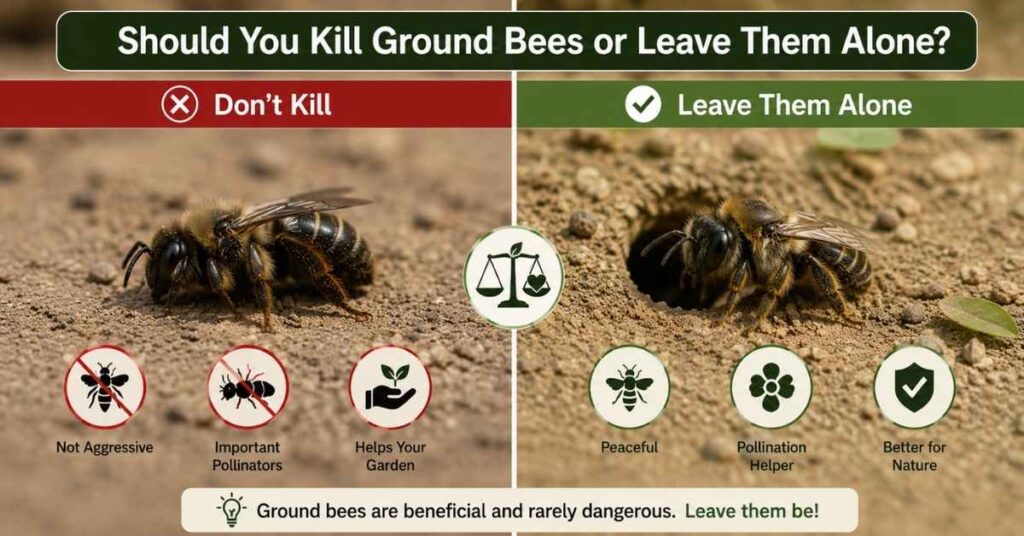
This is the question most homeowners don’t ask until after treatment.
Why Many Ground Bees Are Valuable Pollinators
Many ground bees are important pollinators that support:
- Flowering plants
- Fruit trees
- Vegetable gardens
- Native ecosystems
Mining Bees: The Most Misunderstood Ground Bee
Mining bees are often mistaken for aggressive pests.
In reality, they are:
- Solitary
- Non-aggressive
- Valuable pollinators
- Active for only a short period
When Ground Bees Leave Naturally
Many species disappear naturally after several weeks, making long-term treatment unnecessary.
When Removal Is Justified
Removal may be appropriate when:
- High human activity exists near nests
- Severe allergy risks are present
- Nest density becomes excessive
Why Ground Bees Chose Your Yard
Understanding attraction factors helps prevent future infestations.
Sandy Soil Conditions
Many ground bees prefer loose, well-drained soil.
Thin Grass Coverage
Bare patches create ideal nesting conditions.
Dry Areas of the Lawn
Dry soil often attracts ground-nesting bees.
South-Facing Locations
Sunny areas are especially attractive because they warm up quickly.
Why Ground Bees Keep Coming Back Every Year
Recurring infestations often have environmental causes.
Understanding the Ground Bee Life Cycle
Ground bees emerge seasonally for:
- Mating
- Nest construction
- Egg laying
Why Previous Treatments Fail
Many homeowners treat visible activity but fail to address conditions that attract nesting.
Hidden Underground Activity
Subsurface tunnels can remain suitable for future generations if habitat conditions stay unchanged.
How Professionals Handle Ground Bee Infestations
Inspection and Identification
Professionals first determine:
- Species
- Nest density
- Risk level
Treatment Selection
Different insects require different solutions.
Follow-Up Monitoring
Reputable pest-control companies monitor activity after treatment to ensure long-term success.
How to Prevent Ground Bees From Returning
Improve Lawn Density
Healthy turf reduces available nesting space.
Reduce Bare Soil
Cover exposed soil whenever possible.
Adjust Irrigation Practices
Moderately moist soil is often less attractive than extremely dry conditions.
Use Mulch Strategically
Mulch can discourage nesting in garden beds.
Seasonal Prevention Checklist
- Repair bare patches
- Overseed thin lawn areas
- Monitor spring activity
- Address nesting early
Ground Bee Treatments Ranked by Safety
Safest Options for Families
When children and pets are present, prioritize solutions with lower exposure risks and seek professional advice when necessary.
Lowest Environmental Impact Options
Integrated Pest Management (IPM) strategies focus on prevention, identification, and targeted interventions rather than broad chemical use.
Pollinator-Friendly Alternatives
Where possible:
- Relocate activity zones
- Improve lawn conditions
- Allow short-lived pollinator species to complete their life cycle
LEARN MORE: Which Bees Sting?
Common Ground Bee Removal Mistakes
Treating the Wrong Insect
The most expensive mistake is targeting ground bees when the real problem is yellow jackets.
Using the Wrong Product
Different species respond differently to treatments.
Ignoring Nest Entrances
Many failed treatments occur because nesting entrances are not properly identified.
Destroying Beneficial Pollinators Unnecessarily
Not every ground-nesting insect represents a threat.
What Most Homeowners Get Wrong About Ground Bees
Myth: All Ground Bees Are Aggressive
Most are not.
Myth: Every Nest Must Be Destroyed
Many disappear naturally.
Myth: Vinegar Solves Everything
Results are often exaggerated online.
Myth: Ground Bees Stay All Year
Most species have relatively short active seasons.
Myth: Ground Bees and Yellow Jackets Are the Same Thing
They are entirely different insects with different behaviors and risks.
Expert Recommendations for Different Situations
Best Option for Small Infestations
Accurate identification and monitoring are often sufficient.
Best Option for Large Infestations
Professional evaluation provides the safest and most effective approach.
Best Option for Families With Young Children
Focus on reducing exposure around play areas and high-traffic zones.
Best Option for Pollinator-Conscious Homeowners
Consider whether the insects are beneficial mining bees before pursuing removal.
Frequently Asked Questions
What kills ground bees instantly?
Professional treatments and properly applied insecticidal dusts are generally the fastest options.
Are ground bees dangerous?
Most ground bees are not aggressive and rarely sting.
Do ground bees sting?
Yes, some species can sting, but incidents are uncommon.
What attracts ground bees?
Bare soil, sandy soil, dry conditions, and sunny locations attract nesting activity.
Will ground bees return next year?
They may return if favorable nesting conditions remain.
Should I remove mining bees?
Many homeowners choose to leave mining bees alone because they are beneficial pollinators.
What do ground bee holes look like?
They usually appear as small holes surrounded by loose soil.
How do professionals remove ground bees?
Professionals identify the species, assess risk, apply targeted treatments when necessary, and recommend prevention strategies.
Final Verdict
If you’re searching for what kills ground bees instantly, the fastest solutions typically involve professional-grade treatments and accurate species identification. However, many homeowners discover that they don’t actually have dangerous pests at all—they have mining bees or other beneficial ground-nesting pollinators.
Before choosing any removal method, identify the species, evaluate the risk, and determine whether treatment is truly necessary. In many cases, the smartest solution is not simply eliminating insects but addressing the lawn conditions that attracted them in the first place. Long-term prevention, proper identification, and targeted action will always outperform a quick fix.