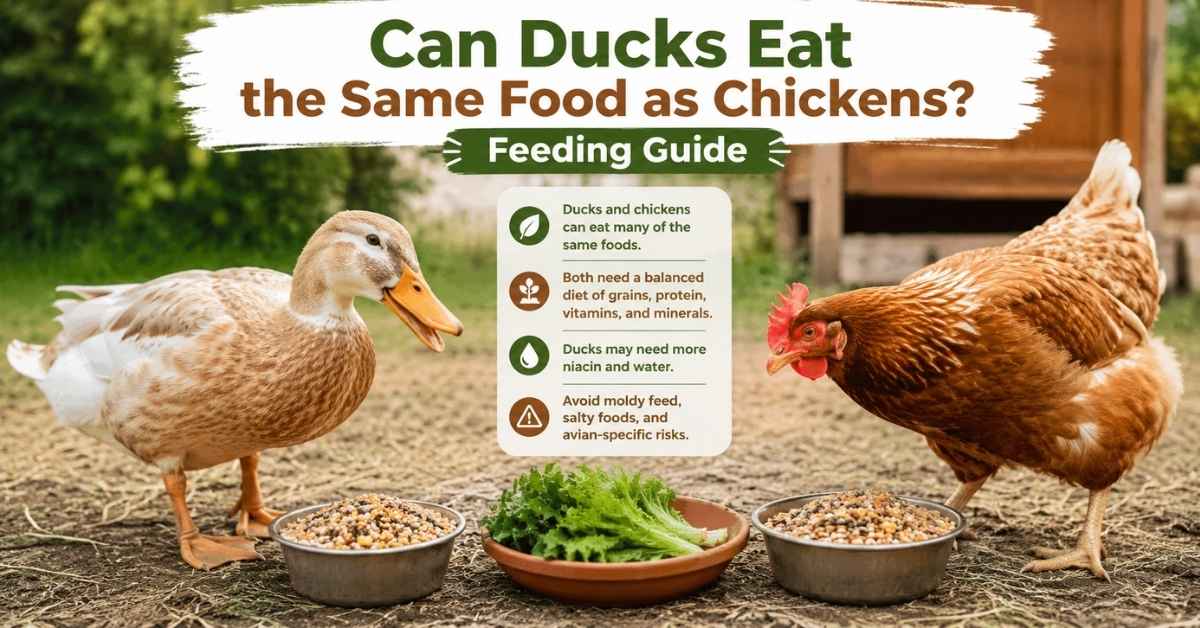
Can ducks eat the same food as chickens? Yes, ducks and chickens can eat many of the same foods, including grains, vegetables, and some poultry feeds. However, ducks have different nutritional requirements than chickens, especially when it comes to niacin (vitamin B3) and water access. While ducks can temporarily eat chicken feed, relying on it long-term may lead to nutritional imbalances if their specific waterfowl needs are ignored.
Many backyard poultry owners keep mixed flocks and wonder whether they can simplify feeding routines. The good news is that ducks and chickens can safely share many healthy foods. The challenge is making sure ducks still receive the nutrients they need for proper growth, digestion, feather health, and leg development.
In this guide, you’ll learn:
- Whether ducks can eat chicken feed
- The biggest nutritional differences between ducks and chickens
- Why ducks need more niacin
- The best feed for mixed flocks
- Foods ducks and chickens can safely share
- Feeding tips for ducklings, chicks, and adult birds
Quick Answer: Can Ducks Eat the Same Food as Chicken?
Ducks and chickens can safely share many foods, but they should not always rely on the exact same feed formulas.
| Food or Feed Type | Safe for Chickens | Safe for Ducks | Notes |
|---|---|---|---|
| Flock raiser feed | Yes | Yes | Best mixed flock option |
| Chicken layer feed | Yes | Limited | Too much calcium for ducks |
| Starter feed | Yes | Limited | Ducks need extra niacin |
| Vegetables | Yes | Yes | Healthy shared treats |
| Bread | Limited | Limited | Poor nutrition |
The biggest issue is that ducks need more niacin and water access than chickens. This is why mixed flock feeding requires careful nutritional balance.
Important: Chicken feed alone may not fully meet long-term duck nutritional requirements.
Why Ducks and Chickens Have Different Nutritional Needs
Although ducks and chickens are both poultry species, they process food differently and have unique dietary needs.
Ducks Need More Niacin Than Chickens
Niacin, also known as vitamin B3, is one of the most important nutrients for ducks.
Ducks grow faster than chickens and require higher niacin levels to support:
- Bone development
- Leg strength
- Joint health
- Proper growth
A niacin deficiency in ducks may lead to:
- Weak legs
- Walking problems
- Joint issues
- Poor feather development
Chicken feed is often lower in niacin because chickens do not require as much vitamin B3 as ducks do.
Waterfowl vs Chicken Digestion
Ducks are waterfowl, which means they naturally consume more water while eating.
Unlike chickens, ducks often:
- Dunk feed in water
- Eat wetter foods
- Require deeper water access
This feeding behavior supports:
- Easier swallowing
- Digestion
- Nutrient absorption
Differences in Growth and Metabolism
Duck metabolism differs from chicken metabolism in several ways.
Ducks usually:
- Grow more rapidly
- Consume more water
- Need different nutrient ratios
- Require stronger hydration support
These differences explain why ducks and chickens should not always eat identical feed formulas long-term.
Can Ducks Eat the same food as Chicken Feed?
This is one of the most common mixed flock feeding questions.
Is Chicken Feed Safe for Ducks?
Ducks can eat chicken feed temporarily without immediate problems. Many backyard poultry owners successfully use shared feed for convenience.
However, chicken feed alone may not provide:
- Enough niacin
- Ideal protein balance
- Proper waterfowl nutrition
Over time, nutritional deficiencies may appear.
Can Ducks Eat Starter Feed?
Ducklings can eat chick starter feed temporarily, but there are important differences.
| Feed Type | Duck Safe? | Important Notes |
|---|---|---|
| Non-medicated chick starter | Limited | Needs niacin supplement |
| Medicated chick starter | Usually avoid | Some formulations may not suit ducks |
| Duck starter feed | Best option | Balanced for ducklings |
Many duck owners add brewer’s yeast as a niacin supplement when feeding chick starter.
Can Ducks Eat Grower Feed?
Yes, ducks can usually eat grower feed in moderation. Grower feeds often contain balanced protein levels suitable for mixed poultry flocks.
Still, water access remains essential for ducks.
Can Ducks Eat Layer Feed?
Layer feed is one of the biggest concerns in mixed flock feeding.
Layer feed contains high calcium levels designed for:
- Egg-laying hens
- Shell production
Too much calcium may create problems for ducks, especially:
- Young ducks
- Male ducks
- Non-laying ducks
Long-term excessive calcium intake may contribute to:
- Kidney stress
- Nutritional imbalance
- Health complications
Best Feed for Mixed Flocks
Choosing the right feed makes mixed flock management much easier.
Why Flock Raiser Feed Works Best
Many poultry keepers prefer flock raiser feed because it works for both ducks and chickens.
Benefits include:
- Balanced protein levels
- Lower calcium than layer feed
- Suitable for mixed poultry species
- Easier feeding management
All Flock Feed vs Layer Feed
| Feed Type | Best For | Duck Safe? | Notes |
|---|---|---|---|
| All flock feed | Mixed flocks | Yes | Balanced nutrition |
| Layer feed | Laying hens | Limited | High calcium |
| Starter feed | Chicks | Limited | Ducks need niacin |
| Duck feed | Ducks | Best | Waterfowl nutrition |
Flock raiser or all flock feed is usually the safest option for mixed flocks.
Should Ducks and Chickens Have Separate Feeders?
Sometimes separate feeders are helpful because:
- Ducks eat differently
- Chickens may dominate feeders
- Nutritional needs vary
Separate feeding stations allow:
- Better feed control
- Reduced competition
- Easier supplementation
Foods Ducks and Chickens Can Both Eat
Many healthy foods are safe for both poultry species.
Healthy Shared Foods
Safe foods include:
- Oats
- Corn
- Peas
- Lettuce
- Kale
- Cucumbers
- Mealworms
These foods work well as healthy treats for mixed flocks.
Safe Grains for Mixed Flocks
Good grain options include:
- Whole grains
- Rolled oats
- Rice
- Wheat
- Barley
Whole grains provide:
- Energy
- Fiber
- Balanced poultry nutrition
Healthy Protein Treats
Both ducks and chickens enjoy:
- Mealworms
- Scrambled eggs
- Insects
- Small fish
Protein treats should still remain moderate.
Foods Ducks Should Avoid Even if Chickens Eat Them
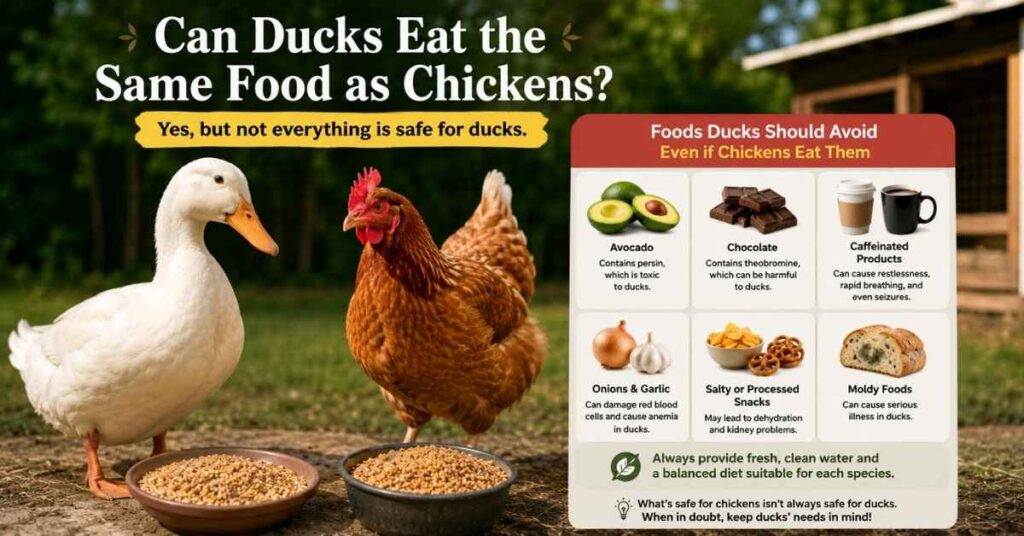
Not all chicken-safe foods are ideal for ducks.
Excess Calcium Foods
Too much calcium from layer feed may be risky for ducks long-term.
Highly Processed Chicken Feeds
Some poultry feeds contain additives or nutrient ratios designed specifically for chickens.
Dry Foods Without Water Access
Ducks require water while eating. Dry feed without water may increase choking risks and digestive stress.
Sugary and Salty Snacks
Processed human foods should be avoided for both poultry species.
Medicated Feeds for Young Ducks
Certain medicated chick starter feeds may not be ideal for ducklings depending on formulation and dosage.
Do Ducks Need More Water Than Chickens?
Absolutely.
Why Water Access Matters for Ducks
Ducks use water differently than chickens.
They often:
- Dunk feed
- Wash nostrils
- Aid digestion
- Prevent choking
Without proper water access, ducks may struggle to eat dry feed safely.
Best Water Setup for Mixed Flocks
A good setup includes:
- Deep water containers
- Clean fresh water
- Multiple water stations
- Easy duck access
Mixed poultry flocks work best when ducks have separate water areas.
Can Ducklings Eat Chick Starter Feed?
Ducklings and chicks have very different growth requirements.
Differences Between Ducklings and Chicks
Ducklings grow faster and require:
- More niacin
- More hydration
- Different nutrient ratios
Niacin Deficiency Risks in Ducklings
Niacin deficiency is one of the most common duckling nutrition problems.
Possible symptoms include:
- Bent legs
- Weak walking
- Joint swelling
- Poor mobility
How To Supplement Ducklings Safely
Many poultry owners supplement ducklings with:
- Brewer’s yeast
- Niacin-rich foods
- Waterfowl supplements
This helps support proper leg and bone development.
Signs Ducks Are Not Getting Proper Nutrition
Nutritional imbalance may appear slowly.
Common Warning Signs
| Symptom | Possible Cause |
|---|---|
| Leg weakness | Niacin deficiency |
| Poor feather growth | Nutrient imbalance |
| Low energy | Poor diet quality |
| Slow growth | Insufficient nutrition |
| Weak egg production | Mineral imbalance |
Healthy ducks should appear:
- Active
- Alert
- Well-feathered
- Strong-legged
Tips for Feeding Ducks and Chickens Together
Mixed flock feeding becomes easier with proper management.
Use Flock Raiser Feed
This reduces nutritional imbalance risks.
Supplement Niacin for Ducks
Brewer’s yeast is commonly used for extra vitamin B3 support.
Provide Constant Water Access
Water is essential for duck digestion and feeding behavior.
Monitor Feed Competition
Chickens may crowd feeders faster than ducks.
Separate Birds During Special Feeding
Some owners separate flocks temporarily for:
- Layer feed
- Medical supplements
- Duckling feeding
Learn More: Can Ducks Eat Strawberry Tops?
Common Mistakes Mixed Flock Owners Make
Feeding Only Layer Feed
Too much calcium may harm ducks over time.
Ignoring Niacin Needs
This is one of the biggest beginner mistakes.
Using Medicated Chick Starter Improperly
Not all medicated feeds suit ducklings equally.
Poor Water Access
Ducks require deeper and more accessible water than chickens.
Overfeeding Treats
Too many treats may weaken balanced poultry nutrition.
Seasonal Feeding Tips for Ducks and Chickens
Winter Feeding for Mixed Flocks
During winter:
- Energy needs increase
- Water freezing becomes an issue
- Extra calories may help
Warm grains and healthy treats are useful during cold weather.
Summer Hydration Needs
Ducks especially require reliable hydration during heat.
Feeding During Egg-Laying Season
Laying hens may need higher calcium while ducks may not require the same levels.
Separate feeding sometimes works best during heavy laying periods.
Can Ducks and Chickens Live Together Successfully?
Yes, many backyard poultry owners successfully raise mixed flocks.
Housing Compatibility
Ducks and chickens can often share:
- Coops
- Runs
- Outdoor spaces
Behavioral Differences
Ducks are usually:
- Messier eaters
- More water-focused
- Lower roosting birds
Feeding Challenges in Shared Coops
The main challenge is balancing:
- Nutrition
- Water access
- Feeding behavior
- Competition
Expert Recommendations for Mixed Flock Nutrition
| Recommendation | Why It Matters |
|---|---|
| Use all flock feed | Safer for both species |
| Add brewer’s yeast | Supports niacin intake |
| Provide deep water | Essential for ducks |
| Limit treats | Prevents nutritional imbalance |
| Monitor bird health | Detect issues early |
Balanced nutrition matters more than feeding convenience in mixed flocks.
Frequently Asked Questions
Can ducks survive on chicken feed?
Temporarily yes, but chicken feed alone may not provide enough niacin for long-term duck health.
Why do ducks need more niacin than chickens?
Ducks grow faster and require more vitamin B3 for healthy leg and bone development.
Can ducks eat chicken layer pellets?
Limited amounts are usually fine, but excessive calcium may be harmful long-term.
What is the best feed for mixed flocks?
Flock raiser feed or all flock feed is usually the best option.
Can ducklings eat chick starter feed?
They can temporarily, but extra niacin supplementation is often necessary.
Should ducks and chickens eat separately?
Sometimes separate feeding helps maintain better nutritional balance.
Is flock raiser feed safe for ducks?
Yes, flock raiser feed is commonly recommended for mixed poultry flocks.
Can ducks and chickens share treats?
Yes, many healthy foods like oats, peas, greens, and mealworms are safe for both.
Conclusion
So, can ducks eat the same food as chickens? Yes, ducks and chickens can safely share many foods and some poultry feeds. However, ducks have different nutritional requirements than chickens, especially when it comes to niacin, hydration, and waterfowl feeding behavior.
Chicken feed alone is not always ideal for long-term duck health. Mixed flock owners usually achieve the best results by using:
- Flock raiser feed
- Balanced poultry nutrition
- Niacin supplementation
- Proper water access
- Healthy shared treats
With the right feeding strategy, ducks and chickens can live together successfully while staying healthy, active, and well-nourished.