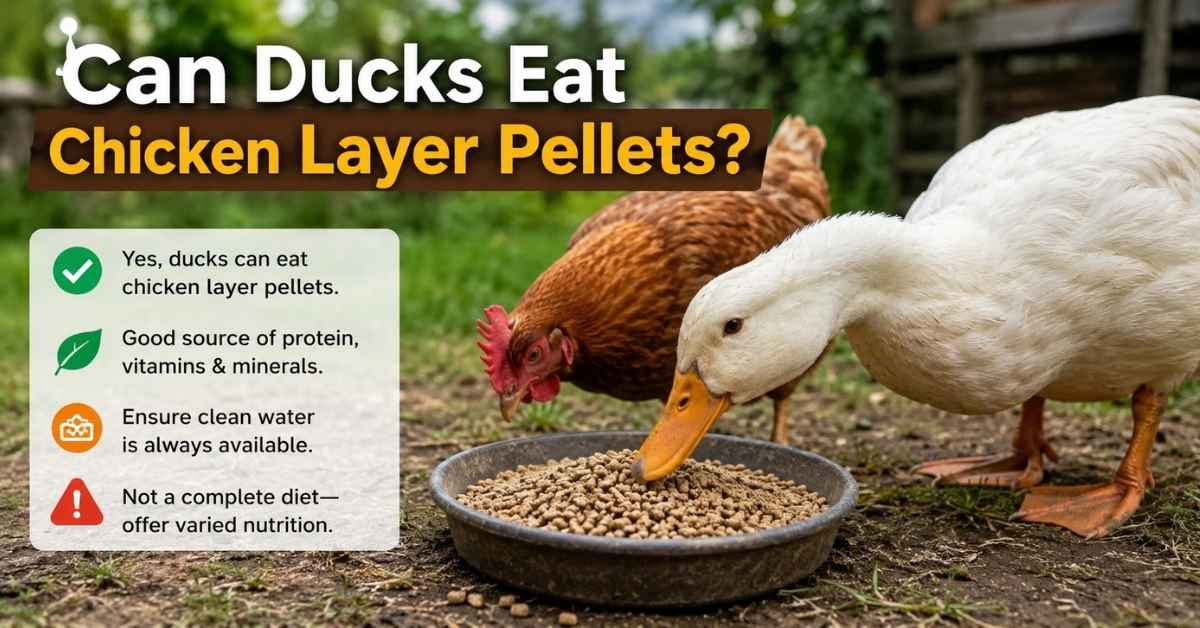
Can ducks eat chicken layer pellets? Yes, ducks can eat chicken layer pellets occasionally, and many backyard poultry owners feed ducks and chickens together without immediate problems. However, chicken layer feed is designed specifically for laying hens, not waterfowl. Long-term feeding may create nutritional imbalances in ducks due to high calcium levels, niacin deficiencies, and improper protein balance, especially for drakes and ducklings.
This is one of the most misunderstood topics in backyard poultry care. Many flock owners want one simple feeding system for ducks and chickens because it saves time, reduces costs, and makes flock management easier. The problem is that ducks and chickens have different nutritional requirements.
Understanding:
- when layer pellets are safe
- which ducks are most at risk
- how calcium affects ducks
- and what feed alternatives work better
can help you avoid serious long-term health problems.
What Are Chicken Layer Pellets?
Chicken layer pellets are a type of poultry feed formulated for hens that are actively laying eggs.
These feeds typically contain:
- Higher calcium levels
- Balanced protein
- Vitamins and minerals
- Egg-production nutrients
The added calcium helps hens produce strong eggshells consistently.
Common Poultry Feed Types
| Feed Type | Protein Level | Calcium Level | Best For |
|---|---|---|---|
| Starter feed | 18%–22% | Low | Young chicks and ducklings |
| Grower feed | 14%–16% | Moderate | Growing birds |
| Layer pellets | 16%–20% | High | Laying hens |
| Flock raiser feed | 16%–20% | Lower calcium | Mixed flocks |
| Waterfowl feed | Species-balanced | Moderate | Ducks |
Layer pellets come in:
- pellets
- crumble feed
- mash feed
While texture changes, the nutritional purpose remains similar.
Can Ducks Safely Eat Chicken Layer Pellets?
In most cases, occasional access to chicken layer pellets is not dangerous for healthy adult ducks.
The bigger issue is long-term feeding.
Adult laying ducks may tolerate higher calcium better because they also require calcium for egg production. However:
- drakes
- ducklings
- non-laying ducks
usually do not need calcium levels as high as chickens do.
This is why many experienced poultry keepers recommend caution.
“Occasional feeding is usually fine. Daily long-term feeding is where problems begin.”
Why Calcium Is the Biggest Concern
The most important issue with chicken layer feed is calcium overload.
Layer pellets are formulated for hens producing eggs almost daily. Eggshell production demands large amounts of calcium.
Ducks have different needs.
Why Excess Calcium Can Harm Ducks
Too much calcium may contribute to:
- Kidney strain
- Urinary stress
- Mineral imbalance
- Organ stress
- Long-term kidney damage
This becomes especially important for:
- drakes
- young ducklings
- meat ducks
because they are not laying eggs and do not use excess calcium efficiently.
Why Drakes Are More Vulnerable
Male ducks generally require lower calcium intake than laying females.
Long-term exposure to high-calcium poultry feed may increase the risk of:
- kidney mineralization
- urinary problems
- metabolic imbalance
This is a major topic most competitors barely explain.
Can Ducklings Eat Chicken Layer Pellets?
Ducklings are far more sensitive nutritionally than adult ducks.
One of the biggest overlooked issues is niacin deficiency.
Ducks require significantly more niacin than chickens during growth.
Without enough niacin, ducklings may develop:
- weak legs
- growth deformities
- mobility problems
- skeletal issues
Chicken layer pellets usually do not provide enough niacin for growing ducks.
Best Feed Options for Ducklings
| Feed Type | Safe for Ducklings? | Main Concern |
|---|---|---|
| Duck starter feed | Best option | Balanced nutrition |
| Non-medicated starter feed | Usually safe | Add niacin support |
| Chicken layer pellets | Not ideal | Excess calcium |
| Grower feed | Better than layer feed | Monitor protein |
| Flock raiser feed | Good mixed-flock option | Lower calcium |
Many backyard duck keepers add:
- brewer’s yeast
- supplemental niacin
- greens and vegetables
to support healthy duckling growth.
Laying Ducks vs Drakes: Important Feeding Differences
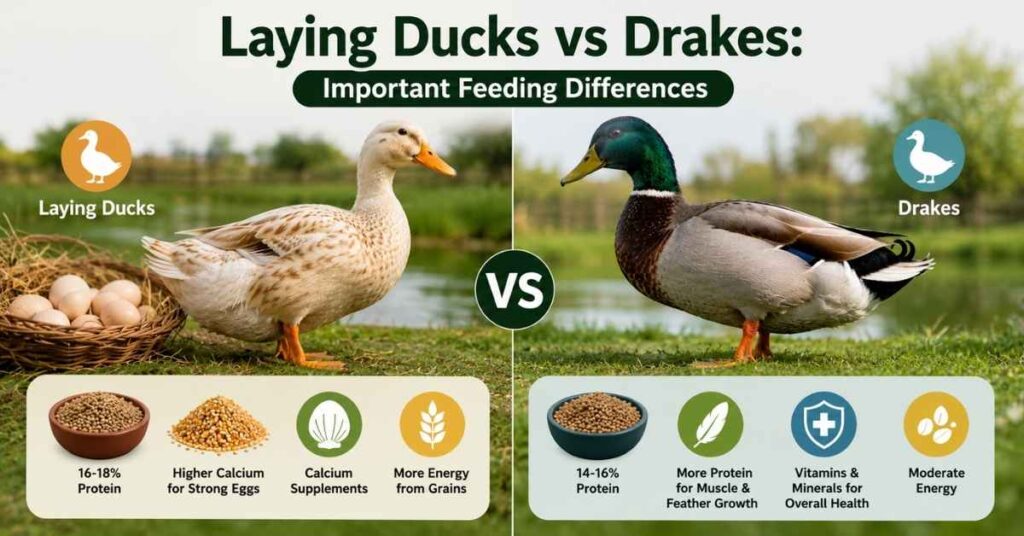
Not all ducks need identical nutrition.
Laying Ducks
Laying ducks benefit from additional calcium during egg production because calcium supports:
- eggshell strength
- bone health
- reproductive health
Adult laying ducks may tolerate layer feed better than drakes.
Drakes
Drakes do not produce eggs, so excess calcium serves little purpose nutritionally.
This creates higher risk of:
- calcium accumulation
- kidney strain
- urinary system stress
The same feed that helps a laying duck may become harmful for a drake over time.
Can Ducks Eat Chicken Layer Pellets Every Day?
Technically yes, but daily feeding is not ideal long term.
Ducks fed layer pellets exclusively may experience:
- nutritional imbalance
- poor waterfowl nutrition diversity
- excess calcium intake
- vitamin deficiencies
- improper protein balance
Ducks naturally thrive on more varied nutrition including:
- aquatic plants
- forage
- insects
- grains
- greens
Chicken feed lacks some of the diversity ducks naturally need.
Chicken Layer Feed vs Duck Feed
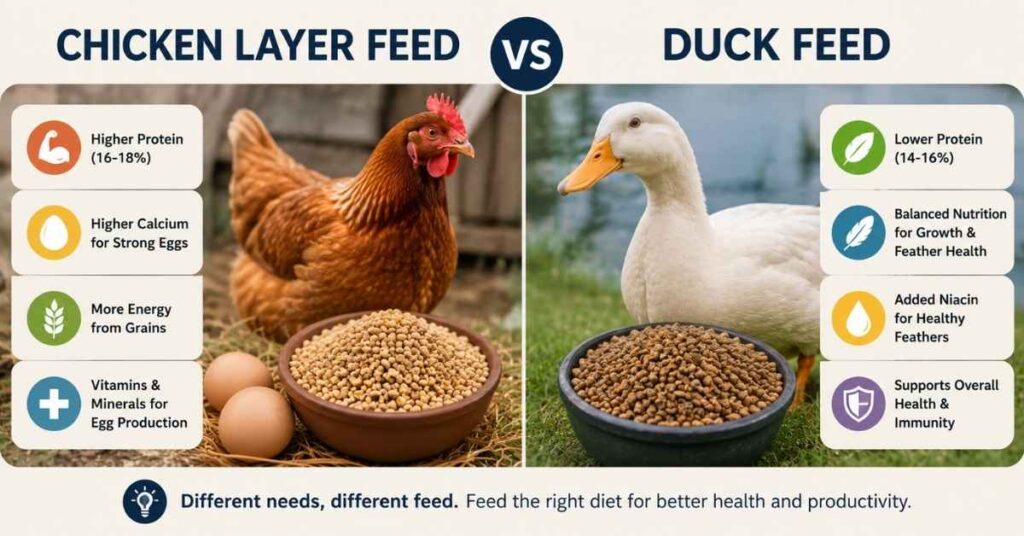
Duck feed is formulated specifically for waterfowl nutrition.
Key Differences Between Duck Feed and Layer Feed
| Feed Type | Protein % | Calcium Level | Best Use |
|---|---|---|---|
| Chicken layer pellets | 16%–20% | High | Egg-laying hens |
| Flock raiser feed | 16%–20% | Lower | Mixed flocks |
| Waterfowl feed | Species-balanced | Moderate | Ducks |
| Grower feed | 14%–16% | Lower | Young birds |
Duck feed usually contains:
- more balanced waterfowl nutrients
- better niacin support
- safer calcium levels
- healthier nutrient ratios
This makes it better for long-term feeding.
Flock Raiser Feed: A Better Option for Mixed Flocks?
Many experienced backyard poultry owners prefer flock raiser feed for mixed flocks.
Why?
Because it contains:
- balanced protein
- lower calcium
- safer nutrient ratios for multiple poultry species
Instead of feeding high-calcium layer pellets to every bird, flock raiser feed allows:
- ducks
- chickens
- drakes
- young birds
to share one safer feed source.
Free-Choice Oyster Shell Strategy
Many flock owners use:
- flock raiser feed as the base feed
- oyster shell separately for laying hens
This allows layers to consume extra calcium only when needed.
It is one of the safest mixed-flock feeding systems available.
Practical Feeding Methods
Separate Feeding Stations
Different feeders prevent ducks from overeating layer pellets.
Timed Feeding
Allow hens access to layer pellets briefly while ducks eat alternative feed.
Free-Range Feeding
Natural foraging helps diversify duck nutrition.
Feed Separation Systems
Some owners place chicken feeders in elevated areas ducks cannot easily reach.
These systems reduce calcium overload risks significantly.
What Happens If Ducks Eat Too Much Calcium?
Long-term calcium excess may contribute to several health concerns.
Possible Problems
| Health Issue | Possible Cause |
|---|---|
| Kidney strain | Chronic calcium overload |
| Urinary stress | Mineral imbalance |
| Weak growth | Nutritional deficiencies |
| Poor feather quality | Imbalanced nutrition |
| Reduced mobility | Developmental problems |
| Soft-shelled eggs | Incorrect mineral balance |
The risk increases when ducks eat high-calcium feed daily for extended periods.
Signs Your Ducks Are Not Getting Proper Nutrition
Nutritional problems often appear gradually.
Warning Signs
- Weak legs
- Poor feather condition
- Lethargy
- Weight problems
- Reduced egg quality
- Abnormal growth
- Low activity
- Skeletal weakness
Ducklings are especially vulnerable during rapid growth phases.
Can Ducks Survive on Chicken Feed Alone?
Ducks may survive on chicken feed short term, but survival is not the same as optimal health.
A duck surviving on layer pellets alone may still develop:
- vitamin deficiencies
- poor growth
- calcium stress
- nutritional imbalance
Ducks thrive best when their diet includes:
- species-appropriate feed
- greens
- forage
- insects
- varied nutrients
Better Alternatives to Chicken Layer Pellets for Ducks
Several safer options exist.
Best Feed Options for Ducks
| Feed Type | Best For | Main Advantage |
|---|---|---|
| Waterfowl feed | Everyday duck nutrition | Species-balanced |
| Flock raiser feed | Mixed flocks | Lower calcium |
| Grower feed | Young ducks | Balanced growth |
| Non-medicated poultry feed | Flexible feeding | Safer ingredients |
| Duck pellets | Backyard ducks | Better nutrient ratios |
Many poultry owners combine quality feed with:
- leafy greens
- peas
- oats
- mealworms
- natural forage
for better nutritional diversity.
Common Feeding Mistakes Backyard Poultry Owners Make
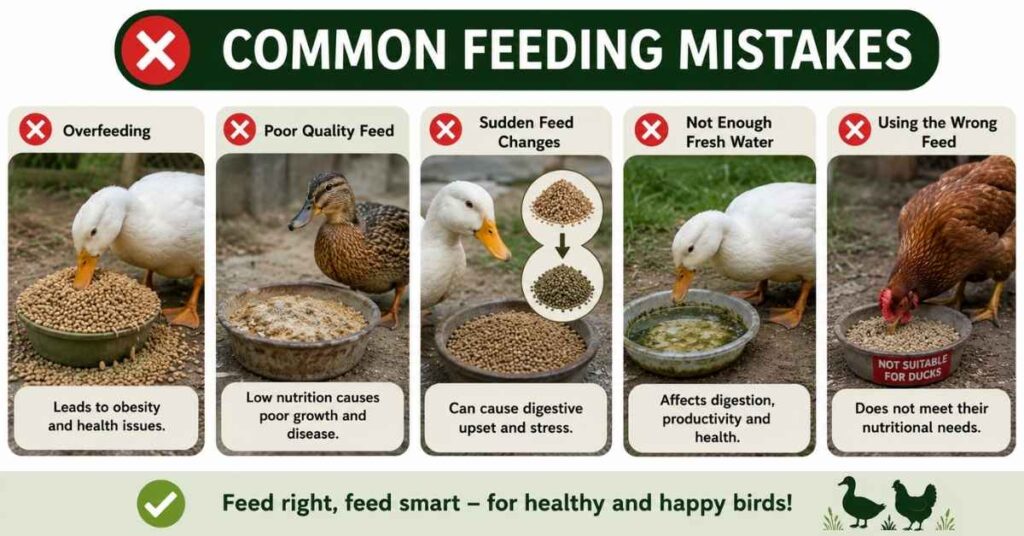
Many flock problems start with simple misunderstandings.
Common Mistakes
- Feeding one feed to every bird
- Ignoring niacin requirements
- Overfeeding high-calcium layer pellets
- Feeding ducklings chicken layer feed
- Assuming ducks and chickens need identical nutrition
- Not offering free-choice calcium separately
These mistakes are extremely common in beginner mixed flocks.
Why Waterfowl Nutrition Is More Complex Than Chicken Nutrition
Ducks are not simply “water chickens.”
Waterfowl nutrition differs significantly because ducks:
- grow differently
- metabolize nutrients differently
- require more niacin
- forage naturally
- consume more water
This is why species-specific feeding matters long term.
Experienced poultry keepers often notice healthier ducks when:
- feed variety increases
- calcium is controlled
- natural forage is encouraged
Myths About Ducks and Chicken Feed
“Chicken Feed Works for All Poultry”
Different poultry species have different nutritional requirements.
“Drakes Can Handle High Calcium”
Long-term calcium overload may stress male ducks significantly.
“Layer Pellets Are Fine for Ducklings”
Ducklings usually need lower calcium and higher niacin support.
“One Feed Always Works Best”
Convenience feeding often sacrifices nutritional optimization.
LEARN MORE: Can Ducks Eat Corn on the Cob?
Best Feed Types for Ducks Ranked
| Feed Type | Nutrition Score | Risk Level | Best Use |
|---|---|---|---|
| Waterfowl feed | Excellent | Low | Best long-term choice |
| Flock raiser feed | Very good | Low | Mixed flocks |
| Grower feed | Good | Low | Young ducks |
| Chicken layer pellets | Moderate | Medium | Occasional feeding |
| Medicated chick feed | Poor | High | Usually avoid |
Real Backyard Flock Scenarios
Small Mixed Flock Setup
A small backyard flock with:
- laying hens
- ducks
- drakes
often performs best with flock raiser feed plus free-choice oyster shell.
Emergency Feed Shortages
If ducks temporarily eat chicken layer pellets during shortages, it is usually not catastrophic.
The real concern is prolonged exclusive feeding.
Free-Range Systems
Free-range ducks naturally supplement nutrition through:
- insects
- grass
- aquatic plants
- forage behavior
This reduces dependence on formulated feed alone.
Frequently Asked Questions
Can ducks safely eat chicken layer pellets?
Yes, occasional feeding is usually safe for adult ducks.
Can drakes eat layer feed?
Drakes can eat small amounts occasionally, but long-term feeding may increase calcium-related risks.
Can ducklings eat chicken pellets?
Ducklings should ideally eat duck starter feed with proper niacin support.
What happens if ducks eat too much calcium?
Excess calcium may contribute to kidney strain, urinary stress, and nutritional imbalance.
Is flock raiser feed better for ducks?
Yes, many poultry keepers prefer flock raiser feed because it contains lower calcium levels.
Do ducks need more niacin than chickens?
Yes. Ducks require significantly more niacin during growth.
Final Thoughts
Can ducks eat chicken layer pellets? Yes, but the answer depends heavily on:
- the duck’s age
- sex
- laying status
- feeding frequency
- overall diet balance
Occasional access to layer feed is usually manageable for healthy adult ducks. The bigger issue is long-term dependence on feed designed specifically for laying hens.
If you raise ducks and chickens together, the safest approach is usually:
- flock raiser feed
- waterfowl feed
- free-choice oyster shell for layers
- balanced mixed-flock feeding systems
Proper nutrition today prevents serious flock health problems later.