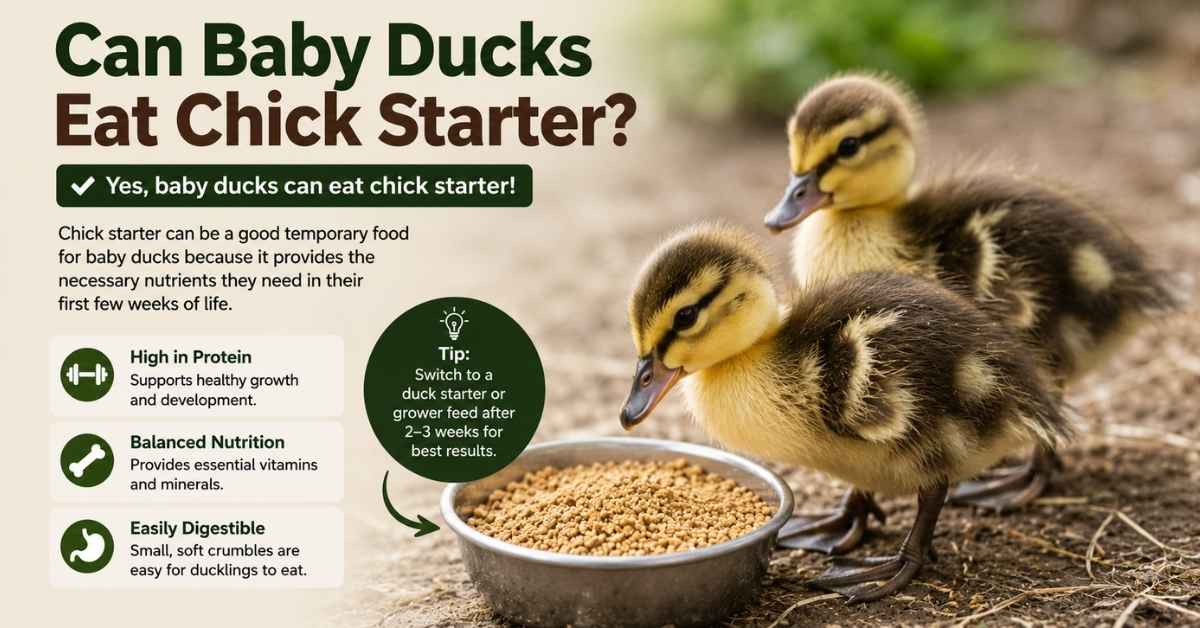
Can baby ducks eat chick starter? Yes, they can, and plenty of backyard duck keepers raise healthy ducklings on chick starter every year. The problem is that most articles stop there, which is where the confusion begins.
Ducklings are not simply “wet chickens.” They grow differently, process nutrients differently, and develop leg problems surprisingly fast when their diet misses key nutrients. Chick starter can work well, but only when you understand what ducklings actually need beyond basic starter feed.
For most people, the safest setup is non-medicated chick starter combined with extra niacin. If chick starter is all you currently have, don’t panic. A short-term feeding mistake rarely causes disaster overnight. Long-term nutritional imbalance is what creates problems.
Quick Answer – Can Baby Ducks Eat Chick Starter?
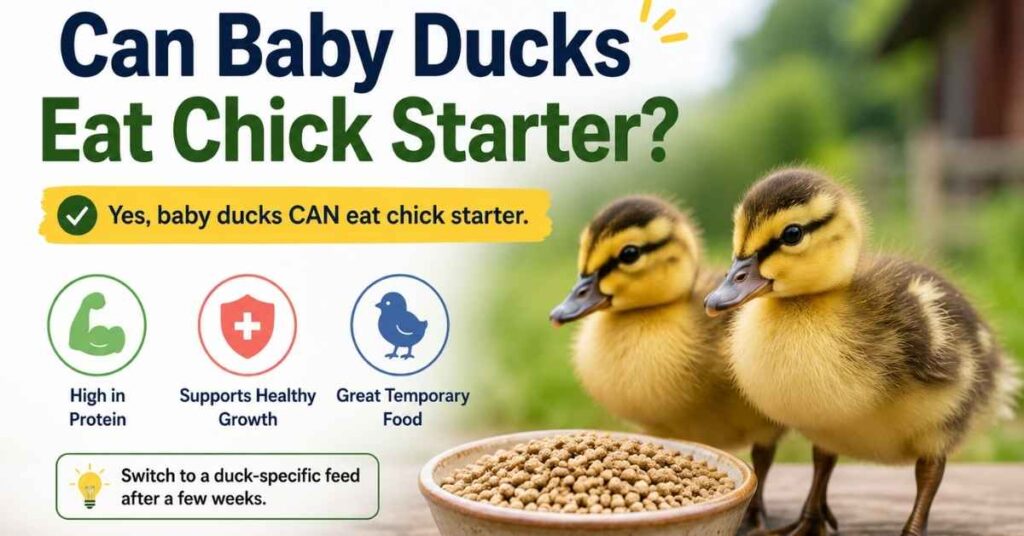
Can Baby ducks can eat chick starter, especially non-medicated starter crumbles with added niacin support like brewer’s yeast. Ducklings need significantly more niacin than chicks for healthy leg and bone development, which is why regular chick feed alone may not fully support growing ducks over time.
If you already bought chick starter, you probably do not need to throw it away. Most beginner duck owners successfully use chick starter temporarily or even long-term with proper supplementation.
Baby Ducks and Chick Starter: Why This Topic Confuses So Many People
Spend ten minutes reading poultry forums and you will see completely opposite advice.
One person says chick starter nearly crippled their ducklings. Another says they have raised ducks on chick starter for years without issues. Feed store employees often recommend one thing while hatcheries recommend another. That contradiction is usually what sends people searching online at midnight after bringing home ducklings.
Part of the confusion comes from how poultry feed is marketed. The word “starter” sounds universal, as though all baby poultry require the same nutrition. They do not.
Ducklings grow extremely fast during the first few weeks of life. Their bones, joints, and nervous system place higher demands on vitamin B3, better known as niacin. Chick starter was designed for chickens, not waterfowl. That distinction matters more than most new owners realize.
Another issue is that many articles oversimplify the conversation into “safe” versus “unsafe.” Feeding ducklings is rarely that black and white. A duckling raised temporarily on chick starter with proper niacin supplementation is very different from a duckling eating low-quality starter feed for weeks without nutritional support.
Can Baby Ducks Eat Chick Starter Long-Term?
Short-term use is usually not the real concern.
If you just brought home ducklings and chick starter is all you could find locally, that situation is common. Many farm stores stock chicken feed far more consistently than waterfowl starter. Ducklings generally tolerate chick starter well in the beginning, particularly non-medicated crumble feed.
The problems usually appear later when nutritional gaps continue for too long.
Ducklings raised exclusively on unsupplemented chick starter may eventually develop:
- weak legs
- difficulty walking
- poor posture
- slower growth
- mobility issues
Some ducks compensate surprisingly well. Others decline quickly. Genetics, feed quality, protein levels, and niacin intake all influence the outcome.
Most experienced duck keepers either:
- add brewer’s yeast to chick starter
- use flock raiser feed
- transition to waterfowl feed when possible
That middle-ground approach works far better than the extreme opinions often found online.
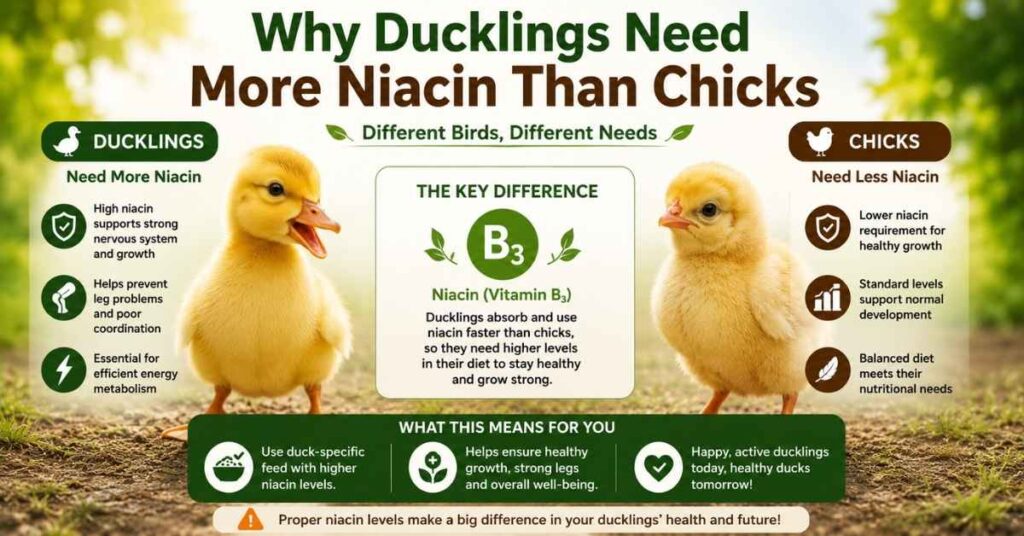
Why Ducklings Need More Niacin Than Chicks
Niacin is the detail most articles mention without fully explaining.
Ducklings need higher levels of vitamin B3 because their bodies develop rapidly, especially their legs and joints. Niacin supports:
- bone growth
- nerve function
- joint development
- energy metabolism
Chicks can produce some niacin internally. Ducks are much less efficient at doing that.
A niacin-deficient duckling often starts showing subtle symptoms first. Owners usually notice:
- wobbling
- difficulty standing
- sitting more often
- shaky walking
- legs turning outward
People sometimes assume the duckling injured itself. Nutritional deficiency is often the actual cause.
Severe deficiency can create permanent mobility problems if ignored long enough. The earlier the issue is corrected, the better the recovery chances tend to be.
One reason duck owners become alarmed online is because leg weakness in ducklings can progress surprisingly fast. Reading worst-case stories without context creates panic. Yet many of those situations developed after prolonged nutritional imbalance, not after feeding chick starter for two days.
Medicated vs Non-Medicated Chick Starter for Ducklings
This is where internet arguments usually explode.
Medicated chick starter contains amprolium, which helps prevent coccidiosis in chicks. People often describe medicated feed as “toxic” for ducklings, though the reality is more nuanced than that.
Amprolium itself is not automatically poisonous to ducks. The concern is that it may interfere with niacin utilization, which ducklings already require in larger amounts.
That is why many experienced duck keepers prefer non-medicated chick starter whenever possible. It reduces complications and simplifies supplementation.
Still, temporary use of medicated feed is not usually catastrophic if no alternatives exist. Plenty of ducklings have been raised successfully on medicated starter with extra niacin support. The internet often turns feeding discussions into absolutes when practical poultry care rarely works that way.
If you have a choice, non-medicated crumble starter remains the safer and simpler option for beginners.
The Best Type of Chick Starter for Baby Ducks
Not all chick starter is equal.
Texture matters more than people expect. Ducklings generally do best with starter crumbles because:
- they are easier to eat
- they reduce waste
- they soften well with water
- they support early digestion better than pellets
Protein levels also matter.
Very high protein diets can contribute to excessively rapid growth in ducks, which raises concerns about angel wing. Most duck keepers aim for moderate starter protein rather than extremely high-performance chicken feed formulas.
Feed labels deserve more attention than brand names.
A good starter feed for ducklings should avoid:
- excessive calcium
- poor filler ingredients
- overly aggressive protein formulas
- unclear nutrient information
Many beginners focus entirely on whether the bag says “duck” or “chick.” The actual nutritional profile matters far more.
How to Add Niacin Without Complicating Everything
This part scares people unnecessarily.
You do not need a chemistry degree to supplement niacin correctly.
Brewer’s yeast is one of the most common solutions because it naturally contains niacin and mixes easily into feed. Many duck owners simply sprinkle it over starter crumbles daily.
That approach became popular for a reason: it is practical.
Some people use poultry vitamin supplements instead. Others prefer nutritional yeast or dedicated vitamin B3 supplements. The exact method matters less than consistency.
A duckling receiving enough niacin usually shows:
- stronger walking
- better balance
- improved activity
- steadier growth
The dramatic before-and-after stories you sometimes see online are often linked to correcting previously overlooked deficiencies.
What Experienced Duck Keepers Actually Feed
This is where real-world poultry keeping differs from idealized internet advice.
Many experienced keepers do not buy separate duck starter feed at all. Availability can be inconsistent, especially in smaller towns. Some feeds marketed for ducks are also surprisingly expensive compared to flock raiser systems.
Common setups include:
- non-medicated chick starter plus brewer’s yeast
- flock raiser feed for mixed poultry
- waterfowl starter when locally available
People raising ducks and chicks together often prioritize practicality. Maintaining separate feeding systems for small backyard flocks is not always realistic.
What matters most is whether the nutritional gaps are being addressed.
Experienced keepers tend to focus less on labels and more on outcomes:
- strong legs
- steady growth
- healthy feather development
- active behavior
That perspective usually develops after raising multiple flocks over time.
If Chick Starter Is All You Have Tonight
This scenario happens constantly.
Someone brings home ducklings unexpectedly or the farm store runs out of duck feed. Then panic sets in after reading dramatic online warnings.
If chick starter is all you currently have, feed the ducklings.
Going without food is worse than temporary use of starter feed. The immediate priority is keeping young ducklings eating and hydrated.
Then:
- switch to non-medicated feed if possible
- add niacin support
- monitor leg strength
- provide constant clean water
Nutritional issues generally develop through prolonged imbalance, not a single evening of imperfect feeding.
Signs Your Ducklings Are Thriving
Healthy ducklings are usually easy to recognize.
They move constantly. They explore everything. They walk steadily, eat aggressively, and grow fast enough that owners often notice changes almost daily during the first weeks.
Good signs include:
- strong appetite
- upright posture
- smooth walking
- active social behavior
- steady feather development
Warning signs deserve quick attention.
Watch for:
- limping
- shaking legs
- sitting excessively
- swollen joints
- twisted posture
- inability to keep balance
Young ducklings decline faster than many people expect once nutritional problems progress.
Feeding Mistakes That Cause Problems
One of the biggest mistakes is feeding layer feed too early.
Layer feed contains far too much calcium for growing ducklings. Excess calcium can damage developing kidneys and create serious health issues.
Another common mistake is overfeeding high-protein diets for long periods. Fast growth sounds beneficial until wing deformities like angel wing begin appearing.
People also underestimate how important water access is during feeding. Ducks eat differently than chickens. They need water nearby to help swallow food properly and keep nasal passages clear.
Small husbandry details matter more than expensive specialty feeds in many cases.
Learn more: Can Ducks Eat the Same Food as Chickens?
Chick Starter vs Duck Starter Feed
Duck starter feed usually contains:
- more niacin
- waterfowl-focused nutrition
- balanced protein for ducks
- fewer supplementation concerns
That convenience makes it appealing.
Still, quality duck feed is not always easy to find. Many backyard keepers end up using chick starter because local feed stores simply stock more chicken products.
Flock raiser feed has also become popular for mixed flocks because it simplifies management while avoiding some of the calcium problems found in layer feed.
The “best” feed often depends on:
- flock setup
- local availability
- budget
- owner experience
- supplementation consistency
There is no universal solution that fits every flock.
The Truth About Angel Wing
Angel wing gets blamed on almost everything online.
In reality, it is usually connected to excessively rapid growth and nutritional imbalance. Wings twist outward as developing feathers and bones grow improperly.
High-protein diets can contribute to the issue, particularly in fast-growing breeds.
People sometimes overcorrect after reading alarming advice and swing too far in the opposite direction by restricting nutrition excessively. Balanced feeding matters more than obsessing over single ingredients.
Moderation usually prevents most problems.
Beginner Duck Feeding Schedule by Age
During the first couple of weeks, ducklings typically thrive on starter crumble with niacin support and constant fresh water.
As growth accelerates, many owners transition toward flock raiser or balanced grower feed depending on flock setup.
Older ducklings generally tolerate more dietary flexibility once leg development stabilizes and growth slows slightly.
Watching the birds themselves often tells you more than rigid feeding charts. Strong movement, healthy posture, and consistent growth usually indicate the diet is working.
Frequently Asked Questions About Can Baby Ducks Eat Chick Starter
Can ducklings survive on chick starter alone?
Some can, especially short-term, but long-term use without extra niacin increases the risk of leg and growth problems.
Is medicated chick starter bad for ducks?
Non-medicated starter is usually preferred, though temporary medicated feed use is not automatically dangerous when niacin support is provided.
Do ducklings really need brewer’s yeast?
Not necessarily, but brewer’s yeast is one of the easiest ways to increase niacin intake when using chick starter.
Can ducks and chicks eat the same feed forever?
Mixed flocks often use flock raiser feed successfully, though nutritional balance still matters for both species.
What is the best feed for baby ducks?
Waterfowl starter is ideal when available, but quality non-medicated chick starter with niacin support works well for many backyard duck owners.
Can niacin deficiency be reversed?
Mild cases often improve significantly when corrected early. Severe deficiencies may leave lasting mobility problems.
Final Thoughts
Most duck feeding problems come from oversimplification.
People search for a strict yes-or-no answer when duck nutrition is far more practical than that. Chick starter itself is not automatically harmful. The real issue is whether ducklings receive the nutrients they need while growing at an incredibly fast pace.
Healthy ducklings usually tell you when things are going right. They move confidently, stay active, and grow steadily. Careful observation matters just as much as the feed bag sitting in the barn.