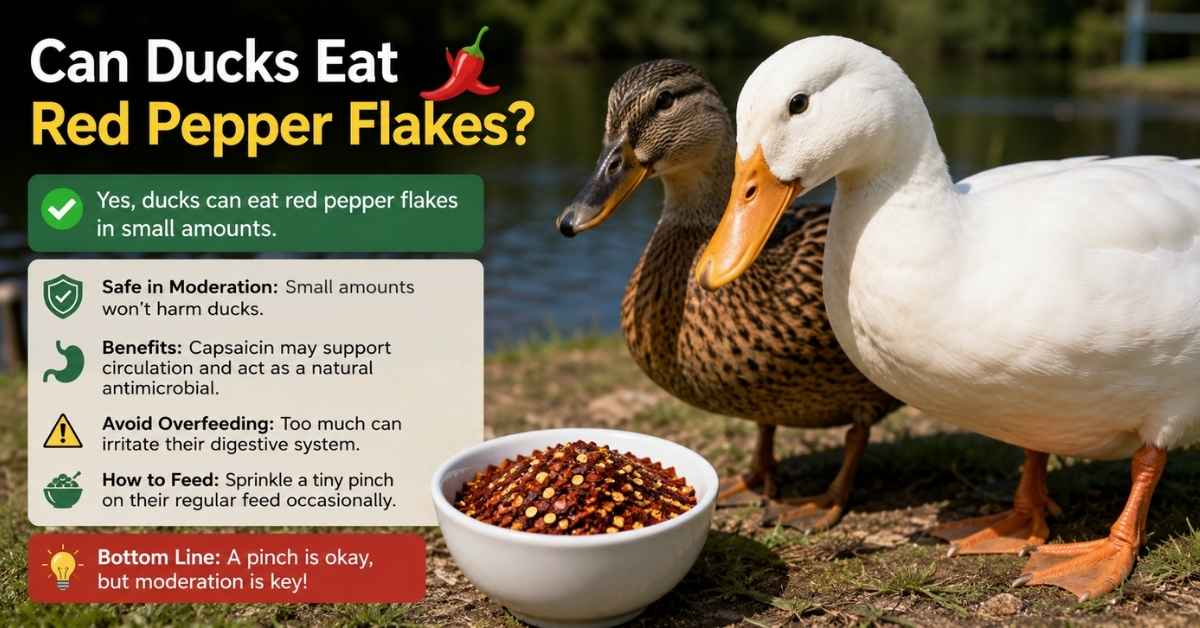
Can ducks eat red pepper flakes? Yes, ducks can eat small amounts of red pepper flakes occasionally, but they should only be offered in moderation. Birds are naturally less sensitive to capsaicin, the compound that makes peppers spicy, than mammals are. However, feeding too many spicy foods may still irritate a duck’s digestive system, especially in young ducklings. Plain crushed red pepper flakes without salt, garlic, onion powder, or artificial additives are the safest option.
Many backyard poultry owners use red pepper flakes for ducks as an occasional treat or even as a natural rodent deterrent around poultry feed. Still, ducks thrive best on a balanced diet made primarily from quality duck pellets, grains, greens, and healthy treats.
In this guide, you’ll learn whether red pepper flakes are safe for ducks, the possible benefits and risks, how much ducks can eat, and which spicy foods should be avoided.
Quick Answer: Can Ducks Safely Eat Red Pepper Flakes?
Here’s the short answer:
| Question | Answer |
|---|---|
| Can ducks eat red pepper flakes? | Yes, in tiny amounts |
| Are red pepper flakes toxic to ducks? | No, plain flakes are not toxic |
| Can ducks taste spicy food? | Birds react differently to capsaicin |
| Should ducks eat spicy foods daily? | No |
| Are seasoned pepper blends safe? | Usually not |
| Can ducklings eat red pepper flakes? | Not recommended |
The key is moderation. While ducks can tolerate spicy peppers better than mammals, excessive spicy foods may still lead to digestive irritation, dehydration, or reduced appetite.
Important: Treats should make up less than 10% of a duck’s total diet.
What Are Red Pepper Flakes?
Red pepper flakes are dried and crushed chili peppers commonly used in human foods. They contain capsaicin compounds, which create the spicy sensation mammals feel when eating hot peppers.
How Red Pepper Flakes Are Made
Most crushed red pepper blends contain:
- Dried chili peppers
- Pepper seeds
- Capsaicin oils
- Occasionally salt or additives
Plain chili flakes are safer for poultry than heavily seasoned spice blends.
Nutrients Found in Red Pepper Flakes
Although ducks do not need spicy foods for nutrition, red pepper flakes contain small amounts of:
| Nutrient | Potential Benefit |
|---|---|
| Vitamin A | Supports eye and immune health |
| Antioxidants | Help fight oxidative stress |
| Capsaicin | Natural plant compound |
| Trace minerals | Minor nutritional support |
Still, ducks get far better nutrition from vegetables, greens, and balanced poultry feed.
Why Ducks React Differently to Spicy Foods
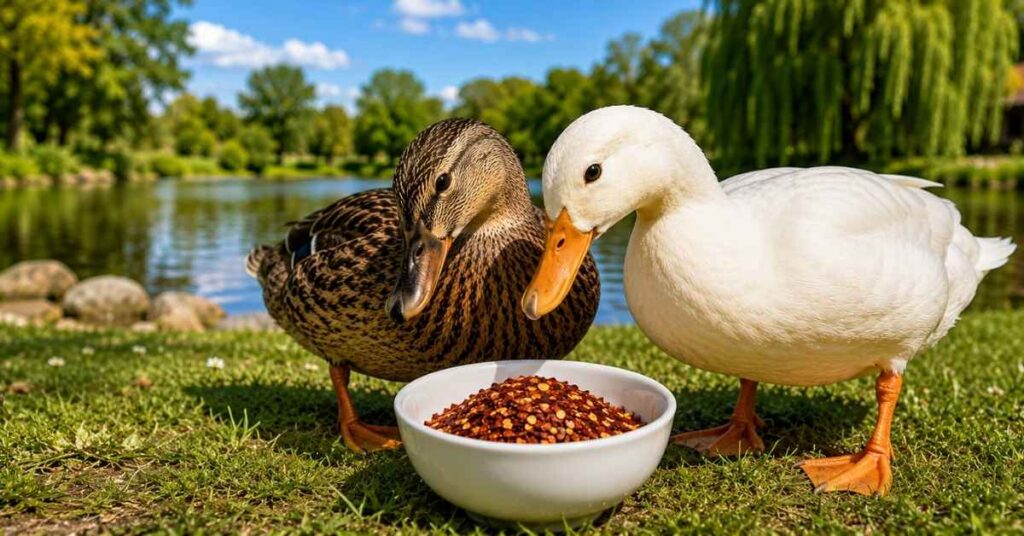
One reason this topic confuses poultry owners is because birds process spicy foods differently than humans.
Can Ducks Taste Spiciness?
Ducks and many other birds lack the same capsaicin-sensitive receptors mammals have. Humans feel burning heat from spicy peppers because capsaicin activates pain receptors in the mouth. Birds react much less intensely.
That’s why many birds can eat chili peppers without obvious discomfort.
What Is Capsaicin?
Capsaicin is the active compound found in:
- Chili peppers
- Cayenne pepper
- Crushed red pepper
- Jalapeños
- Hot peppers
It naturally deters mammals like squirrels and rodents but affects birds differently.
Do Ducks Feel Heat From Peppers?
Ducks may not experience spice exactly like humans do, but that does not mean spicy foods are completely harmless. Large quantities can still upset the avian digestive system and affect hydration levels.
Are Red Pepper Flakes Good for Ducks?
Red pepper flakes are not a necessary part of a duck diet, but tiny amounts may provide minor benefits.
Possible Benefits of Small Amounts
Some backyard poultry keepers believe red pepper flakes may help:
- Support circulation during cold weather
- Provide antioxidants
- Add variety to duck treats
- Discourage rodents from duck feed
There is limited scientific evidence supporting major health benefits, though.
Why Red Pepper Flakes Should Still Be Limited
Even though ducks tolerate capsaicin better than mammals:
- Spicy foods are not nutritionally essential
- Overfeeding may cause digestive upset
- Some ducks may be more sensitive than others
- Seasoned blends may contain harmful additives
A duck’s primary nutrition should always come from:
- Duck pellets
- Whole grains
- Vegetables
- Healthy protein sources
Risks of Feeding Red Pepper Flakes to Ducks
This is where many competitors fail to provide enough detail. Understanding the risks helps create safer feeding habits.
Digestive Irritation
Too many red pepper flakes may irritate a duck’s stomach and digestive tract.
Possible signs include:
- Loose droppings
- Reduced appetite
- Increased thirst
- Mild digestive stress
Dehydration Risk
Spicy foods can increase water consumption. Ducks always need access to clean fresh water, especially after eating treats or dry foods.
Hydration is critical for:
- Digestion
- Temperature regulation
- Nutrient absorption
Sodium and Seasoning Dangers
Many store-bought pepper blends contain:
- Garlic powder
- Onion powder
- Excess sodium
- Artificial preservatives
These ingredients can be harmful to poultry.
Never feed ducks heavily seasoned human snack foods.
Overfeeding Risks
Too many treats can interfere with proper flock nutrition. Ducks that fill up on snacks may eat less balanced poultry feed, leading to nutrient deficiencies over time.
Can Ducklings Eat Red Pepper Flakes?
It is best to avoid feeding spicy foods to ducklings.
Young ducks have:
- More sensitive digestive systems
- Smaller nutrient reserves
- Greater hydration needs
Ducklings thrive on:
- Starter feed
- Finely chopped greens
- Oats
- Peas
- Soft vegetables
Even if adult ducks tolerate capsaicin, ducklings may struggle with spicy additives.
How Much Red Pepper Flakes Can Ducks Eat?
Safe Serving Size
A tiny sprinkle mixed into regular feed is enough. Ducks should never consume large amounts of crushed red pepper.
| Duck Size | Suggested Amount |
|---|---|
| Ducklings | Avoid |
| Small ducks | Tiny pinch occasionally |
| Adult ducks | Small sprinkle rarely |
How Often Can Ducks Eat Them?
Red pepper flakes should only be an occasional treat.
Safe frequency:
- Once every few weeks
- Rare winter treat
- Small amounts only
Daily feeding is unnecessary.
Signs You Fed Too Much
Watch for:
- Diarrhea
- Excessive thirst
- Refusal to eat
- Lethargy
- Digestive discomfort
If symptoms appear, discontinue spicy foods immediately.
Best Ways to Feed Red Pepper Flakes to Ducks
Mixing With Regular Feed
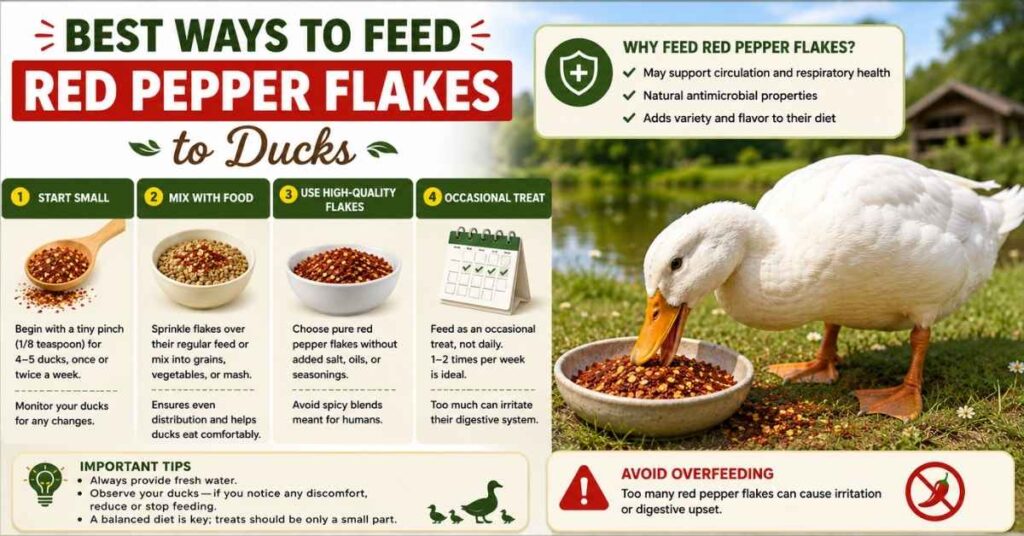
Some poultry owners lightly sprinkle pepper flakes into:
- Duck pellets
- Mixed grains
- Vegetable blends
This reduces concentrated spice exposure.
Feeding Fresh Peppers Instead
Fresh peppers are usually a better option than dried flakes.
Safer pepper choices include:
- Bell peppers
- Sweet peppers
- Mild chili peppers
Bell peppers are especially good because they contain:
- Vitamin A
- Fiber
- Moisture
- Antioxidants
without intense heat.
Foods to Combine With Pepper Flakes
Healthier combinations include:
- Corn
- Peas
- Oats
- Cucumbers
- Lettuce
- Kale
These foods support a more balanced duck diet.
Can Red Pepper Flakes Help During Winter?
Some poultry keepers believe spicy peppers improve circulation during winter months.
Winter Feeding Myths Explained
There is limited evidence showing pepper flakes significantly warm ducks. Ducks naturally tolerate cold weather well when they have:
- Dry shelter
- Proper bedding
- Clean water
- Balanced nutrition
Do Pepper Flakes Actually Keep Ducks Warm?
Red pepper flakes are not a replacement for proper winter care. Good flock management matters far more than spicy treats.
Focus on:
- Insulated shelter
- Dry environments
- Extra calories during winter
- Fresh unfrozen water
Red Pepper Flakes as a Pest Deterrent Around Duck Feed
This topic appeared frequently across competitor discussions.
Can Pepper Keep Rats and Squirrels Away?
Capsaicin strongly irritates many mammals, including:
- Rats
- Squirrels
- Rodents
Because birds tolerate capsaicin better, some backyard poultry owners add cayenne pepper near feed areas.
Is It Safe Around Ducks?
Small amounts are generally tolerated, but excessive exposure is unnecessary.
Avoid:
- Large piles of pepper
- Strong spice concentrations
- Direct inhalation exposure
Red Pepper Flakes vs Other Peppers for Ducks
| Pepper Type | Safe for Ducks? | Notes |
|---|---|---|
| Bell peppers | Yes | Best overall option |
| Sweet peppers | Yes | Nutritious and mild |
| Jalapeños | Limited | Mild spice |
| Cayenne pepper | Small amounts | Stronger capsaicin |
| Chili flakes | Occasionally | Use carefully |
| Black pepper | Limited | Avoid excess |
Bell peppers remain the safest and healthiest pepper choice for ducks.
Learn More: Can Baby Ducks Eat Chick Starter?
Foods Ducks Should Never Eat
Not all human foods are safe for poultry.
Toxic or Unsafe Foods
Avoid feeding ducks:
- Chocolate
- Avocado
- Moldy bread
- Excess salt
- Processed junk food
- Onion-heavy seasonings
- Garlic-heavy spice blends
Why Balanced Nutrition Matters
A healthy duck diet should center around:
- Poultry feed
- Greens
- Grains
- Protein-rich treats
- Fresh water
Treat foods should always remain supplemental.
Healthier Alternatives to Red Pepper Flakes
There are many healthier duck treats with better nutritional value.
Best Vegetables for Ducks
Excellent options include:
- Lettuce
- Kale
- Peas
- Cucumbers
- Zucchini
- Corn
Healthy Protein Treats
Ducks also enjoy:
- Mealworms
- Scrambled eggs
- Small fish
- Insects
Safer Natural Supplements
Better natural additions include:
- Herbs
- Greens
- Seeds
- Vegetable scraps
These provide nutrients without digestive irritation risks.
Common Mistakes Duck Owners Make
Feeding Too Many Treats
Overfeeding treats can unbalance flock nutrition quickly.
Using Heavily Seasoned Foods
Human foods often contain dangerous additives for poultry.
Ignoring Water Intake
Ducks need constant hydration, especially after eating dry or spicy foods.
Feeding Processed Snack Foods
Chips, spicy snacks, and heavily salted foods should never be given to ducks.
Expert Tips for Feeding Ducks Safely
Follow these simple poultry feeding guidelines:
| Tip | Why It Matters |
|---|---|
| Introduce foods slowly | Prevent digestive upset |
| Keep treats under 10% | Maintain balanced nutrition |
| Always provide fresh water | Supports digestion |
| Avoid processed seasonings | Reduces toxicity risks |
| Monitor droppings | Detect feeding problems early |
A balanced diet matters far more than trendy treats or supplements.
Frequently Asked Questions
Can ducks taste spicy food?
Ducks react differently to spicy foods because birds are less sensitive to capsaicin than mammals.
Can ducks eat cayenne pepper?
Yes, adult ducks can tolerate tiny amounts occasionally, but moderation is important.
Are red pepper flakes toxic to ducks?
Plain red pepper flakes are not toxic in small amounts, but seasoned blends may contain harmful additives.
Can ducks eat hot sauce?
No. Most hot sauces contain salt, vinegar, garlic, onion powder, and preservatives unsuitable for poultry.
What happens if ducks eat too much spicy food?
Too much spicy food may cause digestive irritation, diarrhea, excessive thirst, or reduced appetite.
Can birds safely eat chili peppers?
Many birds tolerate chili peppers better than mammals because of their different capsaicin receptors.
Are pepper flakes healthier than fresh peppers?
Fresh bell peppers are healthier because they provide nutrients and hydration without concentrated spice.
Can ducks eat crushed red pepper daily?
No. Red pepper flakes should only be an occasional treat.
Conclusion
So, can ducks eat red pepper flakes? Yes, ducks can safely eat small amounts of red pepper flakes occasionally because birds tolerate capsaicin differently than mammals. However, spicy foods should never become a major part of a duck’s diet.
Too much crushed red pepper may still cause digestive irritation, dehydration, or feeding imbalance. Plain flakes without heavy seasoning are the safest option, while healthier treats like peas, greens, oats, and bell peppers remain better long-term choices.
For the healthiest flock, focus on:
- Balanced poultry nutrition
- Fresh water
- Proper duck feed
- Safe natural treats
- Moderation with spicy foods
That approach supports stronger, healthier backyard ducks year-round.