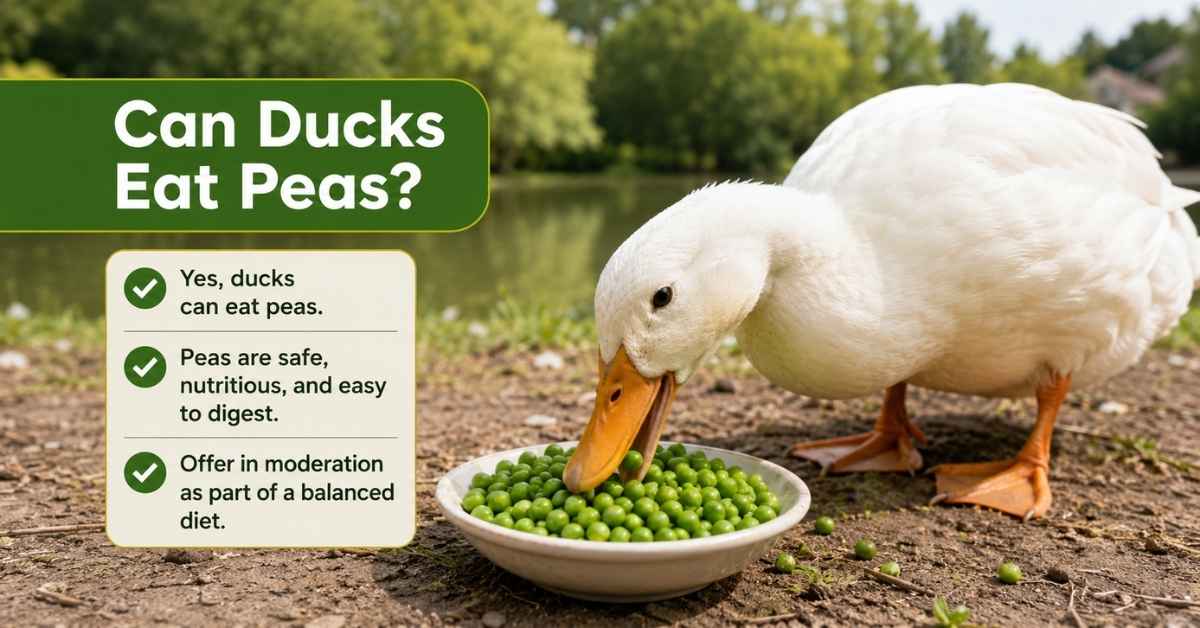
If you’ve ever fed ducks at a pond or cared for backyard ducks, you’ve probably wondered which foods are actually healthy for them. Many people know bread isn’t the best option, but what about vegetables? Can ducks eat peas? Yes, ducks can eat peas, and they are actually one of the healthiest treats you can offer. Peas provide essential vitamins, minerals, fiber, and plant-based protein that support a duck’s overall health.
In fact, peas are often recommended by poultry experts as a nutritious alternative to bread and processed snacks. This guide explains everything you need to know about feeding peas to ducks, including benefits, proper serving methods, age recommendations, and whether ducks can safely eat peas with other vegetables like corn and carrots.
Are Peas Good for Ducks?
Peas are more than just safe for ducks they’re highly nutritious.
Ducks naturally consume a variety of plant materials, seeds, aquatic vegetation, and insects. Peas fit well into this natural feeding pattern because they provide nutrients without excessive sugar, salt, or unhealthy fats.
Unlike processed foods, peas support healthy digestion and provide long-lasting energy.
Nutritional Benefits of Peas for Ducks
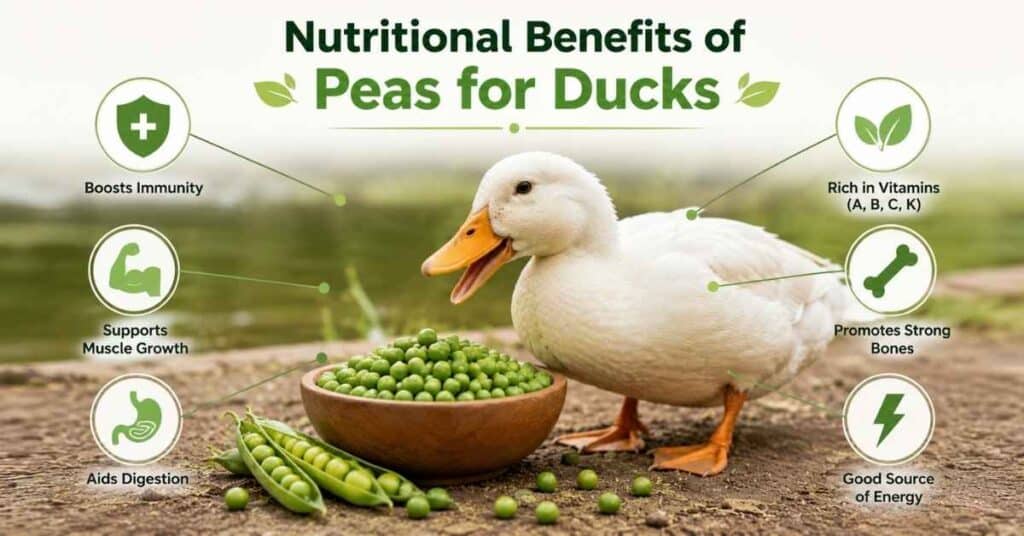
Peas contain several nutrients that benefit ducks:
- Protein for muscle growth
- Fiber for digestive health
- Vitamin A for vision and immunity
- Vitamin C for overall wellness
- Vitamin K for healthy blood clotting
- Potassium for muscle function
- Folate for growth and development
Because of these nutrients, peas are often considered one of the best treats for ducks.
Can Ducks Eat Frozen Peas?
Yes, ducks can eat frozen peas.
In fact, frozen peas are one of the most popular duck treats. Before feeding them, allow the peas to thaw completely.
Thawed peas are:
- Easy to swallow
- Soft enough for ducks to digest
- Convenient to store
- Available year-round
Avoid feeding frozen peas while they are still hard, especially to younger ducks.
Can Ducks Eat Fresh Peas?
Fresh peas are perfectly safe for ducks.
Whether they come from a garden or grocery store, fresh peas provide excellent nutrition and hydration.
You can offer:
- Garden peas
- Green peas
- English peas
- Sweet peas (the edible vegetable variety)
Wash fresh peas thoroughly before feeding them.
Can Ducks Eat Cooked Peas?
Yes, cooked peas are also safe.
If you cook peas, avoid adding:
- Salt
- Butter
- Oil
- Seasonings
- Garlic or onion powders
Plain cooked peas remain the healthiest choice.
What Age Can Ducks Eat Peas?
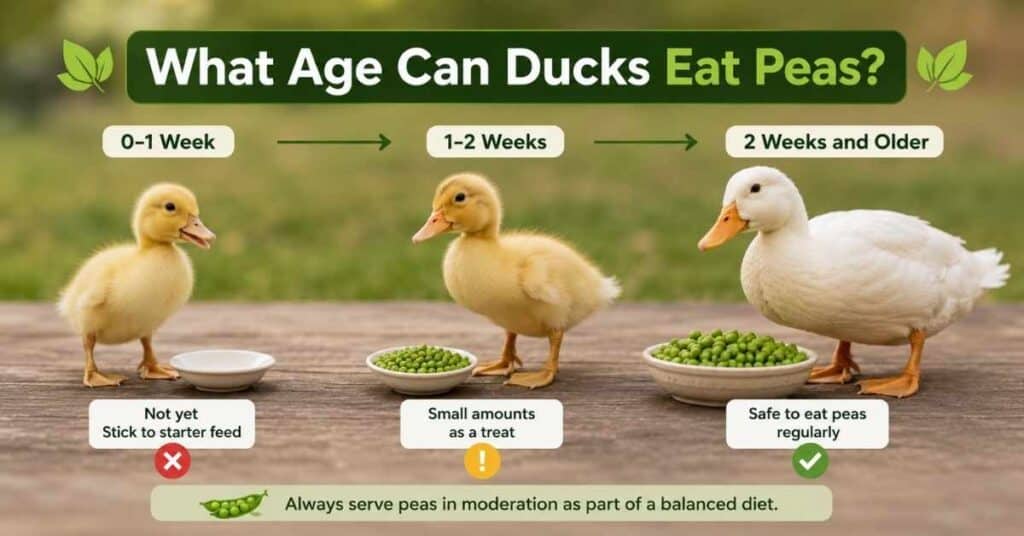
One of the most common questions new duck owners ask is what age can ducks eat peas?
Ducklings can usually start eating small amounts of peas once they are around 2 to 3 weeks old. At this stage, they can handle soft foods in addition to their starter feed.
However, peas should remain a treat rather than a replacement for nutritionally balanced duckling feed.
At What Age Can Ducks Eat Peas Safely?
If you’re wondering at what age can ducks eat peas, most experts recommend introducing peas after the first couple of weeks of life.
For young ducklings:
- Use thawed or cooked peas.
- Mash or chop them into smaller pieces.
- Feed only a small amount.
- Continue providing starter feed as the primary diet.
This approach ensures healthy growth and proper development.
When Can Ducks Eat Peas?
Another common question is when can ducks eat peas during the day or life stage.
Ducks can eat peas:
- As occasional treats throughout adulthood
- During warm or cold seasons
- Alongside other healthy vegetables
- After ducklings reach approximately 2–3 weeks of age
Peas work well as supplemental treats at any stage beyond early duckling development.
Can Ducks Eat Peas and Corn?
Yes, can ducks eat peas and corn is an easy question to answer. Ducks can safely eat both.
Peas and corn create a nutritious combination because they provide complementary nutrients.
Benefits of Peas and Corn Together
| Peas | Corn |
|---|---|
| High in protein | High in carbohydrates |
| Rich in vitamins | Excellent energy source |
| Supports digestion | Helps maintain body heat |
| Contains fiber | Easy to digest |
Many duck owners mix thawed peas and sweet corn to create a healthy snack.
Can Ducks Eat Peas and Carrots?
Yes, can ducks eat peas and carrots safely? Absolutely.
Peas and carrots make an excellent vegetable combination for ducks.
Carrots provide:
- Beta-carotene
- Vitamin A
- Antioxidants
- Additional fiber
For best results:
- Cook carrots until soft
- Chop them into small pieces
- Mix them with peas
- Serve in moderation
Many ducks enjoy the sweetness and texture of this combination.
Learn more…. Can Ducks Eat Cheese?
Why Peas Are Better Than Bread for Ducks
For decades, people fed bread to ducks without realizing the potential problems it causes.
Compared to bread, peas offer:
- More vitamins
- More minerals
- Better fiber content
- Less processed starch
- Better nutritional balance
This is why wildlife organizations often recommend peas instead of bread when feeding ducks.
How Many Peas Can Ducks Eat?
Although peas are healthy, moderation still matters.
A reasonable serving size includes:
For Adult Ducks
- One small handful per duck
- A few tablespoons as a treat
- Several times per week
For Ducklings
- A few mashed peas occasionally
- Small portions only
- Combined with starter feed
Treats should make up no more than 10% of a duck’s overall diet.
Best Ways to Feed Peas to Ducks
To maximize safety and nutrition, follow these simple feeding methods.
1. Thaw Frozen Peas
Always thaw frozen peas before serving.
2. Serve Plain
Avoid salt, sauces, or seasonings.
3. Scatter the Peas
Scattering peas encourages natural foraging behavior.
4. Mix with Other Vegetables
Combine peas with:
- Corn
- Carrots
- Lettuce
- Cucumber
- Kale
5. Offer Fresh Water
Ducks need access to water while eating.
Foods That Pair Well With Peas
Peas work well alongside other duck-safe foods.
Healthy combinations include:
- Peas and corn
- Peas and carrots
- Peas and oats
- Peas and lettuce
- Peas and cucumber
- Peas and duck pellets
These combinations create balanced, nutritious treats.
Foods Ducks Should Avoid
While peas are beneficial, some foods should stay off the menu.
Avoid:
- Chocolate
- Avocado
- Salty snacks
- Sugary treats
- Moldy food
- Raw dried beans
- Processed junk food
These foods may harm ducks or contribute to nutritional deficiencies.
Signs Your Duck Enjoys Peas
Most ducks love peas, and they’ll often show it.
Common signs include:
- Excited feeding behavior
- Increased activity
- Healthy appetite
- Bright feathers
- Good energy levels
Many duck owners report that peas are among their flock’s favorite treats.
Frequently Asked Questions
Can ducks eat peas every day?
Ducks can eat small amounts of peas regularly, but peas should remain a supplement rather than the primary food source.
What age can ducks eat peas?
Ducklings can generally start eating small amounts of peas around 2 to 3 weeks old.
At what age can ducks eat peas safely?
Most ducklings can safely enjoy mashed or chopped peas after their first few weeks of life while continuing to eat starter feed.
Can ducks eat peas and corn together?
Yes. Peas and corn create a nutritious and popular snack combination for ducks.
Can ducks eat peas and carrots?
Yes. Soft, chopped carrots paired with peas provide additional vitamins and fiber.
Can ducks eat frozen peas?
Yes, as long as the peas are thawed before feeding.
Are peas healthier than bread for ducks?
Absolutely. Peas offer significantly more nutritional value and support healthier digestion.
Conclusion
So, can ducks eat peas? Yes, they can—and peas are actually one of the healthiest treats available for ducks. Whether you’re feeding adult ducks or wondering what age can ducks eat peas, these nutrient-rich vegetables provide valuable vitamins, minerals, fiber, and protein.
Additionally, can ducks eat peas and corn and can ducks eat peas and carrots are both easy yeses. These combinations can add variety and nutrition to a duck’s diet when offered in moderation. Just remember that peas should complement a balanced feeding program rather than replace quality duck feed.
If you’re looking for a safe alternative to bread, peas are one of the best choices you can make for happy, healthy ducks.