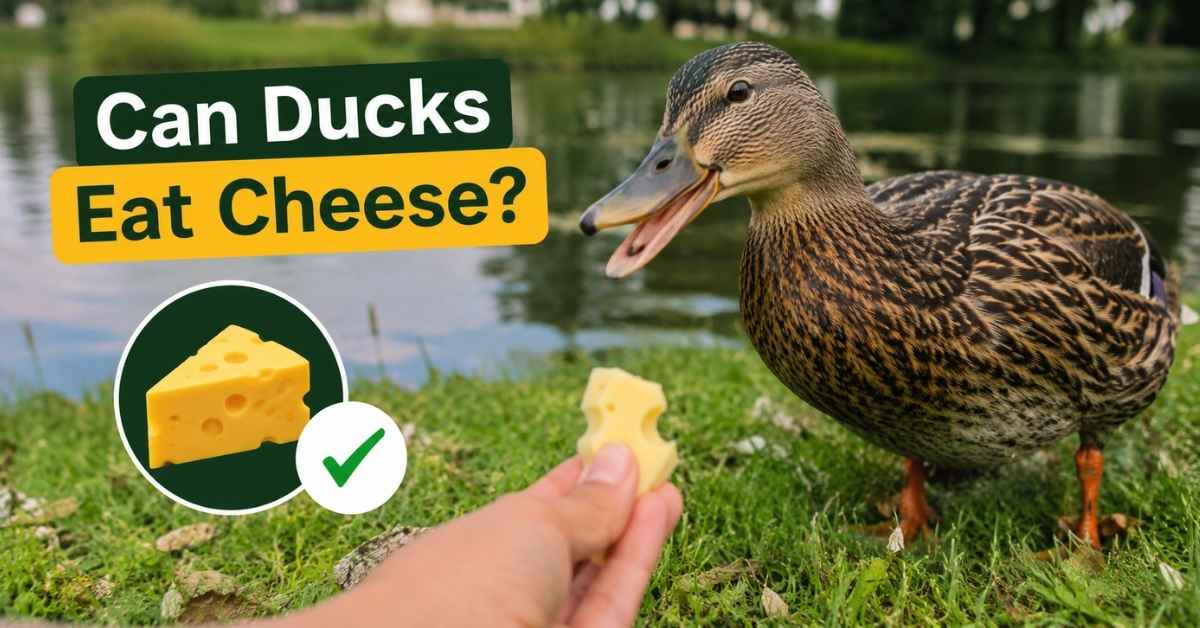
Have you ever watched your ducks eagerly gobble up treats and wondered if they could enjoy a piece of cheese too? Many duck owners ask, can ducks eat cheese when looking for new snacks to add variety to their birds’ diets.
The short answer is yes, ducks can eat cheese in small amounts, but it should only be an occasional treat. Cheese is not toxic to ducks, but it is not a natural part of their diet. Because many ducks have difficulty digesting dairy products, feeding too much cheese can lead to digestive issues and other health problems.
In this guide, you’ll learn whether ducks can safely eat cheese, the risks involved, whether ducks can eat cheese crackers or cheese puffs, and which treats make better alternatives.
Can Ducks Eat Cheese?
Yes, ducks can eat cheese occasionally. However, moderation is extremely important.
Unlike mammals, ducks do not naturally consume dairy products in the wild. Their digestive systems are designed for foods such as:
- Aquatic plants
- Grasses
- Seeds
- Insects
- Small fish
- Vegetables
- Fruits
Since cheese contains lactose and high amounts of fat, it doesn’t offer significant nutritional benefits for ducks.
If you choose to feed cheese, provide only tiny pieces and monitor your ducks for any signs of digestive discomfort.
Why Cheese Is Not an Ideal Food for Ducks
Although cheese isn’t poisonous, it comes with several drawbacks.
Ducks May Struggle to Digest Dairy
Many birds lack the enzymes needed to efficiently digest lactose. As a result, dairy products can sometimes cause:
- Loose droppings
- Upset stomach
- Reduced appetite
- Digestive discomfort
Some ducks tolerate small amounts without problems, while others may react negatively.
Cheese Is High in Fat
Most cheeses contain considerable amounts of fat.
Excessive fat consumption may contribute to:
- Obesity
- Reduced mobility
- Poor overall health
- Liver problems over time
For healthy ducks, treats should make up only a small portion of their daily diet.
Cheese Contains Salt
Processed cheeses often contain high sodium levels.
Too much salt can be harmful to ducks because it may affect hydration and overall health.
Therefore, low-sodium varieties are always a better option if you decide to offer cheese.
What Types of Cheese Can Ducks Eat?
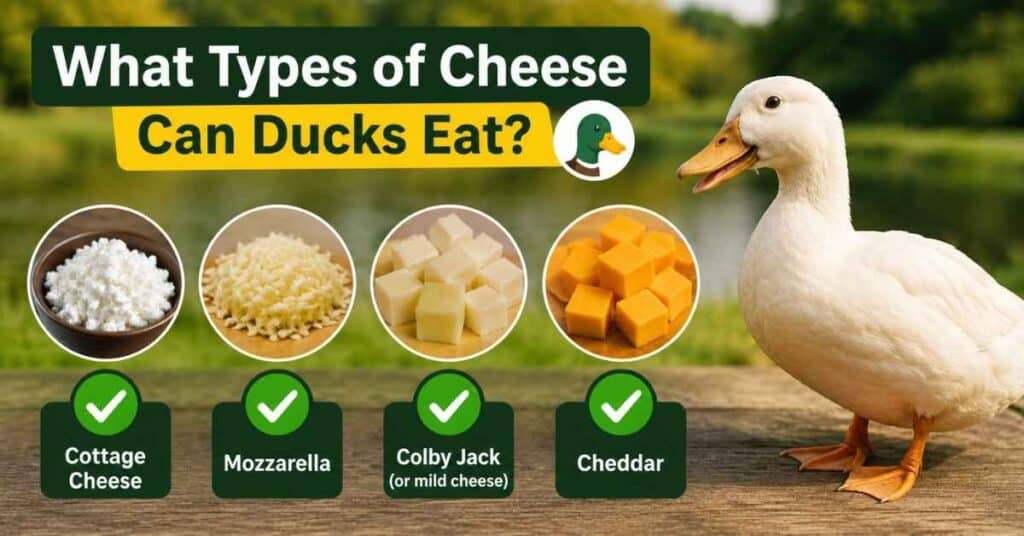
Not all cheeses are equal when it comes to duck feeding.
Safer Cheese Options
If you want to give your ducks a small cheese treat, choose:
- Mild mozzarella
- Cottage cheese (plain)
- Ricotta cheese
- Small amounts of cheddar
- Low-sodium cheese
Always offer cheese in tiny pieces.
Cheese Types to Avoid
Avoid feeding ducks:
- Highly processed cheese products
- Cheese spreads
- Moldy cheese
- Spicy cheese
- Garlic-flavored cheese
- Onion-flavored cheese
Many added ingredients can be harmful to poultry.
Can Ducks Eat Cheese Puffs?
One of the most common questions owners ask is, can ducks eat cheese puffs?
The answer is no, ducks should not eat cheese puffs regularly.
Cheese puffs are heavily processed snack foods that contain:
- Artificial flavors
- Excess salt
- Preservatives
- Food coloring
- Refined carbohydrates
These ingredients provide virtually no nutritional value for ducks.
While a single dropped cheese puff is unlikely to cause serious harm, feeding them intentionally is not recommended.
Why Cheese Puffs Are a Poor Choice
Cheese puffs can contribute to:
- Poor nutrition
- Excess calorie intake
- Digestive problems
- Weight gain
Healthier snacks are always a better option.
Can Ducks Eat Cheese Crackers?
Another frequent question is, can ducks eat cheese crackers?
Technically, ducks can eat a small piece without immediate harm. However, cheese crackers are not suitable treats for regular feeding.
Most cheese crackers contain:
- Refined flour
- Salt
- Artificial flavorings
- Oils
- Preservatives
These ingredients offer little nutritional benefit to ducks.
Risks of Feeding Cheese Crackers
Regular consumption may lead to:
- Nutritional imbalance
- Obesity
- Excess sodium intake
- Reduced interest in healthier foods
For these reasons, cheese crackers should remain off the regular menu.
Nutritional Needs of Ducks
To understand why cheese isn’t ideal, it helps to know what ducks actually need.
Healthy ducks thrive on diets rich in:
Protein
Protein supports:
- Feather growth
- Muscle development
- Egg production
Sources include insects, worms, and quality waterfowl feed.
Vitamins
Ducks require vitamins such as:
- Vitamin A
- Vitamin D
- Vitamin E
- B vitamins
Fresh vegetables provide many of these nutrients.
Minerals
Important minerals include:
- Calcium
- Phosphorus
- Magnesium
These nutrients support bone health and egg shell quality.
Fiber
Fiber promotes healthy digestion and gut function.
Vegetables and leafy greens are excellent sources.
Healthier Treats Than Cheese
Instead of cheese, consider offering more natural foods.
Best Treats for Ducks
Ducks generally enjoy:
- Peas
- Corn
- Lettuce
- Kale
- Cucumber
- Watermelon
- Blueberries
- Strawberries
- Oats
- Mealworms
These foods provide more nutritional value and align closely with a duck’s natural diet.
Treats to Feed in Moderation
Even healthy treats should not replace balanced duck feed.
Treats should make up no more than 10% of a duck’s daily food intake.
Learn More…Can Ducks Eat Spinach?
How to Safely Feed Cheese to Ducks
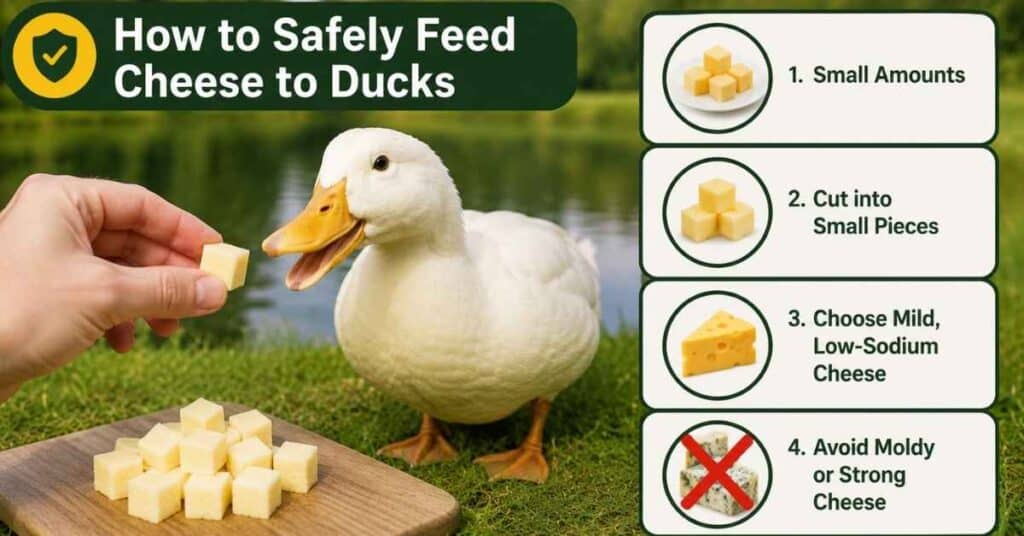
If you decide to offer cheese occasionally, follow these guidelines.
1. Use Small Portions
A tiny cube or shredded pinch is enough.
2. Choose Plain Cheese
Avoid heavily seasoned or processed varieties.
3. Limit Frequency
Offer cheese only occasionally.
4. Watch for Reactions
Monitor ducks for:
- Diarrhea
- Lethargy
- Reduced appetite
Stop feeding cheese if any problems occur.
5. Prioritize Balanced Nutrition
Always provide quality duck feed as the primary food source.
Common Mistakes When Feeding Ducks
Many well-meaning owners accidentally feed unsuitable foods.
Avoid:
- Excess bread
- Processed snacks
- Salty foods
- Sugary foods
- Moldy food
- Large amounts of dairy
A natural, balanced diet supports long-term health.
Signs Your Duck Has Eaten Too Much Cheese
If a duck consumes too much cheese, you may notice:
- Loose stools
- Digestive upset
- Reduced activity
- Poor appetite
Most mild symptoms resolve after returning to a normal diet.
However, persistent symptoms may require advice from a poultry veterinarian.
Frequently Asked Questions
Can ducks eat cheese?
Yes. Ducks can eat small amounts of cheese as an occasional treat. However, cheese should not become a regular part of their diet.
Can ducks eat cheese puffs?
No. Cheese puffs contain excessive salt, artificial ingredients, and processed carbohydrates that provide little nutritional value for ducks.
Can ducks eat cheese crackers?
Ducks can eat tiny amounts without immediate harm, but cheese crackers are not recommended because they contain refined flour, oils, preservatives, and sodium.
Is cheddar cheese safe for ducks?
Small amounts of plain cheddar cheese are generally safe. However, feed it sparingly because it contains fat and salt.
What dairy products can ducks eat?
Plain cottage cheese and small portions of mild cheese may be tolerated by some ducks. However, dairy should always be offered in moderation.
What are the best treats for ducks?
Healthy treats include peas, lettuce, kale, mealworms, oats, watermelon, blueberries, and other fresh fruits and vegetables.
Can baby ducks eat cheese?
No. Ducklings have more sensitive digestive systems and should not be fed cheese or other dairy products.
Conclusion
So, can ducks eat cheese? Yes, ducks can eat cheese in small amounts as an occasional treat. However, cheese is not a natural food for ducks and offers limited nutritional benefits. Because dairy products can be difficult to digest, moderation is essential.
When considering treats, healthier options such as peas, leafy greens, berries, mealworms, and oats are far better choices. Likewise, if you’ve wondered can ducks eat cheese puffs or can ducks eat cheese crackers, the safest answer is to avoid feeding these processed snacks whenever possible.
By focusing on a balanced diet and offering nutritious treats, you can keep your ducks healthy, active, and thriving for years to come. If you’re interested in improving your flock’s diet further, explore more guides on safe foods for ducks and backyard poultry nutrition.