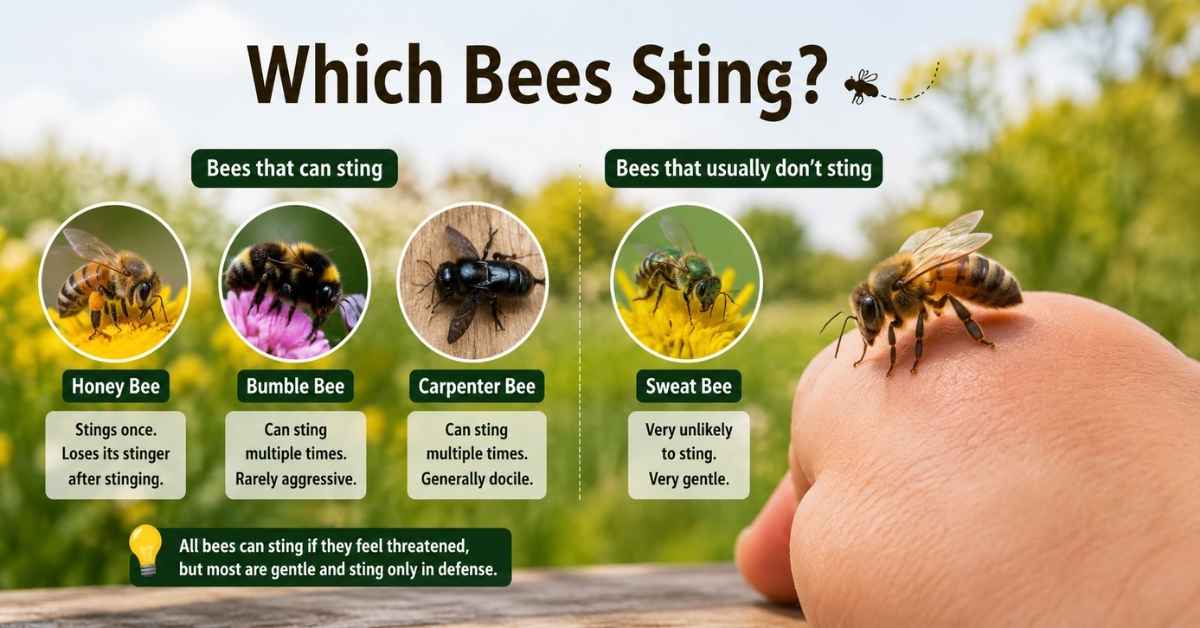
Which bees sting? Most female bee species can sting, including honey bees, bumblebees, carpenter bees, mining bees, sweat bees, mason bees, and leafcutter bees. However, the ability to sting and the likelihood of stinging are very different things. Many bees rarely sting humans unless they feel threatened, while male bees cannot sting at all because they do not possess stingers. Understanding which bees sting, which bees don’t sting, and how different species behave can help homeowners, gardeners, and families make informed decisions without unnecessary fear.
Many people search for which bees sting humans after spotting a bee in the yard, garden, or around their home. In reality, most bees are focused on collecting pollen and nectar rather than interacting with people. The key is learning which species pose a meaningful sting risk and which are among the safest pollinators in nature.
Quick Answer: Which Bees Sting?
Most female bees have the ability to sting.
Common bee species that can sting include:
- Honey bees
- Bumblebees
- Female carpenter bees
- Mining bees
- Sweat bees
- Mason bees
- Leafcutter bees
However, many of these species are considered non-aggressive bees because they rarely sting humans.
Bees that cannot sting include:
- Male honey bees
- Male bumblebees
- Male carpenter bees
- Most other male bee species
The biggest factor affecting sting risk is not whether a bee has a stinger but whether it has a reason to use it.
Bee Sting Risk at a Glance
Bee Sting Risk Comparison Table
| Bee Species | Can Sting? | How Often They Sting | Risk Level |
|---|---|---|---|
| Honey Bee | Yes | Moderate | Moderate |
| Bumblebee | Yes | Low | Low |
| Female Carpenter Bee | Yes | Rare | Low |
| Mason Bee | Yes | Extremely Rare | Very Low |
| Leafcutter Bee | Yes | Extremely Rare | Very Low |
| Mining Bee | Yes | Rare | Very Low |
| Sweat Bee | Yes | Occasionally | Low |
| Male Bees | No | Never | None |
What This Table Means for Homeowners
This comparison highlights an important fact that many articles overlook:
A bee can have a stinger without being dangerous.
For example, mason bees and leafcutter bees technically can sting, yet most people will never experience a sting from either species. They are often considered some of the safest pollinators for family gardens.
The Most Important Fact About Bee Stings
Most confusion about bee stings comes from misunderstanding the difference between male and female bees.
Male Bees Cannot Sting
One of the most important answers to the question “which bees don’t sting?” is simple:
Male bees cannot sting.
This includes:
- Male honey bees (drone bees)
- Male bumblebees
- Male carpenter bees
Because stingers evolved from a female egg-laying structure called an ovipositor, males never developed them.
Why Female Bees Have Stingers
Female bees use stingers primarily for defense.
Different species developed stingers to:
- Protect nests
- Defend colonies
- Deter predators
Some species use them frequently, while others almost never do.
Why Having a Stinger Doesn’t Mean a Bee Will Use It
Many solitary bees possess stingers but have little reason to use them.
Unlike social bees that defend large colonies, solitary species focus on gathering pollen and building nests.
As a result, they tend to avoid confrontation.
Which Bees Commonly Sting Humans?
Several species account for most bee sting incidents.
Honey Bees
Honey bees are among the most recognized pollinators in the world.
When Honey Bees Sting
Honey bees usually sting when:
- Their hive is disturbed
- They feel trapped
- They perceive a threat
Honey bees rarely sting while foraging on flowers.
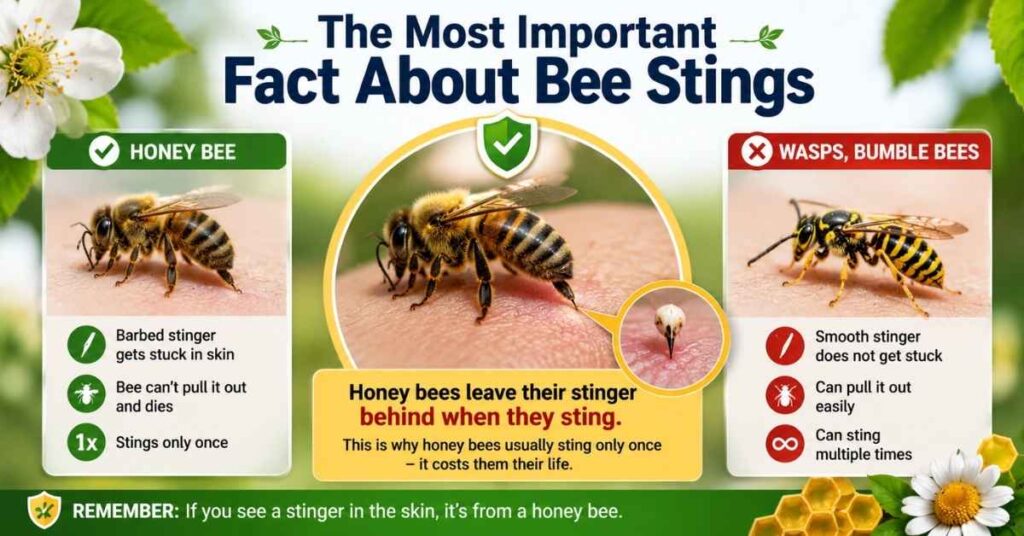
Why Honey Bees Die After Stinging
Honey bees possess barbed stingers.
When they sting mammals, the stinger becomes lodged in the skin, causing the bee to die shortly afterward.
This is unique among many bee species.
Typical Human Encounters
Most honey bee stings occur near:
- Hives
- Swarms
- Managed colonies
Random encounters in gardens seldom result in stings.
Bumblebees
Many people believe bumblebees are aggressive because of their size.
The reality is quite different.
Why Bumblebees Are Less Aggressive Than People Think
Bumblebees are generally calm and focused on pollination.
They often tolerate human activity nearby without reacting.
Nest Defense Behavior
Bumblebees become defensive mainly when:
- Their nest is disturbed
- They feel trapped
- They perceive direct threats
Away from their nests, they are usually peaceful pollinators.
Sweat Bees
Sweat bees are small pollinators known for being attracted to moisture and salt.
Why Sweat Bees Land on People
They are often drawn to:
- Perspiration
- Moist skin
- Salty surfaces
This behavior frequently causes alarm.
When They Sting
Sweat bees can sting, but incidents are relatively uncommon.
Most interactions are harmless.
Female Carpenter Bees
Carpenter bees are among the most misunderstood insects in residential areas.
The Truth About Carpenter Bee Stings
Only female carpenter bees can sting.
However, stinging is rare.
Why Most People Never Get Stung
Female carpenter bees generally focus on:
- Nest construction
- Egg laying
- Gathering resources
They are not naturally aggressive toward humans.
Meanwhile, the large hovering bees that often intimidate homeowners are usually males—which cannot sting.
Which Bees Rarely Sting Humans?
Many beneficial pollinators fall into this category.
Mason Bees
Mason bees are among the friendliest bee species.
Why Gardeners Love Mason Bees
Benefits include:
- Excellent pollination
- Gentle temperament
- Minimal sting risk
These qualities make them ideal for pollinator gardens.
Sting Frequency and Behavior
Although female mason bees can sting, most people never experience one.
Many bee experts consider them among the safest bees around children.
Leafcutter Bees
Leafcutter bees are famous for cutting circular pieces from leaves.
One of the Gentlest Pollinators
They spend most of their time:
- Collecting pollen
- Building nests
- Pollinating flowers
Human interaction is not part of their routine.
Why They Avoid Human Contact
Leafcutter bees are solitary bees with no large colony to defend.
This dramatically reduces sting likelihood.
Mining Bees
Mining bees are among the most common ground-nesting bees.
Solitary Nesting Habits
Unlike honey bees, mining bees live independently.
This makes them much less defensive.
Why They’re Often Misunderstood
Large groups of nesting holes sometimes alarm homeowners.
Despite appearances, mining bees rarely sting people and provide valuable pollination services.
Long-Horned Bees and Other Solitary Species
Many native bee species share similar traits:
- Low aggression
- High pollination value
- Minimal sting risk
These insects are often essential members of healthy ecosystems.
Which Bees Never Sting?
Some bees simply cannot sting under any circumstances.
Male Honey Bees
Drone honey bees lack stingers entirely.
Male Bumblebees
The Male bumblebees are incapable of stinging.
Male Carpenter Bees
Although they may hover near people, male carpenter bees cannot sting.
Understanding Drone Bees
Drone bees serve reproductive functions within colonies.
Because they lack stingers, they pose no direct sting threat.
Why So Many People Misidentify Male Bees
Many people assume large hovering bees are aggressive.
In reality, some of the most intimidating-looking bees are completely harmless.
Why Bees Sting in the First Place
Understanding bee behavior can eliminate much of the fear surrounding stings.
Defensive vs Aggressive Behavior
This distinction is critical.
Most bees are:
- Defensive
- Not aggressive
They sting to protect themselves or their nests—not to attack humans.
What Triggers a Bee to Sting
Common triggers include:
- Swatting
- Crushing
- Disturbing nests
- Blocking hive entrances
Mistakes That Increase Your Risk
People often increase sting risk by:
- Making sudden movements
- Disturbing nesting sites
- Attempting to handle bees
Why Most Bees Prefer to Avoid Humans
For bees, stinging is risky.
Many species would rather escape than engage in conflict.
How to Tell if a Bee Is Likely to Sting
One of the most valuable skills for homeowners is learning how to recognize bee behavior before a sting occurs.
Behavioral Warning Signs
Most bees display warning behaviors when they feel threatened.
Common signs include:
- Repeated buzzing near a person
- Defensive circling
- Guarding a nest entrance
- Increased agitation around a colony
These behaviors do not always lead to a sting, but they indicate that a bee is becoming defensive.
Nest-Protective Species
Social bee species are generally more protective than solitary bees.
Examples include:
- Honey bees
- Bumblebees
These species defend colonies containing queens, brood, and food stores.
Solitary vs Social Bees
Understanding this difference is essential.
Solitary bees such as mason bees, leafcutter bees, and mining bees usually focus on their individual nests.
Social bees defend thousands of colony members.
This is one reason solitary bees are often considered the safest pollinators.
What Bee Body Language Can Tell You
Bees that continue foraging among flowers are usually focused on nectar collection.
Bees that hover repeatedly around a person or nest entrance are more likely to be in a defensive mode.
The Bees Most Often Mistaken for Dangerous Insects
Many people search which bees sting humans after seeing an unfamiliar insect.
Misidentification is common.
Carpenter Bees
Carpenter bees often frighten homeowners because of their large size.
However:
- Males cannot sting
- Females rarely sting
- Most encounters are harmless
Bumblebees
Bumblebees look intimidating because they are large and fuzzy.
Despite their appearance, they are generally gentle pollinators.
Mining Bees
Mining bees often emerge in large numbers.
This creates the false impression of an infestation.
In reality, they are low-risk pollinators.
Mason Bees
Mason bees are frequently mistaken for honey bees.
Their behavior is far less defensive.
Why Appearance Can Be Misleading
Large size does not automatically indicate danger.
Some of the safest bee species are also among the largest.
Bee Species Ranked From Safest to Most Defensive
Bee Safety Ranking Table
| Rank | Bee Species | Safety Score |
|---|---|---|
| 1 | Mason Bee | 10/10 |
| 2 | Leafcutter Bee | 10/10 |
| 3 | Mining Bee | 9/10 |
| 4 | Male Carpenter Bee | 10/10 |
| 5 | Bumblebee | 8/10 |
| 6 | Female Carpenter Bee | 7/10 |
| 7 | Honey Bee | 6/10 |
Friendliest Bee Species
The friendliest bees generally include:
- Mason bees
- Leafcutter bees
- Mining bees
These species rarely sting humans and are highly beneficial pollinators.
Best Bees for Family Gardens
Families often prefer:
- Mason bees
- Leafcutter bees
- Bumblebees
These species support pollination while maintaining relatively low sting risk.
Best Bees Around Pets
Most solitary bees pose little danger to dogs and cats when left undisturbed.
Best Bees for Pollinator-Friendly Landscapes
A healthy pollinator garden benefits from a variety of native bees.
Encouraging multiple species improves biodiversity and ecosystem resilience.
Which Bee Sting Hurts the Most?
Many users searching which bees sting also want to know how painful different stings are.
Comparing Common Bee Stings
Sting pain varies based on:
- Species
- Venom composition
- Sting location
- Individual sensitivity
Honey Bee vs Bumblebee Sting
Honey bee stings are often more memorable because the stinger remains embedded in the skin.
Bumblebee stings can be painful but usually involve less tissue damage.
Carpenter Bee Sting Severity
Female carpenter bees can sting, but stings are rare.
When they occur, pain is generally comparable to other common bee stings.
Why Pain Varies Between Individuals
Allergic responses, skin sensitivity, and previous exposure can significantly affect pain levels.
What Influences Sting Reactions
Factors include:
- Age
- Health
- Immune response
- Location of the sting
What To Do If You Find Bees Around Your Home
Finding bees near your house does not automatically require action.
Leave Them Alone or Take Action?
Ask yourself:
- Are they causing problems?
- Are they aggressive?
- Are they nesting in a high-traffic area?
Many bee populations can coexist safely with humans.
Identifying the Species First
Before making decisions, determine whether you are dealing with:
- Honey bees
- Bumblebees
- Carpenter bees
- Mason bees
- Leafcutter bees
- Mining bees
Correct identification is critical.
When Removal Makes Sense
Removal may be appropriate when:
- Severe allergies are involved
- A colony is located near daily human activity
- The nest presents a safety hazard
When Relocation Is the Better Option
Honey bee colonies can often be relocated by experienced beekeepers.
This protects pollinators while resolving homeowner concerns.
Situations That Require Professional Help
Professional assistance may be necessary when:
- Large colonies are present
- Species identification is uncertain
- Allergic individuals are at risk
Which Bees Should You Encourage in Your Garden?
Not all bees are equal when it comes to pollination.
Best Pollinators for Fruit Trees
Excellent choices include:
- Mason bees
- Bumblebees
- Mining bees
These species are highly effective pollinators.
Best Pollinators for Vegetable Gardens
Vegetable gardeners often benefit from:
- Leafcutter bees
- Bumblebees
- Mason bees
Native Bees Worth Protecting
Native pollinators play an essential role in maintaining healthy ecosystems.
Examples include:
- Mining bees
- Sweat bees
- Long-horned bees
- Mason bees
Pollinators That Rarely Sting
For homeowners concerned about safety:
- Mason bees
- Leafcutter bees
- Mining bees
are among the best options.
Creating a Safe Bee-Friendly Yard
To attract beneficial pollinators:
- Plant native flowers
- Reduce pesticide use
- Provide nesting habitat
- Maintain seasonal blooms
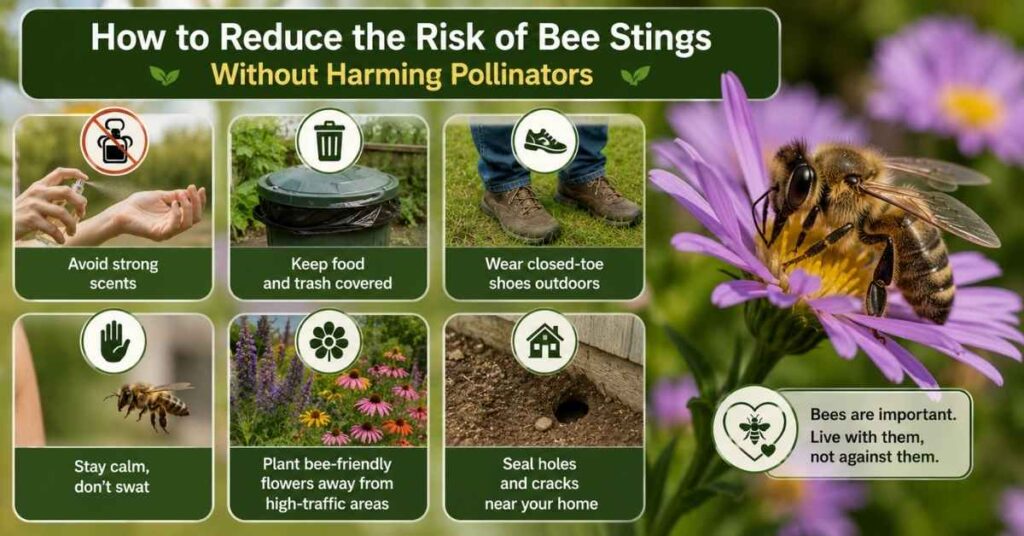
How to Reduce the Risk of Bee Stings Without Harming Pollinators
Safe Gardening Practices
Avoid disturbing active nests while gardening.
Protecting Children Around Bees
Teach children to:
- Stay calm around bees
- Avoid swatting
- Observe from a distance
Protecting Pets Around Bees
Discourage pets from:
- Digging near nests
- Chasing flying insects
Avoiding Accidental Nest Disturbance
Many stings occur when nests are disturbed unknowingly.
Bee-Safe Outdoor Habits
Simple habits can dramatically reduce risk:
- Wear shoes outdoors
- Avoid scented products
- Stay calm around pollinators
Common Myths About Bees and Stinging
Myth: All Bees Sting
False.
Male bees cannot sting.
Myth: Large Bees Are More Dangerous
False.
Many large bees are surprisingly gentle.
Myth: Bumblebees Are Aggressive
False.
Bumblebees are usually calm unless their nest is threatened.
Myth: Solitary Bees Attack Humans
False.
Most solitary bees avoid human interaction.
Myth: Bees Sting Without Reason
False.
Most bee stings result from defensive behavior.
What Allergy Sufferers Need to Know
Normal Reactions vs Allergic Reactions
Most bee stings cause:
- Pain
- Swelling
- Redness
These are normal reactions.
When to Seek Medical Help
Emergency care may be needed if symptoms include:
- Difficulty breathing
- Facial swelling
- Dizziness
- Rapid heartbeat
High-Risk Situations
Individuals with known allergies should be especially cautious around colonies.
Important Safety Precautions
Consider carrying prescribed emergency medication if recommended by your healthcare provider.
LEARN MORE: Can Ducks Eat Watermelon Rind?
Expert Recommendations Based on Your Situation
Best Bees for Home Gardens
Mason bees remain one of the top recommendations for homeowners.
Best Bees for Families With Children
Leafcutter bees and mason bees combine excellent pollination with minimal sting risk.
Best Bees for Pet Owners
Most solitary bees coexist peacefully with pets.
Best Bees for Pollination
Mason bees consistently rank among the most efficient pollinators.
Best Bees for Biodiversity
Supporting multiple native bee species creates healthier ecosystems.
When Concern Is Actually Warranted
Concern is reasonable when:
- Allergies exist
- Colonies are located near living areas
- Species are unknown
Frequently Asked Questions
Which bees sting humans?
Most female bee species can sting, including honey bees, bumblebees, carpenter bees, mining bees, sweat bees, mason bees, and leafcutter bees.
Which bees do not sting?
Male bees do not sting because they lack stingers.
Do male bees sting?
No. Male bees cannot sting.
Do carpenter bees sting?
Only female carpenter bees can sting, and stings are rare.
Do mason bees sting?
Mason bees can sting but almost never do.
Do leafcutter bees sting?
Leafcutter bees rarely sting humans.
Which bee sting hurts the most?
Pain varies, but honey bee stings are often among the most commonly reported.
Are bumblebees aggressive?
No. Bumblebees are generally calm pollinators.
What is the friendliest bee species?
Mason bees are often considered one of the friendliest bee species.
Which bees are safest around children?
Mason bees, leafcutter bees, and mining bees are among the safest.
Which bees are safest around pets?
Most solitary bees pose little risk to pets.
Why do bees sting people?
Bees sting primarily to defend themselves or their nests.
How can I identify a harmless bee?
Look for solitary behavior, low aggression, and flower-focused activity.
Are solitary bees dangerous?
Most solitary bees are extremely low-risk pollinators.
Should I remove bees from my yard?
Not necessarily. Many bees provide valuable pollination and pose little threat.
Final Verdict: Which Bees Sting and Which Bees Are Safest?
Most female bees can sting, including honey bees, bumblebees, carpenter bees, mining bees, sweat bees, mason bees, and leafcutter bees. However, the vast majority of bee species are not aggressive and sting only when threatened.
The safest bees are typically mason bees, leafcutter bees, mining bees, and other solitary bees, while male bees never sting because they lack stingers entirely.
For homeowners, gardeners, and families, the smartest approach is to focus on identification rather than fear. Understanding the difference between a bee that can sting and a bee that is likely to sting makes it much easier to appreciate the essential role pollinators play in our gardens, ecosystems, and food supply.