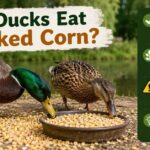
Can ducks eat corn on the cob? Yes, ducks can safely eat plain corn kernels from corn on the cob in moderation. Corn is a common food for ducks because it provides quick energy and is easy for most adult ducks to digest. However, the corn cob itself can create choking and digestive risks, especially for ducklings or smaller ducks. The safest option is to remove the kernels from the cob before feeding ducks.
Many people feed ducks leftover sweet corn because they want a healthier alternative to bread or a way to reduce food waste. While corn can be part of a balanced duck diet, it should only be used as supplemental feeding, not the duck’s main source of nutrition. Understanding the difference between raw corn, cooked corn, canned corn, cracked corn, and whole cobs is important if you want to feed ducks responsibly.
In this guide, you’ll learn:
- Whether ducks can digest corn cobs
- Raw vs cooked corn safety
- The healthiest corn options for ducks
- Risks of overfeeding corn
- Whether ducklings can eat corn
- Better alternatives to corn and bread
- Environmental concerns linked to feeding ducks
Quick Answer: Is Corn on the Cob Safe for Ducks?
Ducks can safely eat:
- Plain sweet corn kernels
- Cooked corn
- Frozen corn
- Cracked corn
Ducks should avoid:
- Buttered corn
- Salted corn
- Moldy corn
- Highly seasoned corn
- Large hard pieces of corn cob
The kernels are usually safe. The fibrous cob texture is the bigger concern because ducks struggle to digest it properly.
Why Ducks Love Corn So Much
Ducks naturally enjoy grains and carbohydrate-rich foods. In the wild, ducks forage for:
- Seeds
- Grasses
- Aquatic vegetation
- Small insects
- Natural grains
Corn mimics part of that natural feeding behavior. Sweet corn is especially attractive because it is:
- Soft
- Easy to peck
- High in carbohydrates
- Quick energy source
Wild ducks often rush toward corn because it provides calories fast, especially during colder seasons when natural food becomes harder to find.
Can Ducks Eat Corn Kernels?
Yes, corn kernels are generally safe for ducks when fed in moderation.
Both raw corn kernels and cooked corn kernels can work well as occasional duck treats. Most adult ducks can easily digest soft kernels without issues.
Safe Corn Types for Ducks
| Corn Type | Safe for Ducks? | Notes |
|---|---|---|
| Sweet corn | Yes | Best fresh option |
| Cracked corn | Yes | Common waterfowl feed |
| Frozen corn | Yes | Thaw before feeding |
| Cooked corn | Yes | Easier digestion |
| Raw corn kernels | Yes | Fine in moderation |
| Buttered corn | No | Excess fat and salt |
| Moldy corn | No | Toxic risk |
| Whole hard cob pieces | Risky | Choking hazard |
Sweet Corn vs Cracked Corn
Many people ask whether sweet corn or cracked corn is better for ducks.
Sweet corn:
- Softer texture
- Easier digestion
- Higher moisture content
Cracked corn:
- More traditional duck feed
- High-energy grain
- Common winter feeding option
Both are generally safe, but neither should replace a balanced duck diet.
Can Ducks Eat the Corn Cob Itself?
This is where many articles fail to explain the real issue.
Ducks may peck leftover bits from the cob, but the actual cob is:
- Fibrous
- Difficult to digest
- Low in nutrition
- Potential choking risk
Large cob fragments may create:
- Digestive blockage
- Choking hazards
- Gastrointestinal stress
Ducklings face even higher risks because their digestive systems are more sensitive.
“The kernels are the safest part of corn on the cob for ducks. The cob itself offers little nutritional value.”
If you want to feed ducks corn safely, remove the kernels first.
Is Corn Healthy for Ducks?
Corn provides useful energy, but it is not a complete food source.
Nutritional Benefits of Corn
Corn contains:
- Carbohydrates
- Small amounts of fiber
- Some vitamins
- Quick calories for energy
This is why cracked corn is commonly used during winter feeding.
The Problem With Corn-Heavy Diets
Corn lacks:
- High-quality protein
- Nutritional diversity
- Enough vitamins and minerals
- Balanced waterfowl nutrition
Too much corn can contribute to:
- Obesity in ducks
- Nutritional imbalance
- Reduced natural foraging
- Poor feather condition
A healthy duck diet should also include:
- Aquatic plants
- Greens
- Insects
- Grains
- Waterfowl pellets
Can Ducklings Eat Corn on the Cob?
Ducklings require much more careful feeding than adult ducks.
Baby ducks need:
- Higher niacin levels
- Softer foods
- Balanced nutrients
- Easy-to-digest textures
Large pieces of corn or hard cob fragments can create digestive problems.
Safe Corn Feeding for Ducklings
| Food Type | Safe for Ducklings? |
|---|---|
| Soft cooked kernels | Yes |
| Tiny sweet corn pieces | Yes |
| Large cob chunks | No |
| Salted canned corn | No |
| Moldy corn | Dangerous |
Ducklings benefit far more from quality waterfowl starter feed than from heavy corn feeding.
Cooked vs Raw Corn for Ducks
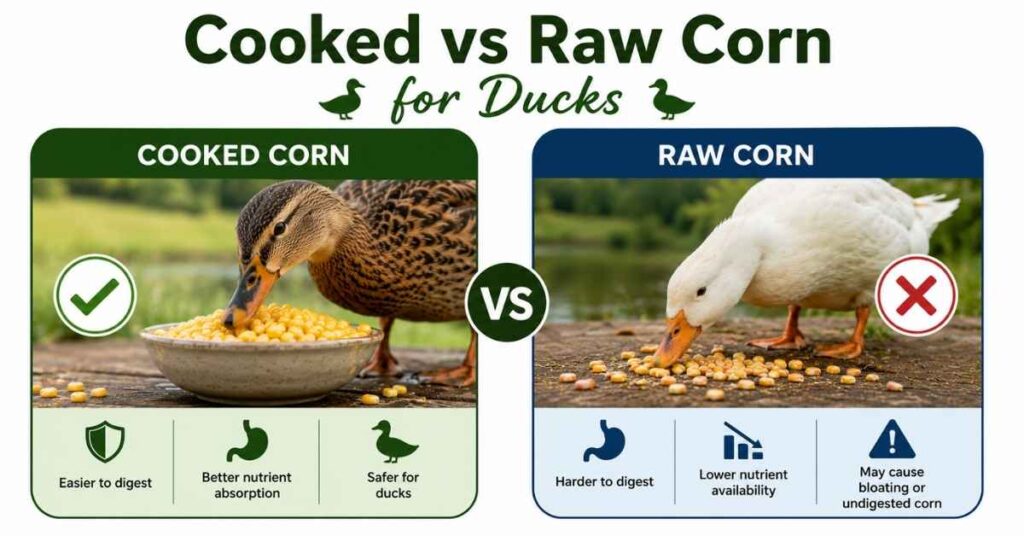
Both cooked and raw corn are usually safe if plain and unseasoned.
Cooked Corn
Cooked corn can be easier to digest because the kernels soften during cooking.
Safe cooked corn includes:
- Boiled corn
- Steamed corn
- Plain grilled corn without seasoning
Raw Corn
Raw sweet corn kernels are also safe for most ducks. However, harder raw kernels may be slightly more difficult for smaller ducks to break apart.
Why Buttered or Seasoned Corn Is Dangerous
One major mistake people make is feeding ducks leftover human food.
Avoid:
- Buttered corn
- Salted corn
- Spicy corn
- Corn with sauces or oils
Ducks cannot properly handle:
- Excess sodium
- Heavy oils
- Artificial seasonings
These additives can damage digestive health and contribute to unhealthy feeding habits.
Can Ducks Eat Canned or Frozen Corn?
Frozen Corn
Plain frozen corn is usually safe after thawing. Many duck owners prefer it because:
- It stays soft
- Easy portion control
- Less mess
Canned Corn
Canned corn is less ideal because many brands contain:
- Added sodium
- Preservatives
- Flavor additives
If using canned corn, rinse it thoroughly first.
How Much Corn Should Ducks Eat?
Corn should remain an occasional treat rather than a primary food source.
Recommended Feeding Frequency
| Duck Type | Recommended Corn Feeding |
|---|---|
| Wild ducks | 1–2 times weekly |
| Backyard ducks | Small portions occasionally |
| Ducklings | Minimal amounts |
Portion Guidance
Small handful-sized portions work best.
Overfeeding corn creates problems because corn is:
- Calorie-dense
- High in carbohydrates
- Nutritionally incomplete
What Happens If Ducks Eat Too Much Corn?
Too much corn can negatively affect duck health.
Common Problems From Overfeeding
| Health Issue | Cause |
|---|---|
| Obesity | Excess calorie intake |
| Nutritional imbalance | Lack of diet diversity |
| Reduced foraging | Dependency on human feeding |
| Aggressive behavior | Competition around food |
| Poor feather quality | Nutrient deficiencies |
Angel Wing Risk
Excessive feeding of calorie-rich foods may contribute to angel wing, a deformity where feathers twist outward unnaturally.
This issue appears more often in young waterfowl fed overly rich diets.
Better Ways To Feed Corn to Ducks
The safest method is simple:
- Remove kernels from the cob
- Feed plain corn only
- Use small portions
- Mix corn with healthier foods
Better Feeding Combinations
Corn works best when combined with:
- Frozen peas
- Oats
- Lettuce
- Leafy greens
- Waterfowl pellets
- Mealworms
This creates better nutritional balance.
Best Alternatives to Corn for Ducks
Corn is not the only healthy duck treat.
Healthier Duck Foods
| Food | Nutrition Value | Safe for Ducklings? |
|---|---|---|
| Frozen peas | Excellent vitamins | Yes |
| Oats | Easy digestion | Yes |
| Lettuce | Hydration and nutrients | Yes |
| Duck pellets | Balanced nutrition | Best option |
| Mealworms | Protein source | Moderate |
| Cracked grains | Good energy source | Yes |
Many wildlife experts consider frozen peas and waterfowl pellets healthier than heavy corn feeding.
Unsafe Corn Preparations Ducks Should Never Eat
Some corn products are far riskier than others.
Unsafe Corn Foods
- Moldy corn
- Buttered corn
- Salted corn
- Corn chips
- Spicy grilled corn
- Corn soaked in sauces
- Large hard cob pieces
Mold toxicity is especially dangerous because spoiled corn can contain harmful fungal growth.
The Environmental Impact of Feeding Ducks Corn
Feeding ducks affects more than just the birds.
Problems Caused by Excess Corn
| Environmental Issue | Why It Happens |
|---|---|
| Pond pollution | Uneaten corn decays |
| Algae blooms | Nutrient overload |
| Rodent attraction | Leftover food |
| Water contamination | Food waste decomposition |
| Wildlife dependency | Constant human feeding |
Even healthy food becomes harmful when too much accumulates in ponds.
Common Mistakes People Make When Feeding Ducks Corn
Many people unintentionally harm ducks while trying to help them.
Frequent Feeding Mistakes
- Throwing whole corn cobs into ponds
- Feeding corn every day
- Using seasoned leftovers
- Assuming ducks can digest anything
- Overfeeding large groups
- Ignoring portion control
Responsible feeding matters more than feeding quantity.
Signs a Duck Is Eating Too Much Corn
Poor feeding habits often create visible warning signs.
Symptoms of Dietary Imbalance
- Weight gain
- Low activity
- Feather problems
- Aggressive feeding behavior
- Digestive issues
- Reduced natural foraging
These symptoms often appear gradually after long-term overfeeding.
Wild Ducks vs Backyard Ducks
Wild ducks and backyard ducks have different nutritional needs.
The Wild Ducks
Wild ducks naturally forage for:
- Aquatic vegetation
- Insects
- Natural grains
- Small aquatic organisms
They usually do not require regular human feeding.
The Backyard Ducks
Backyard ducks rely more heavily on owners for nutrition. Feeding too much corn may create:
- Obesity
- Vitamin deficiencies
- Poor nutritional balance
Pet ducks need more dietary variety than occasional corn treats.
Why Corn Should Only Be Supplemental Feeding
Corn is useful as an occasional energy source, but ducks thrive best with diverse nutrition.
A proper waterfowl diet includes:
- Aquatic plants
- Protein sources
- Greens
- Grains
- Balanced duck pellets
Corn provides calories, but it does not provide complete nutrition.
That distinction separates responsible feeding from harmful feeding habits.
Myths About Feeding Corn to Ducks
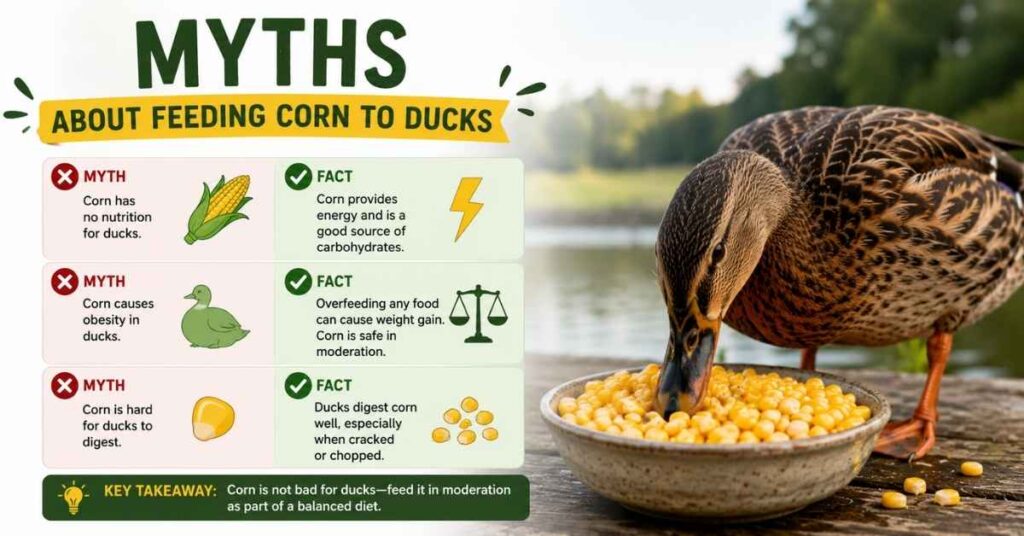
“Corn Is Always Safe”
Plain kernels are usually safe. Processed or seasoned corn is not.
“Ducks Can Digest Entire Corn Cobs”
The fibrous cob is much harder to digest than kernels.
“Canned Corn Is Healthy”
Many canned corn products contain excess sodium.
“Wild Ducks Need Human Feeding”
Most wild ducks can naturally forage for food without human help.
LEARN MORE: Can Ducks Eat Oats Raw or Cooked?
Best Corn Types for Ducks Ranked
| Corn Type | Nutrition Score | Risk Level | Best Use |
|---|---|---|---|
| Sweet corn kernels | High | Low | Best overall |
| Frozen corn | High | Low | Convenient treat |
| Cracked corn | Moderate | Medium | Winter feeding |
| Raw field corn | Moderate | Medium | Occasional use |
| Canned corn | Low | Medium | Only if rinsed |
| Buttered corn | Poor | High | Avoid |
| Whole cob chunks | Poor | High | Avoid |
Can Ducks Survive Without Human Feeding?
Yes. Wild ducks naturally survive through:
- Aquatic plants
- Seeds
- Small insects
- Wetland vegetation
- Natural forage
Human feeding should remain occasional and responsible.
Overfeeding wildlife can sometimes create more harm than benefit.
Frequently Asked Questions
Can ducks eat corn on the cob safely?
Yes, ducks can safely eat plain corn kernels from the cob in moderation.
Can ducks digest corn cobs?
Large cob pieces are difficult to digest and may create choking or blockage risks.
Can ducklings eat corn?
Yes, but only small soft pieces in moderation.
Is cooked corn better than raw corn for ducks?
Cooked corn is often easier to digest because the kernels soften.
Can ducks eat canned corn?
Plain rinsed canned corn is safer than salted canned corn, but fresh corn is better.
Can ducks choke on corn cobs?
Yes. Large hard cob fragments may become choking hazards.
Is sweet corn healthy for ducks?
Sweet corn can provide energy, but it should only be supplemental feeding.
Final Thoughts
Can ducks eat corn on the cob? Absolutely, but the safest approach is feeding ducks the kernels rather than the entire cob. Plain sweet corn, frozen corn, and cracked corn can all work as occasional treats when served in moderation.
The biggest mistakes happen when ducks are fed:
- too much corn
- seasoned leftovers
- buttered corn
- moldy food
- large cob pieces
If you want healthier ducks and cleaner ponds, focus on balanced nutrition, natural foraging, and responsible feeding habits instead of excessive treats.