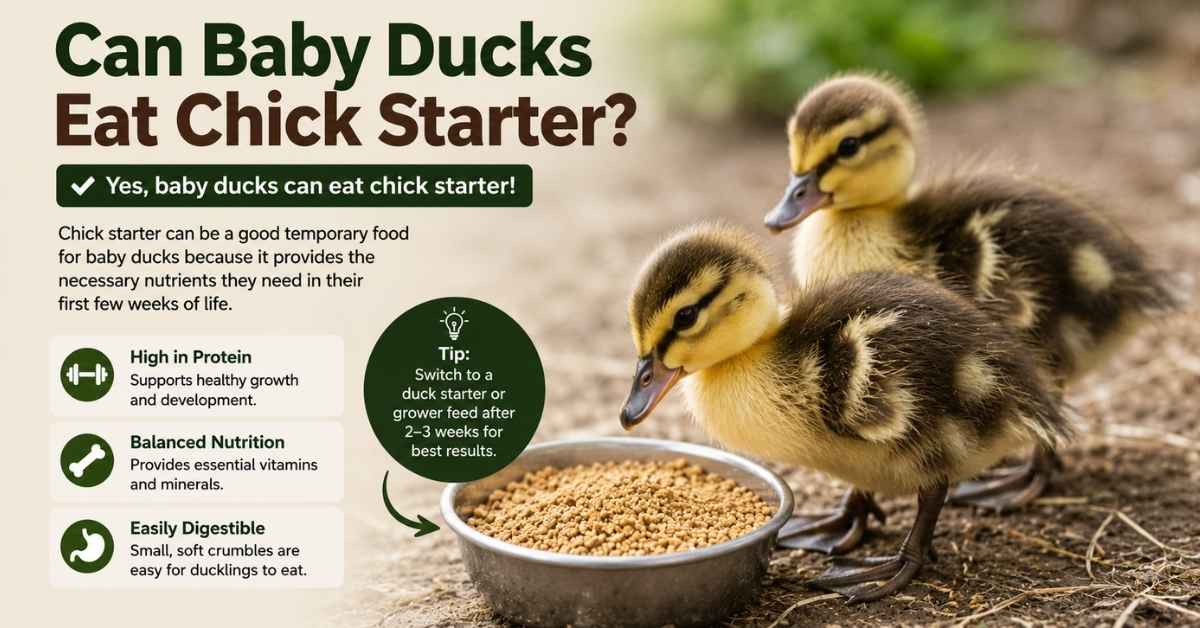
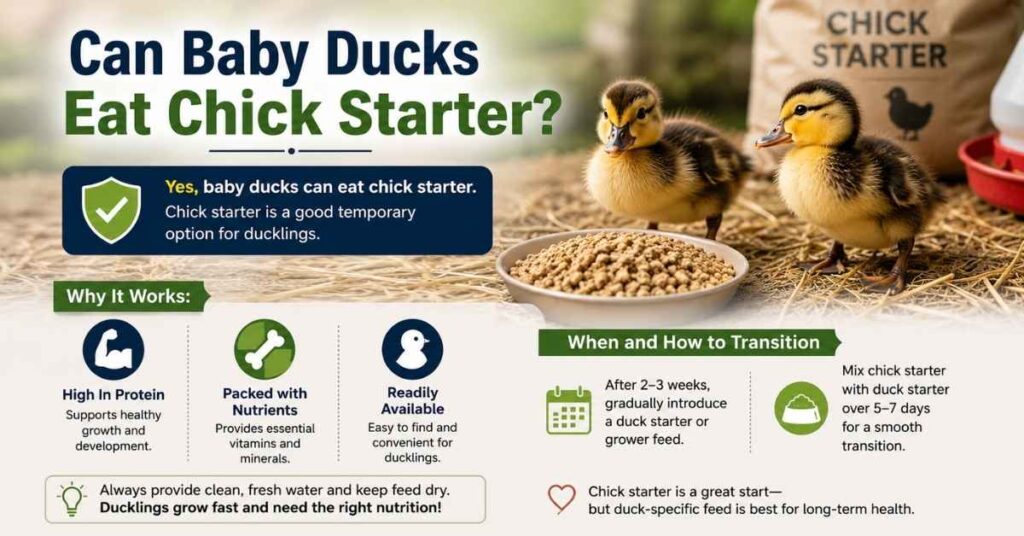
Can baby ducks eat chick starter? Yes, baby ducks can eat chick starter food, but only under specific conditions. The safest option is a non-medicated chick starter feed with added niacin supplementation because ducklings require nearly 2x more niacin than chicks for healthy bone growth and leg development. While chick starter can work temporarily, long-term feeding without proper nutrients may lead to niacin deficiency, weak legs, bowed joints, angel wing, and developmental problems.
Many first-time duck owners panic after realizing they bought chicken feed instead of duck starter. The good news is that most ducklings do fine on the right chick starter feed when it’s used correctly. The problem usually starts when owners miss one critical nutrient: Vitamin B3 (niacin).
This guide explains:
- whether chick starter is safe for ducklings
- medicated vs non-medicated feed
- how to supplement niacin
- proper protein levels
- emergency feeding solutions
- common mistakes beginners make
- how to raise healthy ducklings without nutritional issues
Quick Answer: Can Baby Ducks Eat Chick Starter Food?
Yes, can baby ducks eat chick starter food is a common question among new poultry owners, and the short answer is yes — but with precautions.
Ducklings can safely eat:
- Non-medicated chick starter crumble
- Starter feed with 18% to 20% protein
- Chick starter supplemented with brewer’s yeast
- Fresh starter crumble with clean water access
Ducklings should avoid:
- High-calcium layer feed
- Long-term feeding without niacin
- Poor-quality poultry feed
- Excessively high-protein feed above 20–22% protein
The biggest mistake beginners make is assuming ducks and chicks have identical nutritional needs. They don’t.
Why Ducklings Need Different Nutrition Than Chicks
Ducklings grow much faster than chicks. Their bodies develop rapidly during the first 0–6 weeks, especially their:
- joints
- bones
- leg muscles
- nervous system
- feather structure
That rapid growth changes their nutritional requirements.
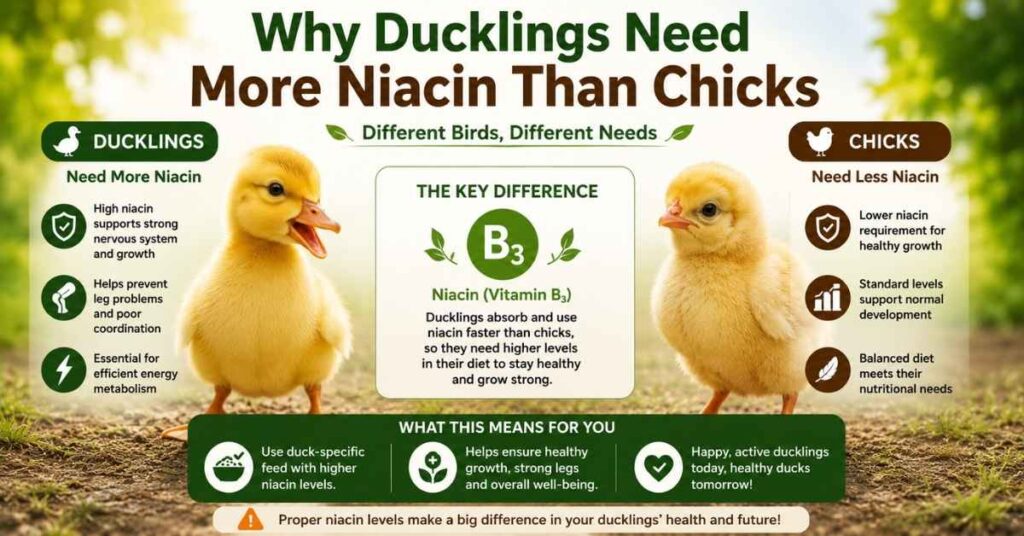
Ducklings Need More Niacin Than Chicks
Niacin, also called Vitamin B3, is one of the most important nutrients for baby ducks. Chick starter feed often contains around 35 mg/kg niacin, while ducklings typically need 55–70 mg/kg niacin for healthy skeletal development.
Without enough niacin, ducklings may develop:
- weak legs
- bent joints
- mobility issues
- bowed legs
- poor posture
- difficulty walking
In severe cases, nutritional imbalance can permanently damage their mobility.
“Most duckling leg problems start with hidden niacin deficiency, not injury.”
This is why experienced duck owners almost always add brewer’s yeast to chick starter feed.
Can Baby Ducks Eat Chick Starter Feed Long-Term?
Can baby ducks eat chick starter feed permanently? Not ideally.
Chick starter works best as:
- a temporary solution
- an emergency feed
- a short-term starter option with supplementation
Long-term feeding without adjustments increases the risk of:
- nutritional imbalance
- protein overload
- poor feather growth
- weak joints
- developmental disorders
Ducklings thrive better on:
- waterfowl starter feed
- duck starter crumble
- properly supplemented chick starter
Medicated vs Non-Medicated Chick Starter for Ducklings
One of the biggest areas of confusion is medicated feed.
Non-Medicated Chick Starter
This is usually the safest option for ducklings because it:
- avoids unnecessary medication
- allows easier nutrient balancing
- reduces feeding complications
- works well with brewer’s yeast supplementation
For most backyard duck owners, this is the preferred choice.
Medicated Chick Starter
Medicated chick starter often contains amprolium, a medication designed to help chicks prevent coccidiosis.
Some duck owners avoid medicated feed because:
- ducks process nutrients differently
- waterfowl metabolism differs from chickens
- excessive medication may interfere with nutrient absorption
Interestingly, there’s ongoing debate in poultry nutrition communities about whether medicated feed is truly toxic to ducklings. Many ducks survive on it temporarily without issues.
Still, most experts recommend:
- non-medicated feed
- added niacin
- proper water access
That combination creates the safest feeding environment.
Best Protein Percentage for Ducklings
Protein levels matter more than many beginners realize.
Recommended Protein Range
| Duckling Age | Ideal Protein Percentage |
|---|---|
| 0–2 weeks | 18%–20% protein |
| 2–6 weeks | 16%–18% protein |
| 6–8 weeks | 14%–16% protein |
Very high protein starter feed above 20–22% protein may contribute to:
- accelerated growth
- wing deformities
- angel wing
- skeletal imbalance
Angel wing occurs when feathers grow faster than developing joints can support.
How To Make Chick Starter Safe for Ducklings
The simplest solution is niacin supplementation.
Adding Brewer’s Yeast
Most duck keepers add:
- 1 tablespoon brewer’s yeast per cup feed
Brewer’s yeast naturally boosts Vitamin B3 levels and helps support:
- bone formation
- healthy joints
- feather growth
- nervous system function
This small adjustment dramatically improves the nutritional quality of chick starter for ducklings.
Other Niacin Sources
Besides brewer’s yeast, ducklings may also get niacin from:
- nutritional yeast
- peas
- fish meal
- duck vitamin supplements
- waterfowl starter crumble
Still, brewer’s yeast remains the easiest and most affordable option.
Duckling Feeding Schedule by Age
Proper feeding changes quickly as ducklings grow.
0–2 Weeks Feeding Stage
During the first two weeks:
- ducklings need 24-hour feed access
- protein should stay around 18–20%
- clean water must remain nearby
- feed should be crumble texture
Ducklings also require:
- brooder temperatures around 85–90°F
- a gradual 5°F weekly reduction
2–6 Weeks Growth Stage
Growth accelerates heavily during this phase.
Ducklings begin:
- feather development
- stronger muscle growth
- increased water consumption
- outdoor exploration
At this stage:
- introduce greens slowly
- avoid excess treats
- maintain niacin supplementation
- monitor leg posture closely
6–8 Weeks Transition Stage
This is when many owners gradually switch to:
- grower feed
- lower protein diets
- forage-based nutrition
Outdoor ducklings often begin consuming:
- grass
- insects
- weeds
- natural forage
Signs of Niacin Deficiency in Ducklings
Niacin deficiency is one of the most common duckling health problems.
Early Symptoms
Watch for:
- shaky walking
- weak posture
- sitting frequently
- trouble standing
- swollen joints
- bent legs
Many beginners mistake these symptoms for injury.
The earlier niacin deficiency is corrected, the better the recovery chances.
Signs of Too Much Protein
Excessive protein can also create problems.
Common Symptoms
- rapid growth
- twisted wings
- feather imbalance
- angel wing
- uneven posture
A balanced diet matters more than simply feeding the highest protein feed available.
Can Ducks and Chickens Share Feed?
Mixed flocks are common in backyard poultry setups.
The Problem With Shared Feed
Chickens and ducks have different:
- niacin requirements
- calcium needs
- feeding behavior
- water habits
Layer feed especially creates issues because it contains around 3%–4% calcium, which is too high for young ducklings.
Starter feed usually contains closer to 0.5% calcium, making it much safer.
Best Feeding Strategy for Mixed Flocks
Experienced poultry owners often:
- use separate feeders
- feed ducks extra niacin
- avoid free-choice layer feed for ducklings
- transition feeds gradually
This reduces nutritional stress and developmental problems.
Emergency Feeding Situations
Many people search this topic during emergencies.
What If Chick Starter Is All You Have Tonight?
If chick starter is your only option temporarily:
- Use non-medicated feed if possible
- Add brewer’s yeast immediately
- Provide plenty of water
- Transition to duck starter later
Short-term use rarely harms healthy ducklings.
Panic usually causes more mistakes than the feed itself.
Emergency Foods Ducklings Can Eat
Temporary foods include:
- oats
- peas
- chopped greens
- scrambled eggs
- soft lettuce
- duck-safe vegetables
These should never replace balanced starter feed long term.
Common Duckling Feeding Mistakes
Forgetting Water Access
Ducklings need water while eating because they:
- swallow feed differently
- moisten crumble while eating
- clean nostrils frequently
Without water nearby, choking risks increase.
Using Layer Feed Too Early
Layer feed contains excessive calcium for growing ducklings.
This may lead to:
- kidney strain
- developmental stress
- nutritional imbalance
Feeding Too Many Treats
Too many treats dilute important nutrients.
Ducklings should receive balanced starter nutrition before:
- vegetables
- grains
- snacks
- fruit
Best Alternatives to Chick Starter
Waterfowl Starter Feed
This is usually the ideal choice because it’s specifically formulated for:
- duckling growth
- niacin requirements
- waterfowl metabolism
- healthy skeletal development
Homemade Duckling Feed
Some owners create homemade mixes using:
- oats
- peas
- fish meal
- brewer’s yeast
- poultry vitamins
Homemade feed requires careful balancing to avoid deficiencies.
Feed Label Guide for Duck Owners
Learning to read feed labels prevents many beginner mistakes.
What To Look For
| Nutrient | Recommended Range |
|---|---|
| Protein | 18%–20% |
| Calcium | Around 0.5% |
| Niacin | 55–70 mg/kg |
| Feed Texture | Crumble |
Avoid feeds with:
- excessive calcium
- poor ingredient quality
- unclear labeling
- unnecessary additives
Practical Duckling Feeding Setup
Ducklings create more mess than chicks because they:
- splash water constantly
- soak feed
- contaminate feeders quickly
Best Setup Tips
- Use raised feeders
- Clean water 2–3 times daily
- Keep bedding dry
- Separate feed and water slightly
- Avoid deep drowning-risk containers
Simple setup changes improve hygiene dramatically.
LEARN MORE: Can Ducks Eat Wild Bird Feed?
Expert Tips for Raising Healthy Ducklings
Healthy ducklings usually share a few things in common:
- balanced starter feed
- clean water access
- niacin supplementation
- safe brooder temperatures
- gradual feed transitions
- room for movement
Owners who monitor posture and growth early often prevent serious developmental problems before they become permanent.
Case Study: Why One Small Feeding Change Fixed Leg Problems
A beginner duck owner raised six ducklings on regular chick starter without brewer’s yeast. Around 3 weeks old, two ducklings developed weak legs and struggled to stand properly.
After switching to:
- non-medicated starter
- brewer’s yeast supplementation
- lower protein feed
their mobility improved within days.
This is why proper duckling nutrition matters early.
Frequently Asked Questions
Can baby ducks eat chick starter food every day?
Yes, but it should ideally be:
- non-medicated
- properly supplemented with niacin
- balanced for protein levels
Can baby ducks eat chick starter feed without brewer’s yeast?
They can temporarily, but long-term feeding increases the risk of niacin deficiency and leg problems.
Is medicated chick starter toxic to ducklings?
Not always, but many duck owners prefer non-medicated feed because waterfowl process nutrients differently than chicks.
What is the best feed for baby ducks?
Waterfowl starter feed is usually the best option because it naturally contains the correct nutrient balance for ducklings.
How much brewer’s yeast should I add?
Most poultry owners use:
- 1 tablespoon per cup of feed
What are the first signs of niacin deficiency?
Early signs include:
- weak legs
- sitting frequently
- shaky walking
- bent joints
- difficulty standing
Final Thoughts
Can baby ducks eat chick starter? Absolutely — when it’s done correctly.
The safest approach is using:
- non-medicated chick starter crumble
- proper niacin supplementation
- balanced protein levels
- clean water access
Most duckling feeding problems happen because owners don’t realize ducks need different nutrition than chicks.
Once you understand:
- niacin requirements
- protein balance
- waterfowl feeding behavior
- feed label basics
raising healthy ducklings becomes much easier.