Can ducks eat uncooked rice? Yes, ducks can eat plain uncooked rice in moderation. Contrary to the popular myth, uncooked rice does not expand inside a duck’s stomach or cause it to explode. Plain raw rice can be offered as an occasional treat to both backyard ducks and many wild ducks, but it should never replace a balanced waterfowl diet. The healthiest diet for ducks still consists of quality duck feed, fresh water, natural forage, and a variety of safe vegetables.
If you’ve been wondering whether can ducks eat uncooked rice, you’re not alone. For years, many people believed feeding raw rice to birds was dangerous. Fortunately, research and guidance from wildlife experts have shown that this belief is a myth. In this guide, you’ll learn why uncooked rice is safe for ducks, how much to feed, which types of rice are best, and which rice dishes should always be avoided.
Can Ducks Eat Uncooked Rice? (Quick Answer)
The simple answer is yes.
Ducks can safely eat plain uncooked rice in small amounts. Raw rice is not toxic, does not swell dangerously inside their digestive system, and can be digested naturally.
However, rice should always be treated as an occasional snack rather than a complete meal.
The Short Answer
- Plain uncooked white rice: ✅ Safe
- Plain uncooked brown rice: ✅ Safe
- Plain wild rice: ✅ Safe
- Plain basmati rice: ✅ Safe
- Rice with salt or seasoning: ❌ Avoid
- Rice mixed with onions or garlic: ❌ Avoid
- Spoiled rice: ❌ Never feed
Is Uncooked Rice Safe for Ducks?
Yes.
Healthy ducks naturally eat many types of seeds and grains in the wild. Uncooked rice is simply another grain that ducks can digest.
When offered in moderation, uncooked rice:
- Provides energy from carbohydrates.
- Encourages natural foraging behavior.
- Can add variety to the diet.
- Is easy to scatter for backyard ducks.
Should Ducks Eat Uncooked Rice Regularly?
No.
Although raw rice is safe, it is not nutritionally complete.
Rice contains mostly carbohydrates but relatively small amounts of:
- Protein
- Calcium
- Vitamins
- Essential minerals
For long-term health, ducks need a balanced diet built around commercial waterfowl feed, supplemented with vegetables and healthy treats.
Why Can Ducks Digest Uncooked Rice?
Many people still worry that uncooked rice expands after birds eat it.
Fortunately, this isn’t how a duck’s digestive system works.
Understanding a Duck’s Digestive System

Ducks naturally consume:
- Seeds
- Grains
- Aquatic plants
- Small insects
- Snails
- Worms
Their digestive system is designed to process a variety of foods, including dry grains.
Why Rice Doesn’t Expand Inside a Duck’s Stomach
One of the biggest misconceptions is that uncooked rice absorbs water inside a bird’s stomach until it bursts.
In reality:
- Ducks chew very little.
- Food moves through specialized digestive organs.
- Digestive fluids gradually soften grains.
- Rice is broken down during normal digestion.
This is why wildlife experts generally consider plain uncooked rice safe when fed responsibly.
The Science Behind Bird Digestion
A duck’s digestive tract is well adapted to handling grains.
Like other natural foods, uncooked rice is processed gradually rather than expanding into a dangerous mass.
The real concern isn’t raw rice itself it’s feeding too much of any single treat instead of providing a nutritionally balanced diet.
Uncooked Rice vs. Cooked Rice
Many owners wonder whether uncooked rice or cooked rice is the better option.
The truth is that both are generally safe when served plain and in moderation.
Digestibility
Cooked rice contains more moisture and is softer.
Uncooked rice remains dry but is still digestible for healthy ducks.
Nutritional Differences
Nutritionally, the two are very similar.
Cooking changes texture more than nutrient content.
Neither should replace complete duck feed.
Which Option Is Better?
For most ducks:
- Cooked rice may be slightly easier to eat.
- Uncooked rice is convenient to scatter outdoors.
- Both are acceptable as occasional treats.
Comparison Table
| Feature | Uncooked Rice | Cooked Rice |
|---|---|---|
| Safe for ducks | ✅ Yes | ✅ Yes |
| Easy to digest | ✅ Yes | ✅ Slightly easier |
| Moisture | Low | High |
| Best use | Occasional treat | Occasional treat |
| Daily food | ❌ No | ❌ No |
Different Types of Rice Ducks Can Eat
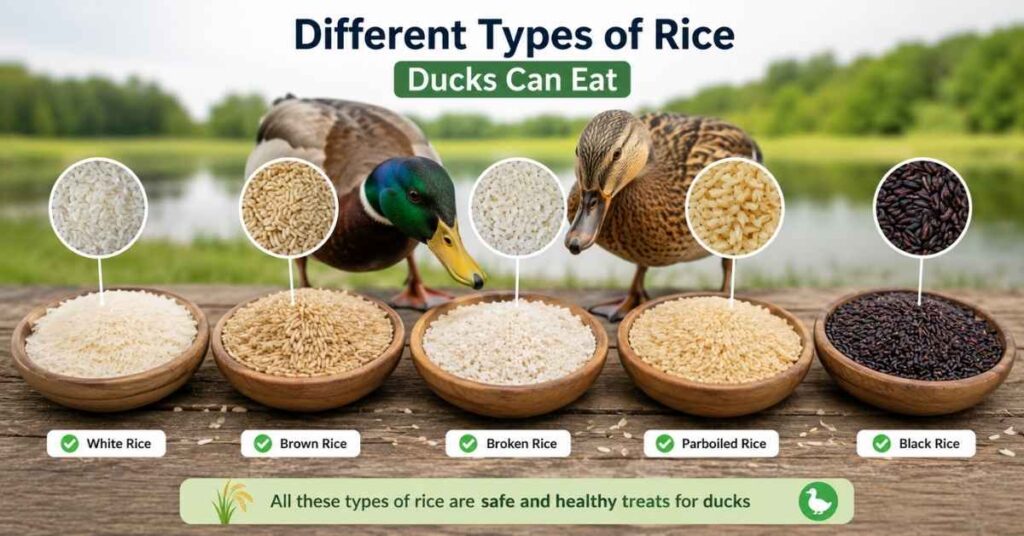
Not every type of rice is identical, but several varieties are suitable when served plain.
White Rice
White rice is one of the most common grains people feed ducks.
It is safe but relatively low in fiber compared to brown rice.
Brown Rice
Brown rice retains its outer bran layer, giving it slightly more fiber and nutrients.
Many duck owners prefer it because of its higher nutritional value.
Wild Rice
Although called “rice,” wild rice is technically the seed of an aquatic grass.
Plain wild rice can also be fed occasionally.
Jasmine Rice
Plain jasmine rice is another acceptable choice provided it contains no added flavorings.
Basmati Rice
Basmati rice is safe for ducks when served plain and dry.
Sticky Rice
Sticky rice is not toxic, but because it tends to clump together, it should only be offered in small quantities.
Instant Rice
Plain instant rice without seasoning is generally safe.
However, many packaged products contain:
- Salt
- Oils
- Preservatives
- Flavor enhancers
Always check the ingredient label before feeding any packaged rice product to ducks.
Rice Preparations Ducks Should Never Eat
Although plain uncooked rice is safe, many prepared rice dishes contain ingredients that are unhealthy for ducks.
Fried Rice
Avoid feeding fried rice because it usually contains:
- Cooking oil
- Salt
- Garlic
- Onions
- Soy sauce
- Other seasonings
These ingredients can upset a duck’s digestive system, and onions are considered unsuitable for ducks.
Rice with Salt
Ducks do not need added salt in their diet.
Too much sodium may negatively affect their health, so always serve rice plain.
Rice with Butter or Oil
Butter and cooking oils add unnecessary fat and calories without improving the nutritional value for ducks.
Rice with Garlic or Onions
Garlic and onions belong to the allium family. Rice containing these ingredients should never be offered to ducks.
Spicy Rice
Seasonings such as:
- Chili powder
- Black pepper
- Curry
- Hot sauce
- Cajun seasoning
are not suitable for ducks and should always be avoided.
Moldy or Spoiled Rice
Never feed rice that is:
- Moldy
- Sour-smelling
- Left unrefrigerated for long periods
- Contaminated with insects
Spoiled food may contain harmful bacteria or toxins that can make ducks seriously ill.
Safe vs. Unsafe Rice
| Safe Rice | Avoid Feeding |
|---|---|
| Plain uncooked white rice | Fried rice |
| Plain uncooked brown rice | Salted rice |
| Plain wild rice | Buttered rice |
| Plain basmati rice | Rice with onions |
| Plain jasmine rice | Rice with garlic |
| Fresh dry rice | Moldy rice |
Learn more…. Can Ducks Eat Cooked Rice?
Can Ducklings Eat Uncooked Rice?
Many duck owners ask whether ducklings can eat uncooked rice.
The answer is yes, but only in very small amounts and as an occasional treat.
Is Raw Rice Safe for Baby Ducks?
Ducklings can digest small amounts of plain rice, but their growing bodies require a diet rich in:
- Protein
- Vitamins
- Minerals
- Amino acids
These nutrients come from quality waterfowl starter feed, not rice.
Portion Recommendations
If you decide to offer rice:
- Feed only a few grains at a time.
- Ensure fresh water is always available.
- Do not feed rice every day.
Better Starter Foods
More nutritious options include:
- Peas
- Duckweed
- Lettuce
- Cucumber
- Pumpkin
- Oats (in moderation)
These foods provide greater nutritional benefits than rice.
How Much Uncooked Rice Can Ducks Eat?
Even healthy treats should be offered responsibly.
Portion Sizes
Rice should make up only a small percentage of your duck’s diet.
The majority of daily nutrition should come from:
- Complete duck feed
- Safe vegetables
- Natural forage
- Fresh water
Feeding Frequency
Offer uncooked rice only occasionally, not as an everyday food.
A varied diet supports healthier growth and better overall nutrition.
Signs of Overfeeding
Too many treats—including rice—may cause ducks to:
- Ignore balanced feed.
- Consume fewer essential nutrients.
- Gain unnecessary weight.
- Eat a less varied diet.
The Truth About the “Rice Explodes in Birds” Myth
One of the biggest reasons people search this topic is the old myth that uncooked rice causes birds’ stomachs to explode.
Where the Myth Began
The belief became popular after weddings where guests traditionally threw uncooked rice.
Over time, people claimed birds would eat the rice and suffer serious harm.
Why the Myth Is Incorrect
Modern wildlife experts have found no reliable scientific evidence supporting this claim.
Birds, including ducks, naturally consume many dry grains as part of their normal diet.
What Wildlife Experts Recommend
Most experts agree that plain uncooked rice can be fed occasionally.
The more important concern is ensuring ducks receive balanced nutrition rather than relying heavily on treats.
Myth vs. Fact
| Myth | Fact |
|---|---|
| Raw rice explodes inside ducks | ❌ False |
| Ducks cannot digest dry rice | ❌ False |
| Plain uncooked rice is poisonous | ❌ False |
| Rice should replace duck feed | ❌ False |
| Rice is an occasional treat | ✅ True |
Better Foods Than Rice for Ducks
Although rice is safe, many foods offer greater nutritional value.
Nutritious Vegetables
Excellent choices include:
- Peas
- Lettuce
- Pumpkin
- Carrots
- Cucumber
- Zucchini
Healthy Grains
Other suitable grains include:
- Oats
- Cracked corn
- Barley
These can provide variety when fed appropriately.
Fruits in Moderation
Occasional fruit treats include:
- Blueberries
- Strawberries
- Watermelon
- Seedless grapes
Because fruits contain natural sugars, they should only be offered in moderation.
Balanced Waterfowl Feed
A commercial waterfowl feed remains the best foundation for a healthy duck diet because it provides the protein, vitamins, and minerals ducks need every day.
Rice vs. Better Duck Foods
| Food | Nutritional Value | Recommended Frequency |
|---|---|---|
| Plain uncooked rice | Moderate | Occasionally |
| Waterfowl feed | Excellent | Daily |
| Peas | Excellent | Frequently |
| Lettuce | Very Good | Frequently |
| Oats | Good | Occasionally |
| Pumpkin | Very Good | Frequently |
Common Feeding Mistakes to Avoid
Avoiding these common errors helps keep your ducks healthy.
Feeding Too Much Rice
Even safe foods can become unhealthy when offered excessively.
Giving Seasoned Leftovers
Never feed rice mixed with:
- Salt
- Butter
- Oils
- Garlic
- Onions
- Spices
Ignoring Nutritional Balance
Treats should always supplement, not replace, complete duck feed.
Feeding Spoiled Food
Discard any rice that smells sour, has mold, or has been stored improperly.
Frequently Asked Questions
Can ducks eat uncooked rice?
Yes. Plain uncooked rice is safe for ducks in moderation and can be offered as an occasional treat.
Can ducks digest uncooked rice?
Yes. Ducks naturally digest grains, including plain raw rice.
Can wild ducks eat uncooked rice?
Yes. Wild ducks can eat plain uncooked rice occasionally, but they should not depend on it as a primary food source.
Can ducklings eat uncooked rice?
Yes, but only in very small amounts alongside a balanced starter feed.
Is uncooked rice better than cooked rice?
Both are generally safe when plain. Cooked rice is softer, while uncooked rice is easier to scatter for outdoor feeding.
Does uncooked rice expand inside a duck’s stomach?
No. This is a common myth and is not supported by reliable scientific evidence.
Can ducks eat brown rice?
Yes. Plain uncooked or cooked brown rice is safe in moderation.
How much uncooked rice is safe?
Rice should only be an occasional treat and should never replace balanced duck feed.
Is rice healthier than bread?
Yes. Plain rice is generally a better occasional option than bread, which provides little nutritional value for ducks.
What foods should ducks avoid?
Avoid foods containing salt, onions, garlic, chocolate, avocado, mold, excessive sugar, or heavy seasonings.
Final Thoughts
Can ducks eat uncooked rice? Yes, they can. Plain uncooked rice is a safe occasional treat for ducks and does not cause their stomachs to expand or explode. However, rice should always be fed in moderation because it lacks the complete nutrition ducks need for long-term health.
For the healthiest flock, make quality waterfowl feed the foundation of your ducks’ diet and supplement it with safe vegetables, whole grains, and occasional treats such as plain uncooked or cooked rice. Avoid seasoned, fried, salty, buttery, or spoiled rice, and always provide fresh, clean water.
By offering a balanced diet and understanding the facts behind common feeding myths, you can keep your ducks healthy, active, and well-nourished throughout every stage of their lives.