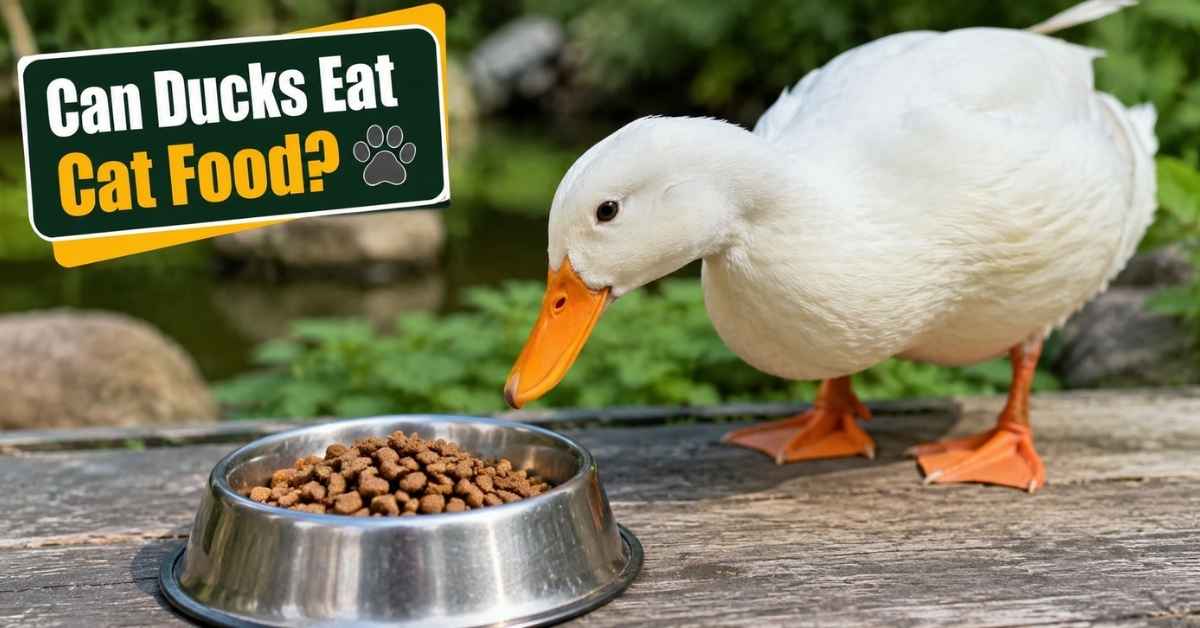
If you’ve ever spotted your ducks pecking at the family cat’s food bowl, you may have wondered, can ducks eat cat food? It’s a surprisingly common question among backyard poultry owners, especially those who keep multiple animals on the same property.
The short answer is yes, ducks can eat cat food occasionally, but it should not be a regular part of their diet. Cat food contains high levels of protein and nutrients that ducks can consume in small amounts. However, it is specifically formulated for cats, not waterfowl. Feeding cat food too often may create nutritional imbalances and health issues over time.
In this guide, you’ll learn whether cat food is safe for ducks, when it might be useful, potential risks, and the best feeding practices for maintaining a healthy flock.
Can Ducks Eat Cat Food?
Yes, ducks can eat cat food in moderation.
Many duck owners discover that their birds occasionally steal bites from a cat’s food dish. In most cases, a small amount won’t cause immediate harm. In fact, some poultry keepers have historically used high-protein cat food as a temporary supplement during certain stages of growth or feather development.
However, cat food should never replace a complete duck feed because ducks have very different nutritional requirements than cats.
Why Ducks Are Attracted to Cat Food
Ducks are naturally curious foragers.
In the wild, they consume a wide variety of foods, including:
- Insects
- Small aquatic creatures
- Seeds
- Grasses
- Aquatic plants
- Worms
Because cat food often contains fish, poultry, or meat ingredients, ducks may find its smell and flavor appealing.
Additionally, the high protein content can make cat food attractive to growing ducks.
Nutritional Composition of Cat Food
To understand whether cat food is appropriate for ducks, it’s helpful to examine what’s inside.
Most commercial cat foods contain:
- Animal proteins
- Fats
- Vitamins
- Minerals
- Amino acids
- Preservatives
These nutrients are designed to meet the needs of obligate carnivores—cats.
Ducks, on the other hand, require a more balanced diet that includes grains, vegetation, insects, and specialized waterfowl feed.
Potential Benefits of Cat Food for Ducks
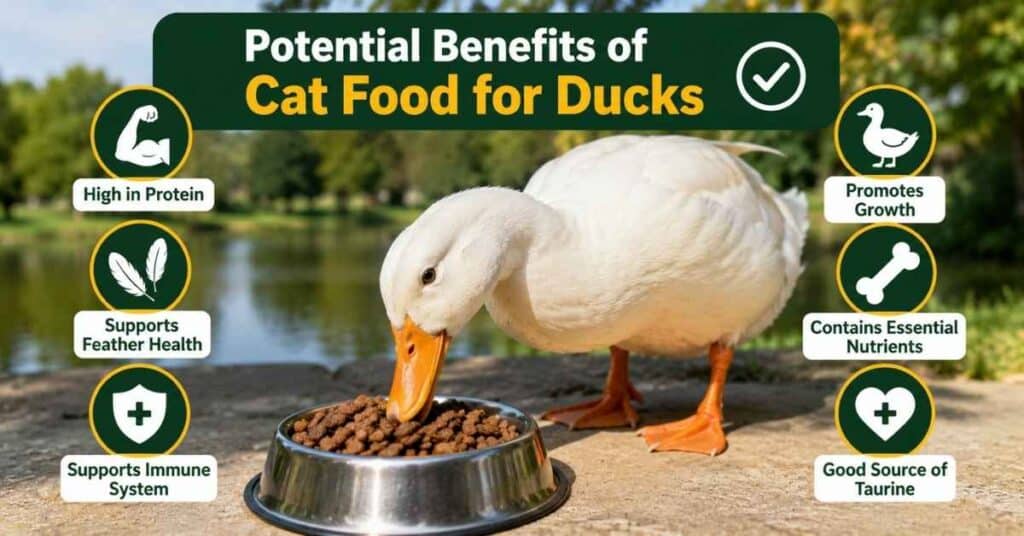
Although cat food is not ideal as a staple feed, it may provide some temporary benefits under specific circumstances.
Extra Protein During Molting
Molting is the natural process where ducks shed old feathers and grow new ones.
During this period, ducks require additional protein to support feather production.
Small amounts of high-protein cat food may occasionally help supplement protein intake.
Support for Growing Ducklings
Young ducklings need more protein than adult ducks.
Some poultry keepers have used cat food as an emergency supplement when proper duck starter feed was unavailable.
However, commercial waterfowl starter feed remains the better option.
Temporary Nutritional Support
In rare situations where ducks need short-term nutritional support, a veterinarian may recommend additional protein sources.
Still, cat food should only serve as a temporary solution.
Risks of Feeding Cat Food to Ducks
While ducks can eat cat food, several risks make it unsuitable for regular feeding.
Excessive Protein Levels
Many cat foods contain protein levels far above what adult ducks require.
Too much protein may contribute to:
- Rapid growth issues
- Angel wing deformity in young birds
- Kidney stress
- Nutritional imbalance
Maintaining appropriate protein levels is important for healthy development.
High Fat Content
Cat food often contains significant amounts of fat.
Excessive fat intake can lead to:
- Obesity
- Reduced mobility
- Fatty liver disease
- Poor overall health
Ducks thrive on a balanced diet rather than a high-fat one.
Excess Sodium
Commercial cat foods may contain more sodium than ducks need.
Too much salt can negatively affect hydration and overall health.
Nutrient Imbalance
Even premium cat food lacks the proper nutrient ratios required by ducks.
Over time, regular feeding may result in deficiencies or excesses of key nutrients.
Can Ducklings Eat Cat Food?
Ducklings require special consideration.
Technically, ducklings can consume small amounts of cat food. However, regular feeding is not recommended.
Young ducks need carefully balanced nutrition to support:
- Bone development
- Muscle growth
- Feather formation
- Organ health
Commercial duck starter feed provides a safer and more complete nutritional profile.
Risks for Ducklings
Excessive cat food consumption may increase the risk of:
- Angel wing
- Improper growth
- Nutritional deficiencies
- Digestive issues
Therefore, ducklings should primarily eat waterfowl-specific feed.
Dry Cat Food vs Wet Cat Food for Ducks
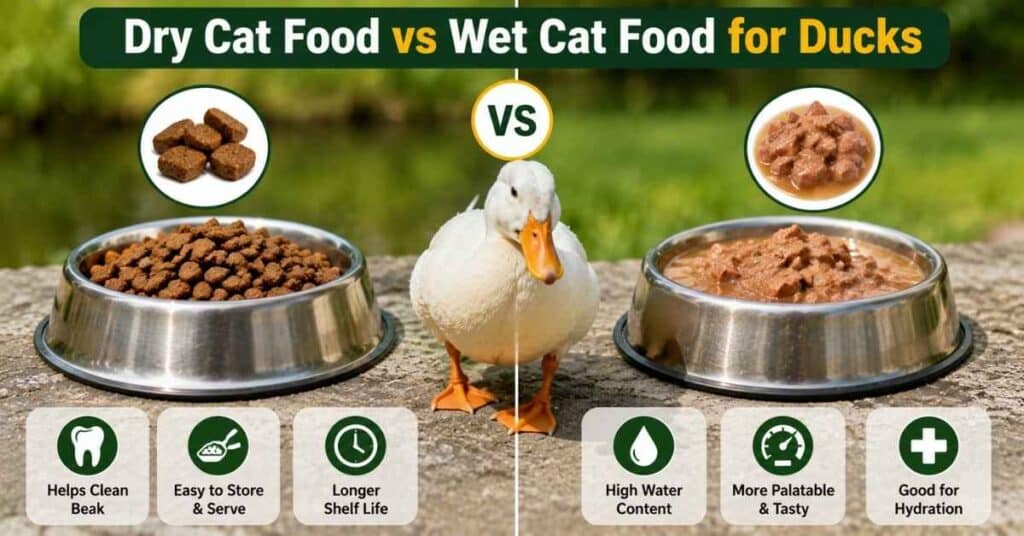
Many owners ask which form is safer.
Dry Cat Food
Dry cat food is generally less messy and easier to store.
However, hard kibble may be difficult for some ducks to swallow, especially young birds.
Wet Cat Food
Wet cat food is softer and easier to consume.
However, it spoils quickly and can attract insects if left outdoors.
Neither option should become a regular dietary component.
When Might Ducks Accidentally Eat Cat Food?
This situation is more common than many people realize.
Ducks often access cat food when:
- Cats eat outdoors
- Feed bowls are left unattended
- Ducks share living spaces with other animals
- Feeding stations are not separated
An occasional nibble is rarely a reason for concern.
Learn More… Can Ducks Eat Lettuce?
Healthier Protein Sources for Ducks
Instead of cat food, consider safer protein-rich foods.
Better Alternatives
Healthy options include:
- Mealworms
- Black soldier fly larvae
- Earthworms
- Crickets
- Waterfowl feed
- Duck starter feed
- Cooked eggs (occasionally)
These foods provide protein while better matching a duck’s natural dietary needs.
What Should Ducks Eat Daily?
A healthy duck diet should focus on balanced nutrition.
Ideal Duck Diet
Most ducks thrive on:
- Quality waterfowl pellets
- Duck feed
- Fresh vegetables
- Leafy greens
- Peas
- Corn
- Insects
- Clean water
A varied diet supports long-term health and productivity.
Signs Your Duck Is Eating Too Much Cat Food
Watch for these warning signs:
- Rapid weight gain
- Excessive fat deposits
- Reduced activity
- Digestive upset
- Feather abnormalities
- Poor egg production
If these symptoms appear, review your feeding program and consult a poultry veterinarian if necessary.
Tips for Feeding Ducks Safely
To keep your flock healthy:
1. Prioritize Duck Feed
Duck-specific feed should always serve as the primary food source.
2. Limit Treats
Treats should account for only a small portion of the diet.
3. Separate Feeding Areas
Keep cat food inaccessible to ducks whenever possible.
4. Monitor Body Condition
Observe weight, feather quality, and overall health regularly.
5. Provide Fresh Water
Ducks need constant access to clean water for digestion and hydration.
Common Feeding Mistakes to Avoid
Many duck owners unknowingly make mistakes that affect flock health.
Avoid:
- Feeding excessive cat food
- Offering too many processed foods
- Relying heavily on treats
- Ignoring balanced nutrition
- Feeding moldy food
Good feeding habits prevent many health problems.
Frequently Asked Questions
Can ducks eat cat food?
Yes. Ducks can eat small amounts of cat food occasionally, but it should not replace a balanced duck diet.
Is cat food bad for ducks?
Cat food is not immediately harmful in small quantities. However, regular feeding can cause nutritional imbalances due to excessive protein, fat, and sodium.
Can ducklings eat cat food?
Ducklings may consume small amounts accidentally, but they should primarily eat duck starter feed formulated for their growth needs.
Can cat food cause angel wing in ducks?
Excessive protein intake may contribute to angel wing in growing ducks. Therefore, feeding cat food regularly is not recommended.
What happens if ducks eat cat food?
Most ducks experience no issues after eating a small amount. Problems typically arise only when cat food becomes a frequent part of the diet.
Is wet or dry cat food better for ducks?
Neither is ideal. If consumed accidentally, both are generally safe in small amounts, but neither should be a regular food source.
What protein sources are better than cat food?
Mealworms, insects, waterfowl feed, duck starter feed, and black soldier fly larvae provide healthier protein options.
Conclusion
So, can ducks eat cat food? Yes, ducks can safely consume small amounts of cat food from time to time. However, it should never become a staple in their diet. While cat food provides protein and other nutrients, it is designed specifically for cats and does not meet the unique nutritional requirements of ducks.
For optimal health, focus on high-quality duck feed, fresh vegetables, insects, and other natural food sources. If your ducks occasionally sneak a bite from the cat’s bowl, there’s usually no reason to worry. However, long-term feeding can lead to nutritional imbalances and health concerns.
By providing a balanced diet and appropriate treats, you can ensure your ducks remain healthy, active, and productive throughout their lives. If you’re interested in learning more about safe foods for ducks, explore additional guides on waterfowl nutrition and backyard duck care.