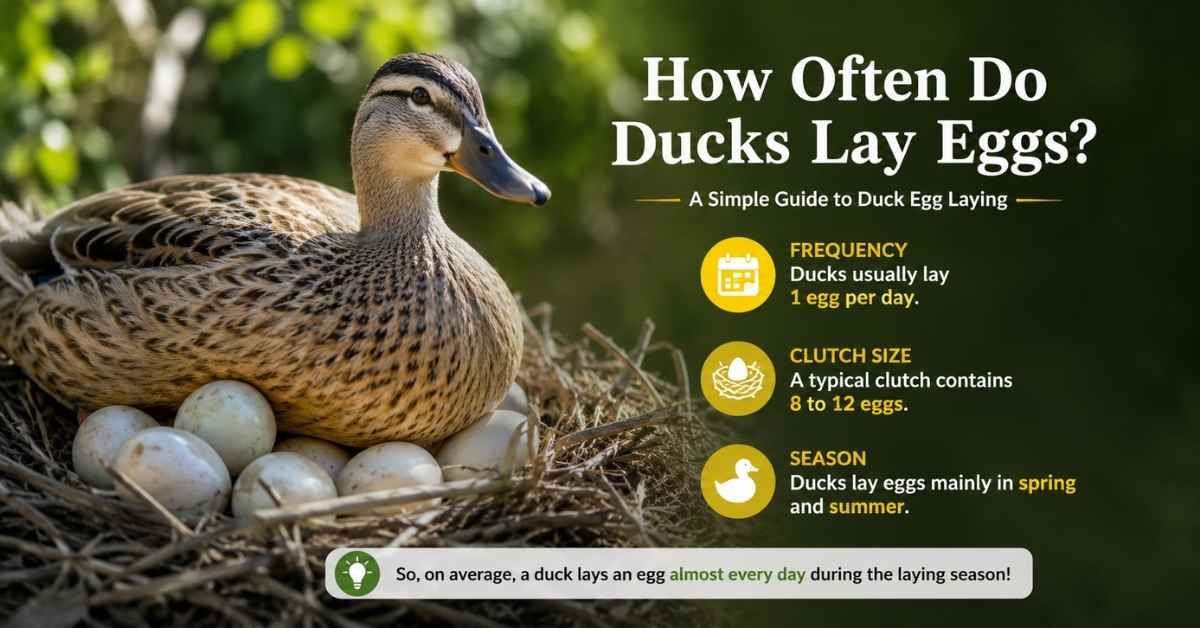
How often do ducks lay eggs? Most healthy laying ducks produce one egg every 24 to 48 hours during peak laying season, which equals roughly 4 to 7 eggs per week. Depending on the breed, age, nutrition, daylight exposure, and overall flock management, a duck can lay anywhere from 150 to 340 eggs per year. High-producing breeds such as Khaki Campbell and Welsh Harlequin are capable of laying almost daily, while heavier breeds like Rouen and Pekin ducks typically produce fewer eggs.
Whether you’re a new duck owner, a homesteader, or simply curious about duck egg production, understanding what affects a duck’s laying cycle can help you set realistic expectations. From breed genetics and reproductive maturity to seasonal egg production and nutrition, several factors determine how productive your flock will be.
Quick Answer: How Often Do Ducks Lay Eggs?
Most laying ducks produce:
| Time Period | Average Production |
|---|---|
| Daily | 0–1 Egg |
| Weekly | 4–7 Eggs |
| Monthly | 18–28 Eggs |
| Yearly | 150–340 Eggs |
The exact laying frequency depends on several variables, including:
- Duck breed
- Age
- Photoperiod (daylight hours)
- Nutrition
- Health
- Stress levels
- Environmental conditions
A productive laying duck living in ideal conditions can provide eggs almost every day during her peak reproductive years.
What Most Duck Owners Can Realistically Expect
One of the biggest mistakes new poultry keepers make is assuming that every duck lays eggs at the same rate. In reality, egg production varies dramatically between breeds and management systems.
A backyard pet duck may produce only a few eggs per week, while a carefully managed flock of high-producing laying ducks can provide a steady supply of eggs throughout much of the year.
For example:
- A flock of five Khaki Campbell ducks may produce 25 to 35 eggs weekly.
- Five Pekin ducks may produce 15 to 25 eggs weekly.
- Five ornamental breeds may produce significantly fewer eggs.
This difference often surprises new owners who read generic articles that fail to explain how strongly genetics influence egg yield efficiency.
Backyard Pet Ducks vs High-Producing Egg Breeds
Not all ducks were developed for egg production.
Some breeds were selectively bred to maximize egg output, while others were bred primarily for meat production, exhibition, or dual-purpose use.
Highly productive egg-laying breeds include:
- Khaki Campbell
- Welsh Harlequin
- Indian Runner
- Ancona
Moderate producers include:
- Pekin
- Cayuga
Lower-producing breeds include:
- Rouen
- Call Ducks
If your primary goal is fresh eggs, breed selection matters more than almost any other factor.
Why Two Duck Owners Can Get Completely Different Results
Imagine two duck owners with the same number of birds.
One provides:
- Balanced protein-rich feed
- Free-choice calcium
- Clean water
- Predator protection
- Proper nesting areas
The other provides inconsistent nutrition and limited daylight exposure.
Even with identical breeds, egg production can differ dramatically.
This is why understanding flock management is just as important as choosing the right breed.
The Biggest Misconception About Duck Egg Production
Many people believe ducks lay eggs every single day year-round.
While some laying breeds come close during peak production periods, ducks are still influenced by:
- Seasonal changes
- Molting
- Age
- Nutrition
- Reproductive hormones
Temporary declines are completely normal and should not immediately cause concern.
At What Age Do Ducks Start Laying Eggs?
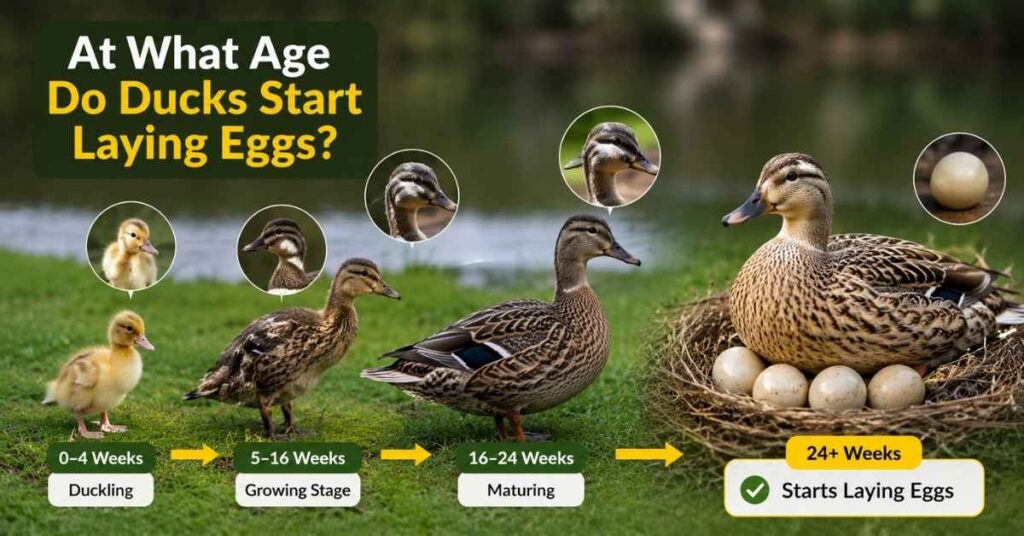
Most ducks begin laying eggs between 4 and 7 months of age, although the exact timing varies by breed.
Lighter egg-producing breeds generally mature faster than larger meat breeds.
Typical Laying Age by Breed
| Breed | First Egg Age |
|---|---|
| Khaki Campbell | 4–5 Months |
| Welsh Harlequin | 4–6 Months |
| Indian Runner | 5–6 Months |
| Ancona | 5–6 Months |
| Pekin | 5–7 Months |
| Rouen | 6–7 Months |
These ranges may vary depending on nutrition and environmental conditions.
Signs Your Duck Is Getting Ready to Lay
Several behavioral changes often occur before the first egg appears.
Common signs include:
- Increased nesting behavior
- Spending more time in sheltered areas
- Collecting bedding materials
- Louder vocalizations
- Slight widening of pelvic bones
Many owners notice these signs a few weeks before egg production begins.
What Happens Before the First Egg Appears?
As ducks approach reproductive maturity, hormonal changes trigger the development of the reproductive system.
This process involves:
- Ovulation
- Egg formation
- Shell development
- Hormonal regulation
Once these biological processes become established, regular laying patterns begin to emerge.
Why Some Ducks Start Earlier Than Others
Several factors influence laying age:
- Breed genetics
- Protein intake
- Daylight exposure
- Overall health
- Environmental stress
Healthy ducks receiving balanced nutrition generally reach reproductive maturity sooner than ducks experiencing nutritional deficiencies.
How Many Eggs Does Each Duck Breed Lay?
Breed selection has the greatest impact on long-term egg production.
Some ducks are capable of producing nearly as many eggs as highly productive chickens, while others lay much less frequently.
Highest Egg-Laying Duck Breeds
If your goal is maximum egg production, these breeds consistently rank among the best performers.
Khaki Campbell
The Khaki Campbell is widely regarded as one of the most productive laying ducks in the world.
Expected production:
- 250–340 eggs annually
- 5–7 eggs weekly
Welsh Harlequin
This breed combines excellent egg production with a calm temperament.
Expected production:
- 240–330 eggs annually
- 5–6 eggs weekly
Indian Runner
Known for their upright posture and active behavior, Runner ducks are reliable layers.
Expected production:
- 180–300 eggs annually
- 4–6 eggs weekly
Moderate Egg Producers
These breeds still provide a good supply of eggs but generally produce fewer than specialist laying breeds.
Pekin Ducks
Pekin ducks are often raised for meat production but still produce a respectable number of eggs.
Expected production:
- 150–250 eggs annually
- 3–5 eggs weekly
Cayuga Ducks
Cayugas are prized for their unique appearance and attractive eggs.
Expected production:
- 100–150 eggs annually
- 2–4 eggs weekly
Breeds Kept More for Appearance Than Egg Production
Certain breeds are selected primarily for ornamental purposes.
Examples include:
- Rouen
- Call Ducks
- Crested Ducks
These birds can still lay eggs, but productivity is generally lower than specialized laying breeds.
Complete Duck Breed Egg Production Comparison Table
| Breed | Eggs Per Year | Eggs Per Week | Egg Color | Productivity |
|---|---|---|---|---|
| Khaki Campbell | 250–340 | 5–7 | White | Excellent |
| Welsh Harlequin | 240–330 | 5–6 | White | Excellent |
| Ancona | 210–280 | 4–6 | White | Very Good |
| Indian Runner | 180–300 | 4–6 | White | Very Good |
| Pekin | 150–250 | 3–5 | White | Good |
| Cayuga | 100–150 | 2–4 | Gray to Black | Moderate |
| Rouen | 80–150 | 2–3 | White | Moderate |
Choosing a breed that aligns with your goals is one of the most effective ways to improve overall flock productivity. A well-managed flock of high-producing ducks can supply a family with hundreds of fresh duck eggs every year while requiring relatively little additional effort.
Do Ducks Lay Eggs Every Day?
One of the most common questions new duck owners ask is whether ducks lay eggs every day. The answer is sometimes, but not always.
A healthy laying duck in her peak production years can produce one egg every 24 to 48 hours, especially during spring and early summer when environmental conditions are ideal. However, even the best egg-laying breeds occasionally skip days due to natural biological processes.
Why Some Ducks Lay Daily During Peak Season
High-producing breeds such as Khaki Campbell, Welsh Harlequin, and Indian Runner ducks were selectively bred for strong egg production.
When these ducks receive:
- Adequate protein
- Consistent daylight
- Proper hydration
- Low stress levels
- Balanced nutrition
they may lay nearly every day for extended periods.
Many backyard owners report collecting eggs six or even seven days per week from these productive breeds during peak laying months.
Why Other Ducks Skip Days
Egg formation is a demanding biological process. Producing an egg requires:
- Calcium
- Protein
- Energy
- Hormonal regulation
If any of these factors become limited, the laying cycle can slow down.
Common reasons ducks skip days include:
- Molting
- Seasonal changes
- Stress
- Heat stress
- Nutritional deficiencies
- Aging
Skipping occasional days is completely normal and does not automatically indicate a problem.
Can a Duck Lay More Than One Egg Per Day?
In almost all cases, no.
A duck’s reproductive cycle generally allows for the production of one egg during each ovulation cycle. While unusual reproductive abnormalities can occasionally occur, healthy ducks typically lay a maximum of one egg per day.
What a Normal Laying Schedule Looks Like
For most productive laying ducks:
- Peak season: 5–7 eggs weekly
- Moderate season: 3–5 eggs weekly
- Winter: 0–3 eggs weekly
Understanding these fluctuations helps prevent unrealistic expectations.
When During the Day Do Ducks Usually Lay Eggs?
Unlike chickens that may lay throughout the day, ducks generally prefer laying during the early morning hours.
Most ducks lay:
- Before sunrise
- Shortly after sunrise
- During the early morning
This predictable behavior makes egg collection easier for flock owners.
Morning Laying Patterns
Many ducks complete laying before being released for free-ranging.
This natural pattern evolved because nesting in a secure location helps protect eggs from predators.
Why Ducks Prefer Certain Nesting Times
Egg laying is influenced by:
- Hormone levels
- Circadian rhythms
- Light exposure
- Nest security
A calm environment encourages consistent laying behavior.
How Nest Location Influences Laying Behavior
Ducks often choose nesting areas that are:
- Quiet
- Dry
- Protected
- Comfortable
Poor nesting conditions can contribute to reduced production or hidden eggs.
What Changes Egg Production Throughout the Year?
One of the most misunderstood aspects of duck egg production is seasonality.
Even highly productive ducks rarely maintain identical production levels throughout the year.
Spring: Peak Production Season
Spring is typically the most productive time of year.
Increasing daylight triggers reproductive hormones that stimulate ovulation and egg formation.
During spring:
- Egg production peaks
- Fertility increases
- Nesting behavior intensifies
Many duck owners collect the highest number of eggs during this period.
Summer: Consistent Egg Output
Summer usually brings stable production.
As long as ducks have:
- Clean water
- Shade
- Proper nutrition
they often continue laying consistently.
However, extreme heat can reduce egg production in some regions.
Fall: The Beginning of Decline
As daylight decreases, many ducks begin reducing their laying frequency.
During fall, ducks may also prepare for molting, which diverts nutrients away from egg production.
Winter: Why Production Often Slows Down
Winter often causes the largest decline in egg production.
The primary reason is reduced photoperiod, which refers to the number of daylight hours available each day.
When daylight drops below approximately 14 hours:
- Reproductive hormones decline
- Ovulation slows
- Egg production decreases
Some ducks continue laying through winter, but output is usually lower.
Seasonal Egg Production Calendar
| Season | Production Level |
|---|---|
| Spring | Very High |
| Summer | High |
| Fall | Moderate |
| Winter | Low |
Understanding these natural cycles helps owners avoid unnecessary concern during seasonal slowdowns.
Why Your Duck Suddenly Stopped Laying Eggs
Few situations frustrate duck owners more than finding fewer eggs in the nest.
Fortunately, most production declines have logical explanations.
Natural Reasons
Molting
Molting is one of the most common reasons ducks stop laying.
During molt:
- Old feathers are shed
- New feathers grow
- Nutrients are redirected away from reproduction
Egg production often resumes after molting ends.
Aging
Duck egg production naturally declines with age.
Most ducks produce their highest number of eggs during:
- Year 1
- Year 2
Afterward, gradual reductions are normal.
Seasonal Changes
Changes in daylight frequently cause temporary declines.
This is especially noticeable during fall and winter.
Management-Related Reasons
Poor Nutrition
A laying duck requires:
- Protein
- Calcium
- Vitamins
- Minerals
Nutritional deficiencies can significantly reduce productivity.
Inadequate Daylight
Daylight directly influences reproductive hormones.
Insufficient light often results in lower laying rates.
Stress
Stress is a major but often overlooked factor.
Common stressors include:
- Predator activity
- Relocation
- Extreme weather
- Flock bullying
- Sudden environmental changes
Stress can disrupt the reproductive cycle and reduce egg production.
Health-Related Reasons
Parasites
Internal and external parasites can weaken ducks and affect laying performance.
Illness
Various diseases can interfere with normal reproductive function.
Reproductive Disorders
Conditions affecting the reproductive tract may reduce or stop egg production entirely.
How to Identify the Real Cause
Ask yourself:
- Has daylight recently changed?
- Is the duck molting?
- Has feed quality changed?
- Are predators causing stress?
- Is the duck showing signs of illness?
Working through these questions usually reveals the underlying cause.
The Four Factors That Determine How Many Eggs a Duck Will Lay
Every duck’s productivity is influenced by four core pillars.
Genetics
Genetics establish the maximum egg production potential.
A Khaki Campbell will naturally outperform most ornamental breeds regardless of management.
Nutrition
Feed quality directly affects:
- Egg production
- Shell quality
- Reproductive health
Poor nutrition often leads to fewer eggs and weaker shells.
Environment
Environmental conditions influence stress levels and reproductive efficiency.
Important factors include:
- Housing
- Clean water
- Space
- Predator protection
- Nesting conditions
Health
Healthy ducks consistently outperform unhealthy birds.
Regular monitoring helps maintain long-term flock productivity.
The most successful flock owners optimize all four factors simultaneously rather than focusing on only one area.
What Ducks Need to Maintain Consistent Egg Production
Producing eggs requires significant biological resources.
Providing proper care supports both quantity and quality.
Protein Requirements for Laying Ducks
Protein supports:
- Egg formation
- Feather maintenance
- Overall health
Most laying ducks perform best on feed containing approximately 16%–18% protein.
Why Calcium Matters for Both Quantity and Shell Quality
Calcium plays a critical role in:
- Eggshell formation
- Bone health
- Reproductive function
Many experienced keepers provide free-choice oyster shell to ensure adequate calcium intake.
The Importance of Clean Water
Water is often overlooked despite being essential.
Ducks need constant access to clean water for:
- Digestion
- Feed consumption
- Egg production
- General health
Without sufficient water, productivity can decline rapidly.
Nesting Conditions That Encourage Laying
A comfortable nesting area should be:
- Dry
- Quiet
- Protected
- Clean
Well-designed nesting areas encourage consistent laying behavior.
How Much Space Ducks Actually Need
Overcrowding increases stress and competition.
Providing adequate space helps maintain healthier and more productive birds.
Duck Egg Production by Age: What to Expect Over Time
A duck’s egg production changes significantly throughout her life. Understanding these stages helps set realistic expectations and prevents unnecessary concern when production naturally declines.
First Year
The first year is when most ducks begin laying eggs and gradually increase production.
During this period:
- Reproductive maturity develops
- Laying frequency increases
- Egg size becomes more consistent
- Production approaches peak levels
Many ducks lay their first egg between 4 and 7 months of age, depending on breed and environmental conditions.
Peak Production Years
Most laying ducks reach peak productivity during their first two years.
At this stage:
- Egg yield efficiency is highest
- Shell quality is strongest
- Laying frequency is most consistent
High-producing breeds such as Khaki Campbell, Welsh Harlequin, and Indian Runner ducks often produce near their genetic potential during these years.
Mature Adult Years
From years three to five, production typically begins a gradual decline.
While ducks still lay regularly, owners may notice:
- Fewer eggs per week
- Longer intervals between eggs
- Slightly increased seasonal fluctuations
This is a normal part of the reproductive cycle.
Senior Ducks
After five years of age, most ducks experience a noticeable reduction in egg production.
Senior ducks may:
- Lay less frequently
- Skip laying seasons
- Produce fewer eggs annually
However, many healthy ducks continue laying occasional eggs well beyond this age.
Lifetime Egg Production Timeline
| Duck Age | Expected Production |
|---|---|
| 0–4 Months | No Eggs |
| 4–7 Months | First Eggs Appear |
| 1–2 Years | Peak Production |
| 3–5 Years | Moderate Production |
| 5+ Years | Gradual Decline |
Do Ducks Need a Male to Lay Eggs?
This question causes confusion among many first-time duck owners.
The answer is simple:
No, ducks do not need a male (drake) to lay eggs.
Female ducks naturally produce eggs as part of their reproductive cycle, regardless of whether a drake is present.
Fertile vs Unfertile Eggs
The presence of a drake only affects fertility.
- No drake = unfertilized eggs
- Drake present = potentially fertilized eggs
Both types are completely normal and safe for consumption.
Common Beginner Misunderstandings
Many people assume ducks only lay eggs after mating.
In reality, egg production occurs naturally once a duck reaches reproductive maturity.
What Happens If No Drake Is Present?
Nothing unusual happens.
The duck continues laying eggs according to her normal laying schedule.
This is similar to how chickens produce eggs without a rooster.
Are Ducks Better Egg Layers Than Chickens?
Many backyard poultry keepers compare ducks and chickens before building a flock.
The answer depends on your goals.
Egg Quantity Comparison
| Feature | Ducks | Chickens |
|---|---|---|
| Eggs Per Year | 150–340 | 180–320 |
| Peak Production | Very High | Very High |
| Seasonal Dependence | Moderate | Moderate |
Certain duck breeds rival or exceed many chicken breeds in annual egg production.
Egg Size Comparison
Duck eggs are generally:
- Larger
- Richer
- Higher in fat
- Higher in protein
Many bakers prefer duck eggs because of their richer texture and baking performance.
Nutrition Comparison
Duck eggs typically contain:
- More omega fatty acids
- More calories
- More protein
- Larger yolks
These qualities make them popular among homesteaders and culinary enthusiasts.
Care Requirements Comparison
Ducks generally require:
- More water
- Wetter environments
- Additional cleaning
Chickens often require less water management but may be less cold-hardy than ducks.
Which Is Better for a Backyard Flock?
If your goal is maximum egg production with larger eggs, ducks can be an excellent choice.
If you prefer easier housing and less mess, chickens may be more convenient.
Many homesteaders successfully keep both species together.
How to Increase Duck Egg Production Naturally
If your ducks are laying fewer eggs than expected, improving management practices can often increase productivity.
Improve Feed Quality
Egg production relies heavily on nutrition.
Choose a quality layer feed that provides:
- 16–18% protein
- Essential vitamins
- Essential minerals
- Balanced energy levels
Consistent nutrition supports reproductive health and egg formation.
Optimize Daylight Exposure
Light exposure influences reproductive hormones.
Most productive ducks perform best with approximately:
- 14–16 hours of light daily
Many poultry keepers use supplemental lighting during winter to support egg production.
Reduce Stress Triggers
Stress is one of the most common causes of reduced laying.
Minimize:
- Predator disturbances
- Loud noises
- Sudden environmental changes
- Flock aggression
A calm flock is usually a productive flock.
Improve Nesting Areas
Well-designed nesting spaces encourage consistent laying.
Provide:
- Clean bedding
- Dry nesting boxes
- Quiet locations
- Predator protection
Maintain Proper Flock Health
Healthy ducks consistently outperform unhealthy birds.
Good flock management includes:
- Clean housing
- Fresh water
- Balanced nutrition
- Routine health monitoring
Common Mistakes That Reduce Egg Production
Avoid these common errors:
- Feeding low-protein diets
- Ignoring calcium requirements
- Overcrowding
- Poor sanitation
- Inconsistent feeding schedules
- Inadequate water access
Real-Life Duck Egg Production Examples
Practical examples help illustrate what owners can realistically expect.
Example: Three Pekin Ducks
A flock of three healthy Pekin ducks may produce:
- 9–15 eggs weekly
- 40–60 eggs monthly
- 450–750 eggs annually
Production varies based on season and management.
Example: Five Khaki Campbell Ducks
Five Khaki Campbell ducks can often produce:
- 25–35 eggs weekly
- 100–140 eggs monthly
- 1,250–1,700 eggs annually
This makes them one of the best breeds for consistent egg production.
Example: Small Family Backyard Flock
A mixed flock of:
- Two Pekins
- Two Welsh Harlequins
- One Runner duck
may provide enough eggs to supply a family year-round.
Example: Free-Range vs Confined Ducks
Free-range ducks often benefit from:
- Natural forage
- Insect consumption
- Additional nutrients
However, well-managed confined ducks can achieve equally impressive production when nutritional requirements are fully met.
Duck Egg Production Myths That Cause Confusion
Many misconceptions continue to circulate among new duck owners.
Myth: All Ducks Lay Every Day
Reality:
Even elite laying breeds occasionally skip days.
Myth: Older Ducks Produce Just as Much
Reality:
Egg production naturally declines with age.
Myth: More Feed Means More Eggs
Reality:
Quality matters more than quantity.
Balanced nutrition is the key.
Myth: Winter Means Zero Eggs
Reality:
Many ducks continue laying during winter, although production usually decreases.
Myth: A Drake Is Required for Egg Production
Reality:
Female ducks lay eggs without a male.
Only fertilization requires a drake.
LEARN MORE: What Bees Don’t Sting?
How to Know If Your Duck’s Egg Production Is Normal
Many owners worry unnecessarily when production changes slightly.
Healthy Production Benchmarks
Generally healthy ducks produce:
- 4–7 eggs weekly during peak season
- Consistent shell quality
- Predictable laying patterns
Warning Signs of a Problem
Potential concerns include:
- Sudden production collapse
- Thin shells
- Deformed eggs
- Weight loss
- Reduced appetite
When to Consult a Poultry Veterinarian
Seek professional guidance if:
- Egg production stops unexpectedly
- Illness symptoms appear
- Reproductive issues are suspected
Early intervention often prevents more serious problems.
Egg Production Monitoring Checklist
Track:
- Eggs collected daily
- Feed consumption
- Water intake
- Molting periods
- Seasonal changes
- Health observations
Monitoring helps identify trends before they become problems.
Frequently Asked Questions About Duck Egg Production
How often do ducks lay eggs per week?
Most healthy ducks lay 4 to 7 eggs per week, depending on breed, age, nutrition, and season.
What breed of duck lays the most eggs?
Khaki Campbell ducks are widely considered the most productive egg-laying breed, producing up to 340 eggs annually.
Why did my duck stop laying suddenly?
Common causes include:
- Molting
- Stress
- Seasonal changes
- Poor nutrition
- Illness
How long do ducks continue laying eggs?
Many ducks continue laying for several years, although peak production usually occurs during the first two years.
Do ducks lay eggs in winter?
Yes. Some ducks continue laying through winter, but production often decreases due to reduced daylight hours.
Can ducks lay eggs without a male?
Yes. Female ducks naturally lay eggs without a drake.
What month do ducks start laying?
Most ducks begin laying between 4 and 7 months of age, depending on breed and management.
How many eggs can one duck lay in a year?
Depending on breed, a duck may produce between 150 and 340 eggs annually.
Why are my ducks laying fewer eggs than before?
Possible causes include aging, molting, nutrition deficiencies, stress, or seasonal changes.
How can I encourage my ducks to lay more eggs?
Provide:
- High-quality feed
- Adequate protein
- Calcium supplementation
- Consistent daylight
- Clean water
- Low-stress living conditions
Key Takeaways: Setting Realistic Expectations for Duck Egg Production
How often do ducks lay eggs? Most healthy laying ducks produce one egg every 24 to 48 hours during peak laying season, resulting in approximately 4 to 7 eggs per week and 150 to 340 eggs per year depending on breed and management.
For the best results:
- Choose productive breeds such as Khaki Campbell or Welsh Harlequin
- Provide balanced nutrition and adequate calcium
- Ensure access to clean water at all times
- Reduce stress and predator pressure
- Understand natural seasonal fluctuations
- Monitor flock health regularly
With proper flock management, realistic expectations, and a solid understanding of the duck reproductive cycle, your ducks can provide a dependable supply of fresh eggs for many years.