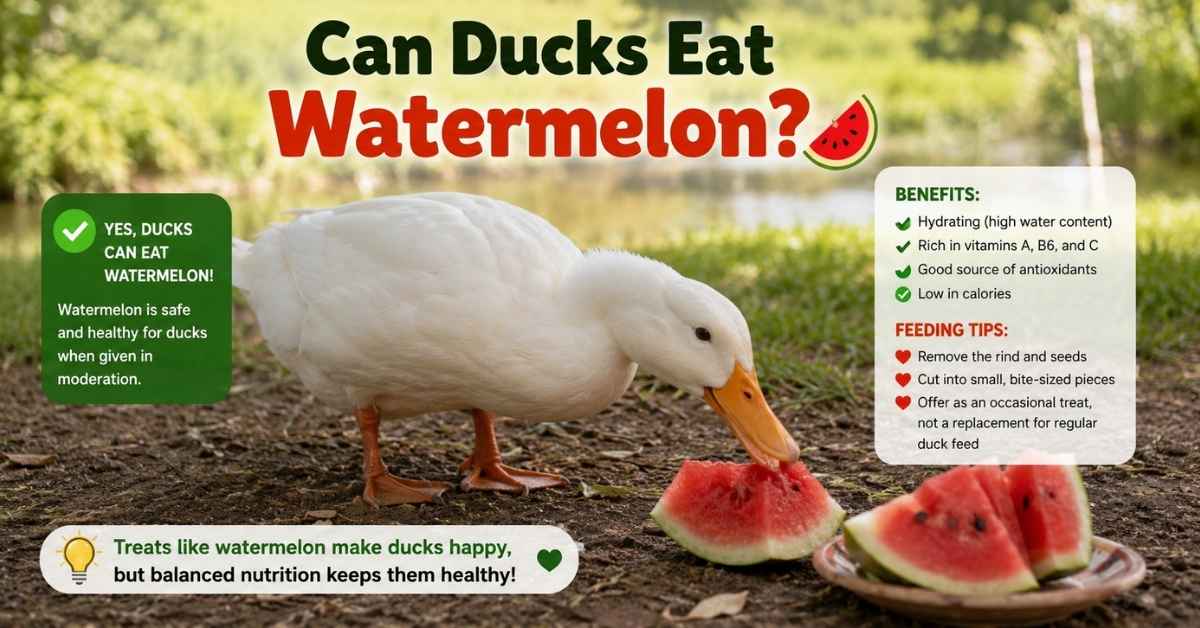
Can ducks eat watermelon? Yes, ducks can eat watermelon safely, and it is actually one of the best summer treats for ducks when fed in moderation. Watermelon is rich in water, vitamins, antioxidants, and natural plant compounds that can support hydration and provide enrichment for backyard ducks, domestic ducks, laying ducks, and even ducklings when properly prepared.
Many duck owners discover leftover watermelon after a family picnic, harvest extra melons from the garden, or simply want to offer their flock a healthy fruit treat. Before sharing watermelon, however, most people want to know whether it is safe, whether ducks can eat watermelon rind or seeds, and how much watermelon should be offered.
The good news is that watermelon is generally considered a duck-safe fruit. Its high water content, soft texture, and natural sweetness make it attractive to ducks while providing valuable hydration during hot weather. However, like any treat, watermelon should be fed responsibly as part of a balanced duck diet.
This guide explains everything you need to know about feeding watermelon to ducks, including watermelon flesh, watermelon rind, watermelon seeds, duckling safety, hydration benefits, serving sizes, and common feeding mistakes.
Quick Answer: Can Ducks Eat Watermelon?
| Question | Quick Answer |
|---|---|
| Can ducks eat watermelon? | Yes |
| Is watermelon safe for ducks? | Yes |
| Can ducklings eat watermelon? | Yes, in moderation |
| Can ducks eat watermelon rind? | Yes, when prepared properly |
| Can ducks eat watermelon seeds? | Generally yes |
| Can ducks eat watermelon every day? | Not recommended |
| Main benefit | Hydration and enrichment |
Watermelon should be viewed as a healthy duck treat, not a replacement for nutritionally complete duck feed.
Why So Many Duck Owners Wonder About Watermelon
The Real Question Behind the Search
When people search “can ducks eat watermelon,” they are usually trying to answer a deeper question:
Will this help my ducks or hurt them?
Most duck keepers genuinely care about flock health and want reassurance before introducing new foods.
Common concerns include:
- Digestive problems
- Choking hazards
- Seed safety
- Rind safety
- Sugar content
- Duckling health
These concerns are completely reasonable because ducks rely on their owners to make safe feeding decisions.
Why Watermelon Is Different From Most Duck Treats
Watermelon stands apart from many fruits because of its extremely high moisture content.
Unlike denser fruits, watermelon provides:
- Hydration
- Refreshment
- Natural sweetness
- Easy swallowing
- Summer enrichment
These characteristics explain why many ducks enthusiastically consume watermelon when given the opportunity.
Is Watermelon Actually Good for Ducks?
Many articles simply state that watermelon is safe.
The more important question is whether watermelon offers meaningful nutritional value.
The answer is yes.
Nutritional Profile of Watermelon
Watermelon contains several nutrients that can support overall health.
| Nutrient | Potential Benefit |
|---|---|
| Water | Hydration support |
| Vitamin A | Eye and immune health |
| Vitamin C | General health support |
| Potassium | Normal body function |
| Lycopene | Antioxidant activity |
| Antioxidants | Cellular protection |
Although watermelon should not replace balanced feed, it can contribute beneficial nutrients when offered responsibly.
How Watermelon Supports Hydration
One of watermelon’s greatest advantages is its water content.
During hot weather, ducks may appreciate water-rich foods that help support hydration.
Benefits may include:
- Increased moisture intake
- Cooling effect during summer
- Additional dietary variety
- Seasonal enrichment
For backyard duck owners, this makes watermelon a particularly appealing warm-weather treat.
Understanding Lycopene and Antioxidants
The bright red color of watermelon comes largely from lycopene, a naturally occurring antioxidant.
Lycopene is also found in foods such as tomatoes and pink grapefruit.
Antioxidants help protect cells from oxidative stress and contribute to overall nutritional quality.
While ducks do not require watermelon to stay healthy, foods containing antioxidants can be valuable additions to a varied diet.
Why Ducks Usually Love Watermelon
Many flock owners notice ducks become excited when watermelon appears.
There are practical reasons for this behavior.
Natural Attraction to Sweet, Moist Foods
Ducks are naturally attracted to foods that are:
- Easy to consume
- Moist
- Soft
- Visually appealing
Watermelon satisfies all of these preferences.
The Role of Color and Texture in Duck Feeding Behavior
Ducks rely heavily on visual cues when selecting food.
The bright red flesh of watermelon often captures their attention quickly.
Its soft texture also makes it easier to eat than many harder fruits and vegetables.
Why Some Ducks Ignore Watermelon at First
Not all ducks immediately embrace new foods.
Some ducks hesitate because:
- The food is unfamiliar
- They have strong preferences
- Dominant birds control feeding areas
- Their diet has been limited previously
This behavior is completely normal.
How to Introduce Watermelon to Picky Ducks
If your ducks ignore watermelon initially, try:
- Offering smaller pieces
- Mixing watermelon with peas
- Combining it with lettuce
- Feeding alongside favorite treats
Many ducks become interested after observing flock mates eating it.
The Safest Ways to Feed Watermelon to Ducks
Preparation matters even with safe foods.
Fresh Watermelon Chunks
Fresh watermelon flesh is generally the best option.
Advantages include:
- Natural moisture
- Easy digestion
- Excellent palatability
- Minimal preparation
Most ducks readily consume bite-sized chunks.
Small Bite-Sized Pieces
Large chunks can be awkward for some birds.
Smaller pieces:
- Improve safety
- Reduce waste
- Encourage feeding
This is especially important for younger ducks.
Watermelon Mixed With Other Duck-Friendly Foods
Experienced duck keepers often create treat mixtures.
Examples include:
- Watermelon and peas
- Watermelon and lettuce
- Watermelon and cucumber
- Watermelon and leafy greens
These combinations improve dietary variety and enrichment.
Serving Watermelon During Hot Weather
Summer is when watermelon truly shines.
Many duck owners use watermelon as part of a seasonal feeding strategy because its high water content helps provide a refreshing treat during periods of heat.
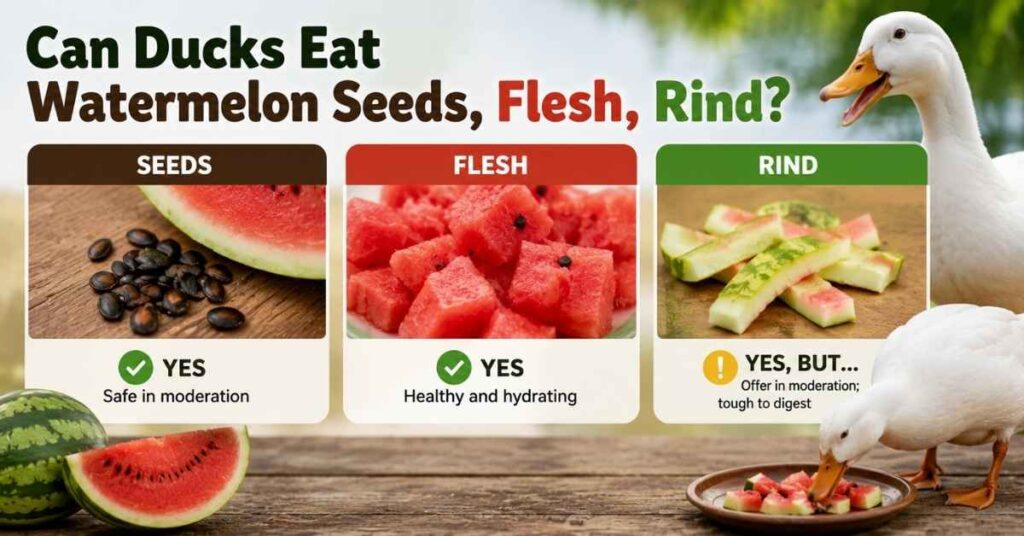
Can Ducks Eat Watermelon Flesh?
Why the Flesh Is the Safest Part
The flesh is soft, moist, and easy to digest.
For most ducks, watermelon flesh presents the lowest risk and the highest acceptance rate.
Nutritional Benefits of Watermelon Flesh
The flesh provides:
- Water
- Vitamin A
- Vitamin C
- Lycopene
- Natural antioxidants
These nutrients contribute to the fruit’s popularity among duck keepers.
Serving Size Recommendations
Although watermelon is healthy, moderation remains important.
A small serving shared among several ducks is usually sufficient as a treat.
The goal is supplementation, not meal replacement.
Can Ducks Eat Watermelon Rind?
One of the most common follow-up questions concerns watermelon rind.
Is Watermelon Rind Safe?
Yes, watermelon rind is generally safe for ducks when offered appropriately.
Many ducks enjoy pecking at the softer portions of the rind.
Nutritional Value of the Rind
The rind contains:
- Fiber
- Moisture
- Plant nutrients
However, it is less palatable than the flesh.
Choking and Texture Considerations
Large pieces of rind may be difficult for some ducks to manage.
Always consider:
- Bird size
- Age
- Piece size
Best Ways to Prepare Watermelon Rind
Practical options include:
- Cutting into small pieces
- Removing extremely tough sections
- Offering softer inner rind portions
Proper preparation improves both safety and acceptance.
Can Ducks Eat Watermelon Seeds?
Another common concern among duck owners is whether watermelon seeds are safe.
Fortunately, for most healthy ducks, watermelon seeds are not considered a significant problem.
Are Watermelon Seeds Dangerous?
In normal quantities, watermelon seeds are generally safe for ducks.
Ducks naturally consume a variety of seeds while foraging and possess digestive systems capable of handling many small seeds.
For most backyard flocks, accidentally consuming watermelon seeds is unlikely to cause issues.
Black Seeds vs White Seeds
Many watermelons contain:
- Black mature seeds
- White immature seeds
Both are generally considered safe when consumed occasionally as part of the fruit.
Whole Seeds vs Crushed Seeds
Unlike some pet species that require seed preparation, ducks can typically consume watermelon seeds whole.
However, if feeding very young ducklings, crushing larger seeds may provide additional peace of mind.
Practical Feeding Recommendations
The simplest approach is:
- Allow ducks to consume naturally occurring seeds in moderation.
- Avoid excessive quantities.
- Focus primarily on watermelon flesh.
For most owners, removing every seed is unnecessary.
Can Ducklings Eat Watermelon?
Duckling nutrition requires extra attention because young birds are growing rapidly.
The Right Age to Introduce Watermelon
Ducklings should first establish strong eating habits with a nutritionally complete starter feed.
Treats should remain a very small part of the diet.
Best Preparation Methods for Young Ducks
Safe preparation methods include:
- Finely chopped watermelon
- Small soft pieces
- Mashed watermelon
These options reduce feeding difficulties.
How Much Watermelon Is Safe?
A small amount goes a long way.
For ducklings:
- Tiny portions
- Occasional feeding
- Careful observation
The goal is exposure, not significant calorie intake.
Signs a Duckling Has Eaten Too Much Fruit
Watch for:
- Loose droppings
- Reduced starter feed consumption
- Digestive upset
- Unusual behavior
If these occur, reduce treats immediately.
How Much Watermelon Should Ducks Eat?
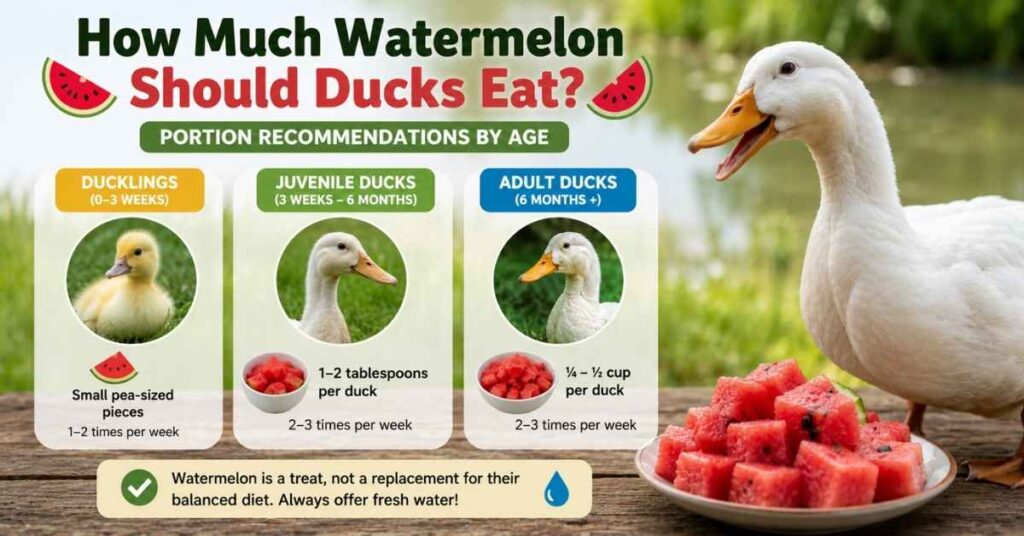
Even healthy foods should be fed with moderation.
Portion Recommendations by Age
| Duck Age | Recommended Amount |
|---|---|
| Young ducklings | Small occasional pieces |
| Juvenile ducks | Limited treat portions |
| Adult ducks | Moderate shared servings |
| Laying ducks | Small supplemental amounts |
Exact amounts depend on flock size, activity level, and the rest of the diet.
Frequency Guidelines
Most experienced duck keepers offer watermelon:
- Once or twice weekly
- During hot weather
- As part of a varied treat rotation
This helps maintain nutritional balance.
The Treat-to-Feed Balance Every Duck Owner Should Follow
A useful guideline is:
- 90% complete duck feed
- 10% treats
Watermelon belongs within the treat category.
This framework prevents overfeeding while still allowing enrichment.
LEARN MORE: Can Ducks Eat Banana Skins?
Can Ducks Eat Watermelon Every Day?
Technically, ducks can consume small amounts of watermelon daily.
However, that does not necessarily make it the best feeding strategy.
Understanding Moderation
A balanced diet is more important than any single food.
Even healthy fruits should remain occasional additions rather than dietary foundations.
Natural Sugar Considerations
Watermelon contains natural sugars.
Although lower in sugar than many fruits, excessive consumption may contribute to:
- Reduced feed intake
- Dietary imbalance
- Excess calories
Why Variety Matters More Than Quantity
Ducks benefit from dietary diversity.
Rotating foods often produces better results than repeatedly feeding the same treat.
The 90/10 Feeding Framework
Successful flock management usually follows:
- 90% balanced feed
- 10% treats and supplements
This principle simplifies feeding decisions.
Watermelon Compared to Other Fruits Ducks Enjoy
Different fruits offer different nutritional advantages.
Watermelon vs Blueberries
| Factor | Watermelon | Blueberries |
|---|---|---|
| Hydration | Excellent | Moderate |
| Antioxidants | Good | Excellent |
| Sugar | Moderate | Moderate |
| Duck Preference | Very High | High |
Blueberries provide more antioxidants, while watermelon excels in hydration.
Watermelon vs Strawberries
Both fruits are duck-safe.
Watermelon offers:
- More water content
Strawberries provide:
- Higher fiber
- Additional antioxidants
Watermelon vs Apples
Apples contain more fiber but generally require preparation.
Watermelon is naturally easier for ducks to consume.
Watermelon vs Grapes
Both are popular treats.
However, grapes contain more concentrated sugars.
Watermelon often provides a better hydration benefit.
Which Fruits Offer the Best Combination of Nutrition and Hydration?
Excellent choices include:
- Watermelon
- Blueberries
- Strawberries
- Apples
- Raspberries
- Blackberries
A diverse selection is often preferable to relying on one fruit.
Watermelon as a Summer Treat
This is where watermelon truly stands out.
Helping Ducks Stay Cool During Hot Weather
Summer temperatures can increase stress on backyard flocks.
Water-rich foods may help provide additional moisture during hot conditions.
Hydration Benefits During Heat Stress
Although fresh drinking water remains the primary hydration source, watermelon can contribute supplemental moisture.
Benefits include:
- Increased fluid intake
- Seasonal enrichment
- Refreshing texture
Signs Ducks Need Additional Hydration Support
Watch for:
- Excessive panting
- Reduced activity
- Seeking shade constantly
- Lower feed intake
Fresh water should always remain available.
Seasonal Feeding Strategies
Many duck owners reserve watermelon primarily for:
- Summer
- Heat waves
- Harvest season
This aligns well with natural availability.
Can Watermelon Improve Egg Production or Egg Quality?
Owners of laying ducks often wonder whether watermelon affects egg production.
What Nutrition Contributes to Egg Health
Healthy eggs depend primarily on:
- Balanced nutrition
- Protein intake
- Minerals
- Genetics
- Overall flock health
Common Myths About Fruit and Egg Production
Some people assume certain fruits dramatically increase laying rates.
This is generally not true.
Realistic Expectations
Watermelon supports overall wellness but should not be viewed as an egg-production supplement.
Its role is enrichment and dietary variety.
Backyard Ducks vs Wild Ducks
Should Backyard Ducks Eat Watermelon?
Absolutely.
When fed appropriately, watermelon can be a safe and enjoyable treat.
Should You Feed Watermelon to Wild Ducks?
Small amounts are generally safer than bread.
However, wild ducks should primarily rely on natural food sources.
Better Feeding Practices for Wild Waterfowl
If feeding is permitted:
- Duck pellets
- Chopped greens
- Peas
- Small fruit portions
These options are usually better than processed foods.
Common Watermelon Feeding Mistakes
Feeding Excessive Amounts
Even healthy treats become problematic when overfed.
Ignoring Overall Diet Quality
No fruit can compensate for poor nutrition elsewhere.
Offering Spoiled Watermelon
Never feed:
- Moldy watermelon
- Fermented watermelon
- Rotten fruit
Feeding Large Pieces of Rind
Large pieces may be difficult for ducks to manage.
Assuming All Fruits Are Equally Healthy
Some fruits provide more nutritional value than others.
Research always helps.
Signs Your Ducks Are Responding Well to Watermelon
Healthy Feeding Behaviors
Look for:
- Enthusiastic eating
- Normal activity levels
- Strong appetite
Positive Digestive Indicators
Healthy ducks typically display:
- Consistent droppings
- Good energy
- Normal weight
What Balanced Nutrition Looks Like
Signs include:
- Smooth feathers
- Bright eyes
- Healthy body condition
- Reliable egg production
When Watermelon Might Not Be the Best Treat
Very Young Ducklings
Young birds should focus on complete starter feed.
Ducks With Digestive Sensitivities
Some ducks tolerate dietary changes less effectively.
Introduce fruit gradually.
Situations Requiring Extra Caution
Exercise care with:
- Sick ducks
- Recovering birds
- Birds under veterinary treatment
When to Consult an Avian Veterinarian
Seek professional guidance if you notice:
- Appetite loss
- Persistent digestive issues
- Behavioral changes
- Difficulty swallowing
LEARN MORE: Can Ducks Eat Banana Chips?
A Practical Watermelon Feeding Routine Used by Experienced Duck Keepers
Weekly Treat Rotation Example
Monday:
- Lettuce
Wednesday:
- Peas
Friday:
- Watermelon
Weekend:
- Mixed vegetables
This encourages variety.
Combining Nutrition With Enrichment
Food can provide mental stimulation.
Scattering watermelon pieces encourages:
- Foraging
- Exploration
- Activity
Preventing Overfeeding
Always prioritize:
- Complete feed
- Fresh water
- Treats last
Making Treat Time More Beneficial
Treats should support health rather than replace nutrition.
Moderation is the key.
Safe Fruit Feeding Checklist for Duck Owners
Before Feeding
- ✔ Wash fruit thoroughly
- ✔ Remove spoiled sections
- ✔ Check freshness
During Feeding
- ✔ Offer moderate portions
- ✔ Observe flock behavior
- ✔ Provide water access
After Feeding
- ✔ Remove leftovers
- ✔ Monitor digestion
- ✔ Prevent spoilage
Storage and Freshness Tips
- Refrigerate unused watermelon
- Freeze excess portions
- Discard moldy fruit immediately
Frequently Asked Questions
Can ducks eat watermelon safely?
Yes. Watermelon is considered a safe fruit for ducks when fed in moderation.
Can ducks eat watermelon rind?
Yes. Watermelon rind is generally safe when cut into manageable pieces.
Can ducks eat watermelon seeds?
Yes. Most ducks can safely consume watermelon seeds in normal amounts.
Can ducklings eat watermelon?
Yes. Small, soft portions can be offered occasionally after ducklings are established on starter feed.
Can ducks eat watermelon every day?
Occasional feeding is usually better than daily feeding.
How much watermelon can ducks eat?
A moderate serving shared among several ducks is generally sufficient.
Is watermelon healthy for ducks?
Yes. Watermelon provides hydration, vitamins, antioxidants, and enrichment.
Can ducks eat seedless watermelon?
Yes. Seedless watermelon is perfectly safe.
Can wild ducks eat watermelon?
Small portions are generally safe, although natural food sources remain preferable.
Can ducks eat frozen watermelon?
Yes, after thawing and softening.
Does watermelon help ducks stay cool?
Its high water content may provide additional hydration support during hot weather.
What fruits should ducks avoid?
Avoid spoiled fruit, heavily processed fruit products, and fruit containing added sugars.
Final Verdict: Should You Feed Watermelon to Ducks?
Can ducks eat watermelon? Absolutely. Watermelon is one of the best summer treats for ducks, offering hydration, antioxidants, vitamin A, vitamin C, lycopene, and natural enrichment in a highly palatable package.
For the best results:
- Feed watermelon in moderation.
- Prioritize complete duck feed.
- Cut rind into manageable pieces.
- Introduce fruit gradually.
- Rotate treats throughout the week.
- Always provide fresh drinking water.
When used responsibly, watermelon can become a refreshing, nutritious, and enjoyable addition to a healthy duck feeding program while helping owners reduce food waste and make use of seasonal produce.