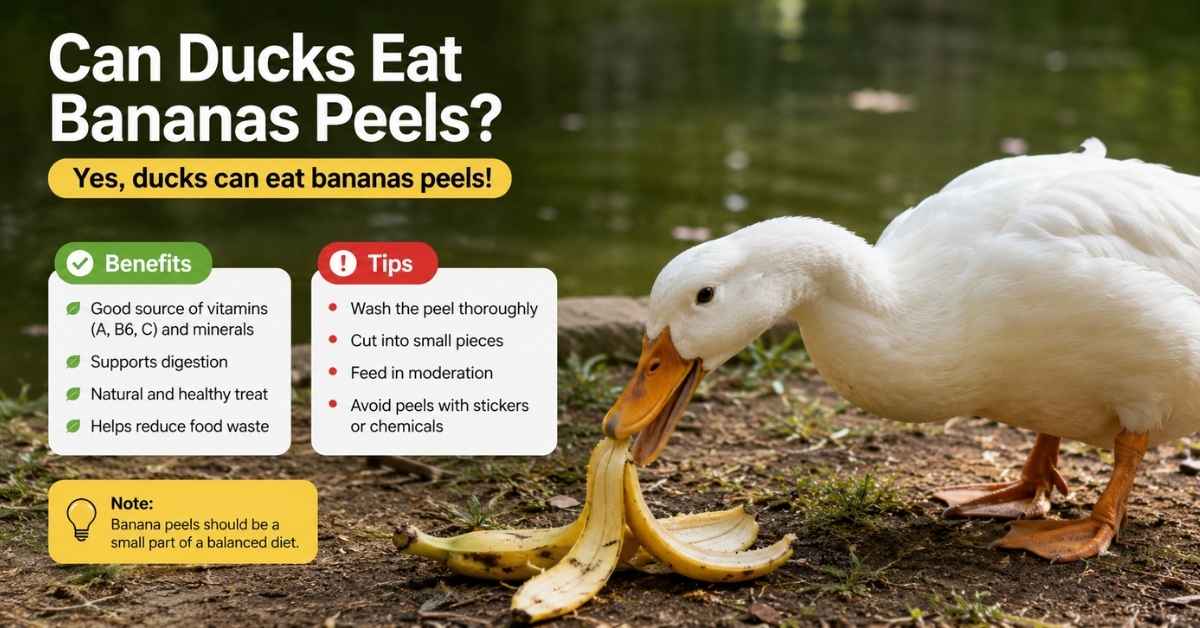
Can ducks eat bananas peels? Yes, ducks can eat small amounts of banana peels, but that does not automatically mean banana peels are the safest treat choice. Banana peels are not toxic to ducks, yet their tough fibrous texture and possible pesticide residue may create digestion or choking concerns if fed improperly. Most healthy adult ducks can tolerate tiny pieces of washed banana peel occasionally, but peeled bananas are usually a much safer and easier option for backyard ducks and ducklings.
Many duck owners search this question after noticing ducks pecking kitchen scraps, compost leftovers, or discarded fruit peels. The good news is that accidental banana peel consumption is rarely dangerous in small amounts. However, understanding how ducks digest fibrous foods and how to safely prepare banana peels helps prevent avoidable feeding mistakes later.
Quick Answer
| Question | Short Answer |
|---|---|
| Can ducks eat banana peels? | Yes, in small washed chopped portions occasionally. |
| Are banana peels toxic to ducks? | No, banana peels are not poisonous. |
| Can ducks digest banana peels? | Adult ducks usually can, but peels are tougher than banana flesh. |
| Are banana peels safe for ducklings? | Ducklings face higher choking and digestion risks. |
| What is the safest option? | Fresh peeled bananas in moderation. |
Why Ducks Peck at Banana Peels
Ducks naturally investigate:
- fruit scraps
- leaves
- vegetables
- insects
- compost materials
- textured objects
Banana peels attract ducks because traces of soft sweet fruit often remain attached to the inside of the peel.
Natural Curiosity and Foraging Instincts
Backyard ducks spend much of the day:
- pecking
- searching
- exploring
- testing unfamiliar textures
This instinctive behavior explains why ducks often grab kitchen scraps quickly, especially soft fruit leftovers.
Why Compost Areas Attract Ducks
Many homesteaders notice ducks wandering near:
- compost piles
- outdoor kitchens
- fruit scrap buckets
- feeding stations
Ducks naturally associate these areas with food opportunities.
Are Banana Peels Actually Safe for Ducks?
The most important distinction is this:
Banana Peels Are Not Toxic But They Are Not Ideal Either
Many people assume that if something is not poisonous, it must automatically be perfectly safe. With ducks, feeding safety is more nuanced.
Banana peels may create concerns involving:
- tough texture
- digestion difficulty
- choking risk
- pesticide residue
- nutritional imbalance if overfed
Situations Where Risk Is Usually Low
Healthy adult ducks that consume:
- tiny chopped peel pieces
- soft washed peels
- occasional peel scraps
often show no serious issues.
Situations That Increase Risk
Risk becomes higher when:
- ducklings eat large peel strips
- peels are unwashed
- moldy peels are fed
- ducks consume excessive fruit scraps regularly
Can Ducks Digest Banana Peels Properly?
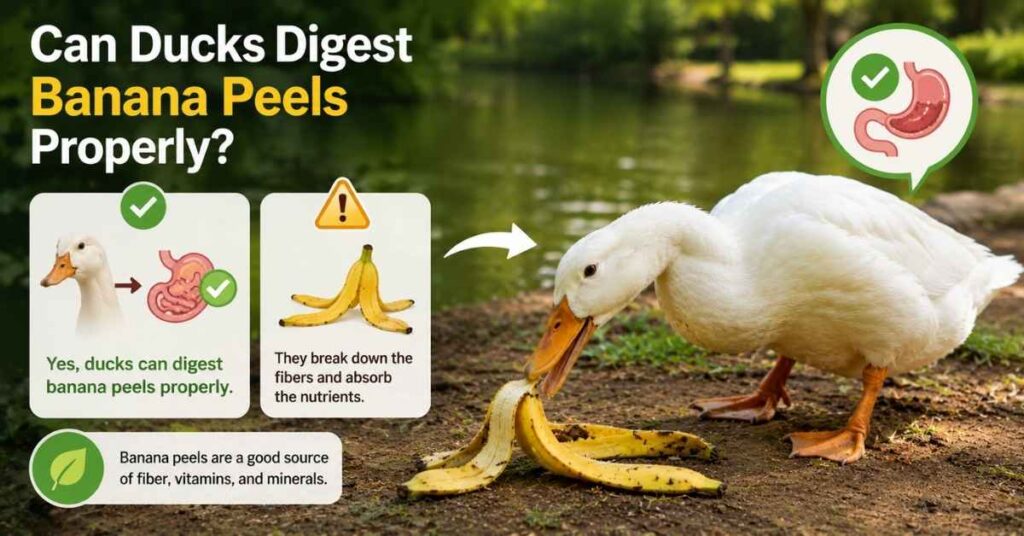
Ducks can process some fibrous foods, but banana peels are harder to digest than banana flesh.
Why Banana Peels Are Tougher
Banana peels contain:
- dense fiber
- thicker texture
- tougher plant material
Unlike the soft inside of bananas, the peel requires more digestive effort.
How Duck Digestion Handles Fiber
Duck digestive systems can handle:
- grasses
- plant matter
- soft vegetation
However, large tough peel pieces may move through digestion more slowly.
Why Small Pieces Matter
Chopped peels are safer because:
- ducks swallow them more easily
- digestion improves
- choking risk decreases
- large fibrous strips become less problematic
Why Pesticide Residue Is a Major Concern
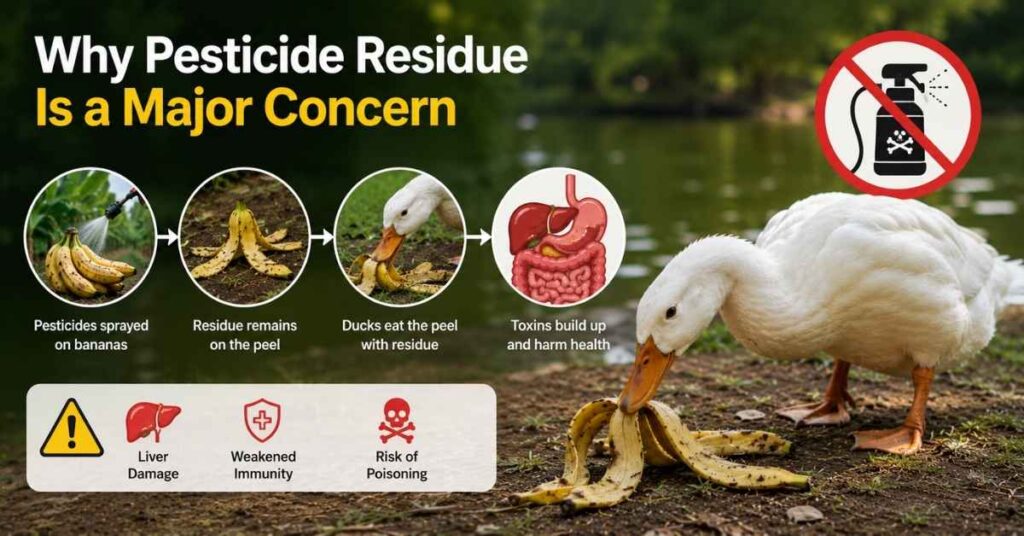
One of the biggest overlooked risks involves pesticide residue on fruit skins.
Why Banana Peels May Carry Chemicals
Non-organic bananas are often exposed to:
- agricultural pesticides
- chemical treatments
- handling residue during transport
Although banana peels naturally protect the fruit inside, residue may remain on the outer surface.
Are Organic Banana Peels Safer?
Organic bananas may reduce pesticide concerns, although washing remains important regardless of banana type.
Should Banana Peels Be Washed?
Yes, thoroughly rinsing banana peels before feeding ducks is strongly recommended.
Many experienced duck owners:
- wash peels carefully
- chop them into small pieces
- avoid feeding large raw strips
Can Ducks Choke on Banana Peels?
Yes, choking becomes possible when ducks swallow:
- long peel strips
- thick raw peel pieces
- large fibrous chunks
Why Texture Matters
Soft banana flesh breaks apart easily, but peels are:
- chewy
- fibrous
- tougher to swallow
This creates higher risk for:
- smaller ducks
- ducklings
- aggressive eaters
Why Ducklings Face Higher Risk
Ducklings have:
- smaller throats
- developing digestion
- weaker feeding coordination
Large peel pieces may become dangerous much faster for young birds.
Can Ducklings Eat Banana Peels?
Ducklings are far more sensitive to tough foods than adult ducks.
Why Young Ducks Need Softer Foods
Young ducks digest:
- mashed foods
- soft vegetables
- finely chopped treats
much more safely than fibrous scraps.
Better Treat Alternatives for Ducklings
Safer options usually include:
- mashed peas
- chopped greens
- tiny banana pieces without peel
- starter waterfowl feed
Many experienced keepers avoid banana peels entirely during early growth stages.
What Happens If Ducks Eat Too Much Banana Peel?
Occasional tiny peel pieces are usually not catastrophic, but repeated overfeeding can create problems.
Possible Problems From Excess Banana Peel
Too much peel may contribute to:
- digestive slowdown
- loose droppings
- reduced appetite
- nutritional imbalance
Why Treat Moderation Matters
Fruit scraps should never replace balanced waterfowl feed.
Healthy ducks require:
- proper protein
- balanced nutrients
- species-appropriate diets
Excessive human food scraps may disrupt long-term health.
Are Cooked Banana Peels Safer Than Raw Peels?
In some situations, softened peels may become easier for ducks to handle.
Why Cooking Changes Texture
Boiling or softening peels may:
- reduce toughness
- improve digestibility
- lower choking risk slightly
Are Raw Peels Riskier?
Large raw peels remain more difficult because they:
- stay fibrous
- resist breaking apart
- require more chewing and digestion
LEARN MORE: Can Ducks Eat Bananas?
How Much Banana Peel Can Ducks Safely Eat?
Moderation is critical.
Safe Portion Guidelines
For healthy adult ducks:
- tiny chopped portions occasionally are usually enough
- banana peels should remain a very small part of total food intake
A Simple Feeding Rule
Many experienced duck keepers follow this principle:
treats and scraps should remain below roughly 10% of a duck’s total diet.
This helps prevent:
- obesity
- nutritional imbalance
- poor feeding habits
Banana Peels vs Peeled Bananas: Which Is Better?
Peeled bananas are almost always safer than peels.
Why Peeled Bananas Work Better
Banana flesh is:
- softer
- easier to digest
- less fibrous
- lower risk for choking
Why Most Owners Prefer Peeled Bananas
Most experienced duck owners choose peeled bananas because they:
- reduce digestive concerns
- simplify feeding
- avoid pesticide worries
- improve safety for ducklings
Wild Ducks vs Backyard Ducks: Does Feeding Context Matter?
Yes, feeding environment matters significantly.
Backyard Ducks
Domestic ducks often:
- receive balanced feed
- live in controlled spaces
- tolerate occasional treats more safely
Wild Ducks
Wild ducks rely heavily on:
- natural foraging
- aquatic plants
- insects
- environmental food sources
Large amounts of scraps may disrupt natural feeding behavior.
Responsible Pond Feeding
If feeding wild ducks:
- avoid excessive scraps
- avoid processed foods
- keep portions small
- prioritize healthier natural foods
Sustainable Feeding and Compost-Friendly Duck Keeping
Many homesteaders want to reduce food waste responsibly.
Can Ducks Help Reduce Kitchen Scraps?
Yes, ducks can consume some safe scraps occasionally, including:
- vegetables
- fruit pieces
- leafy greens
However, sustainability should never override feeding safety.
Safe Compost Feeding Practices
Good compost-feeding habits include:
- avoiding moldy scraps
- limiting processed foods
- washing produce when possible
- removing dangerous waste items
Common Banana Peel Feeding Mistakes
Many feeding issues happen because owners assume ducks can digest almost anything safely.
Common Mistakes Include:
- tossing whole raw peels into the yard
- feeding moldy banana scraps
- ignoring pesticide residue
- overfeeding fruit scraps
- feeding large peel strips to ducklings
Balanced nutrition matters far more than using every leftover scrap.
Safer Fruit and Vegetable Alternatives Ducks Also Enjoy
If you want healthier treat options, there are safer alternatives available.
Better Treat Choices Include:
- peeled bananas
- peas
- blueberries
- watermelon
- chopped lettuce
- oats in moderation
Rotating healthy treats helps improve nutritional variety.
Practical Banana Peel Safety Checklist
| Banana Peel Situation | Safe? | Important Notes |
|---|---|---|
| Washed chopped peel | Moderate | Small amounts only |
| Organic banana peel | Better | Lower pesticide concerns |
| Large raw peel strips | Risky | Choking and digestion concerns |
| Cooked softened peel | Safer | Easier digestion |
| Moldy banana peel | Avoid | Unsafe for ducks |
What Experienced Duck Owners Usually Do
Most experienced duck keepers prefer:
- peeled bananas
- softer treats
- balanced feeding routines
They also:
- monitor ducks after new foods
- limit kitchen scraps carefully
- avoid overfeeding fruit
Monitoring Ducks After New Foods
Whenever introducing new treats, experienced owners watch for:
- appetite changes
- loose droppings
- reduced activity
- digestive irregularities
This helps identify problems early.
Signs Your Ducks May Be Getting Too Many Scraps
Long-term overfeeding often becomes visible through:
- messy droppings
- excessive weight gain
- lower activity levels
- reduced interest in proper feed
Healthy ducks thrive best on balanced nutrition rather than constant human snacks.
Frequently Asked Questions
Can ducks digest banana peels completely?
Adult ducks can usually process small peel pieces, but peels are tougher than banana flesh and harder to digest.
Are banana peels toxic to ducks?
No, banana peels are not poisonous.
Should banana peels be washed before feeding ducks?
Yes, washing peels helps reduce possible pesticide residue.
Can ducklings eat banana peels safely?
Ducklings face higher choking and digestion risks, so peels are generally not ideal for young ducks.
Can ducks choke on banana peels?
Yes, especially on large raw peel strips or thick fibrous pieces.
Are cooked banana peels easier for ducks to digest?
Softened peels may become easier to process than raw tough peels.
How much banana peel is safe for ducks?
Tiny chopped portions occasionally are usually safest.
Are organic banana peels safer than regular peels?
Organic peels may reduce pesticide concerns, although washing still matters.
Final Thoughts
Can ducks eat bananas peels? Yes, ducks can eat small amounts of banana peel occasionally, but banana peels are not the safest or most ideal treat option. Tough fibrous texture, possible pesticide residue, and choking concerns make large raw peels less suitable than peeled bananas or softer prepared foods.
The safest approach is simple: wash peels carefully, chop them into tiny pieces, feed only small amounts occasionally, and prioritize balanced waterfowl nutrition over excessive scraps or treats. Most healthy adult ducks tolerate small peel exposure well, but responsible feeding habits always matter more than finding ways to use leftover kitchen waste.