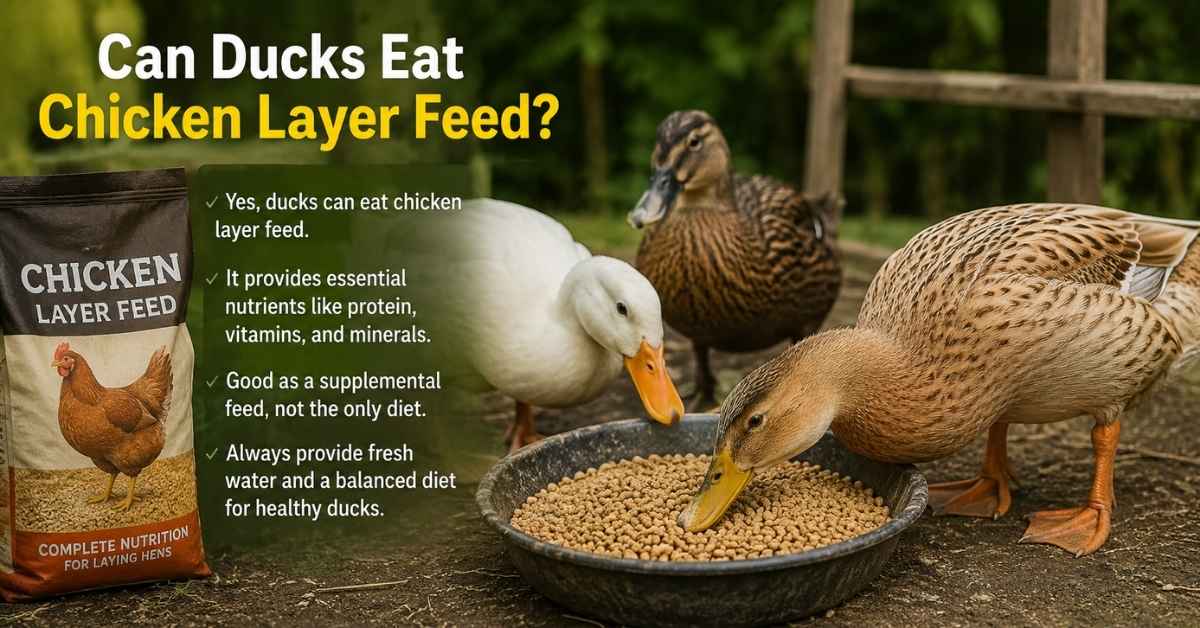
Can ducks eat chicken layer feed? Yes, adult ducks can eat chicken layer feed occasionally, but it is not the best long-term diet for them. Chicken layer feed is formulated for laying hens and usually contains 3–4% calcium, which may be excessive for ducks over time. Ducks also require more niacin (vitamin B3) than chickens, especially during growth stages.
While adult ducks may tolerate layer pellets in moderation, ducklings should avoid chicken layer feed because it can contribute to niacin deficiency, skeletal abnormalities, leg deformities, and kidney stress.
If you keep a mixed flock of ducks and chickens, understanding the difference between duck nutrition and chicken nutrition is essential. Feeding the wrong poultry feed for too long can affect feather health, egg production, bone development, and overall waterfowl health.
Quick Answer: Can Ducks Eat Chicken Layer Feed?
Here’s the short answer most duck owners are looking for:
| Question | Answer |
|---|---|
| Can adult ducks eat chicken layer feed? | Yes, occasionally |
| Can ducklings eat layer feed? | No, not recommended |
| Is layer feed safe long term? | Usually not ideal |
| Why is layer feed risky for ducks? | Excess calcium and low niacin |
| Best alternative? | All flock feed or duck feed |
For emergency situations or short-term feeding, ducks eating chicken feed is usually not dangerous. However, relying on layer pellets daily can create nutritional imbalance over time.
Duck vs Chicken Nutritional Needs
Why Ducks Need Different Nutrition Than Chickens
Many backyard poultry owners assume all birds can share the same feed. In reality, waterfowl nutrition differs significantly from chicken nutrition.
Ducks have:
- higher niacin requirements
- different calcium tolerance
- unique digestive patterns
- faster growth during early life stages
A duck’s metabolism and skeletal development depend heavily on proper vitamin and mineral intake. This is why feeding ducks the wrong poultry ration for months can eventually cause health problems.
Protein Requirements for Ducks
Protein is critical for:
- muscle growth
- feather development
- egg production
- healthy metabolism
Here’s how common poultry feed compares:
| Feed Type | Average Protein |
|---|---|
| Duck starter feed | 20–22% protein |
| Grower feed | 16–18% protein |
| Chicken layer feed | 16% protein |
| All flock feed | 17–18% protein |
Ducklings especially benefit from balanced protein combined with proper niacin supplementation.
Calcium Requirements in Ducks vs Chickens
One of the biggest issues with feeding ducks chicken layer feed is calcium overload.
Layer feed is specifically designed for laying hens producing eggshells daily. Most layer feed formulas contain:
- 3–4% calcium
- additional minerals for shell formation
Adult ducks that are actively laying eggs may tolerate moderate calcium levels, but:
- drakes
- ducklings
- non-laying ducks
do not need that much calcium.
Over time, excessive calcium may contribute to:
- kidney stress
- mineral imbalance
- reduced organ function
- poor nutrient absorption
What Is Chicken Layer Feed?
Chicken layer feed is a specialized poultry feed formulated for laying hens.
Ingredients Commonly Found in Layer Feed
Most commercial layer pellets contain:
- corn
- soybean meal
- calcium carbonate
- phosphorus
- vitamins and minerals
- protein supplements
Some formulas also include:
- probiotics
- amino acids
- omega fatty acids
Nutritional Profile of Typical Layer Feed
| Nutrient | Typical Amount |
|---|---|
| Protein | 16–18% |
| Calcium | 3–4% |
| Niacin | Lower than ducks require |
| Form | Pellets or crumble |
Why Layer Feed Is Formulated for Laying Hens
Laying hens require large amounts of calcium for eggshell production. Ducks, however, process nutrients differently.
That is why duck feed vs chicken feed is such an important discussion among mixed-flock owners.
Can Adult Ducks Eat Chicken Layer Feed?
When It Is Usually Safe
Adult ducks can usually eat layer feed:
- occasionally
- during short feed shortages
- in small amounts
- when mixed with better feed sources
Many homesteaders successfully feed ducks and chickens together temporarily without immediate issues.
Risks of Feeding Adult Ducks Layer Feed Long Term
The bigger concern is long-term feeding.
Continuous feeding may increase the risk of:
- excess calcium accumulation
- kidney damage
- obesity
- nutritional imbalance
- poor feather quality
- low niacin intake
This is especially true if ducks do not receive:
- greens
- forage
- insects
- niacin-rich foods
- supplemental nutrition
Signs Your Ducks Are Not Thriving on Layer Feed
Watch for these warning signs:
- weak legs
- difficulty walking
- low activity
- poor feather condition
- thin eggshells
- reduced appetite
- slow movement
These symptoms can indicate nutritional deficiencies or mineral imbalance.
“Ducks often tolerate inappropriate feed longer than they thrive on it.”
That distinction matters.
Can Ducklings Eat Chicken Layer Feed?
Why Ducklings Are More Vulnerable
Ducklings grow rapidly during the first few weeks.
During the 0–2 weeks and 2–6 weeks stages, their bodies require:
- higher niacin
- balanced protein
- lower calcium
- proper amino acids
Layer feed does not provide ideal support for this growth phase.
Health Problems Linked to Layer Feed in Ducklings
Ducklings fed inappropriate poultry feed may develop:
- leg deformities
- bowed legs
- weak joints
- skeletal abnormalities
- poor growth
- angel wing
Under 8 weeks old, ducks are especially sensitive to nutritional imbalance.
Best Feed for Ducklings
The safest option is:
- non-medicated starter crumble
- waterfowl feed
- all flock starter feed
Many poultry keepers also add:
- brewer’s yeast (5%)
- niacin supplements
- peas
- greens
Ducklings generally require around 55 mg/kg niacin, compared to approximately 35 mg/kg for chickens.
That difference is huge.
Why Niacin Is So Important for Ducks
What Is Niacin?
Niacin, also called vitamin B3, supports:
- bone growth
- nervous system function
- metabolism
- joint health
Ducks need significantly more niacin than chickens.
Niacin Deficiency Symptoms in Ducks
Low niacin intake can cause:
- bowed legs
- trouble walking
- weakness
- enlarged joints
- reduced growth
- lethargy
This issue is common in ducks eating chicken feed without supplementation.
Best Sources of Niacin for Ducks
| Niacin Source | Benefit |
|---|---|
| Brewer’s yeast | Excellent supplement |
| Peas | Natural source |
| Fish meal | Protein + niacin |
| Waterfowl feed | Balanced nutrition |
| All flock feed | Better than layer feed |
Is Excess Calcium Dangerous for Ducks?
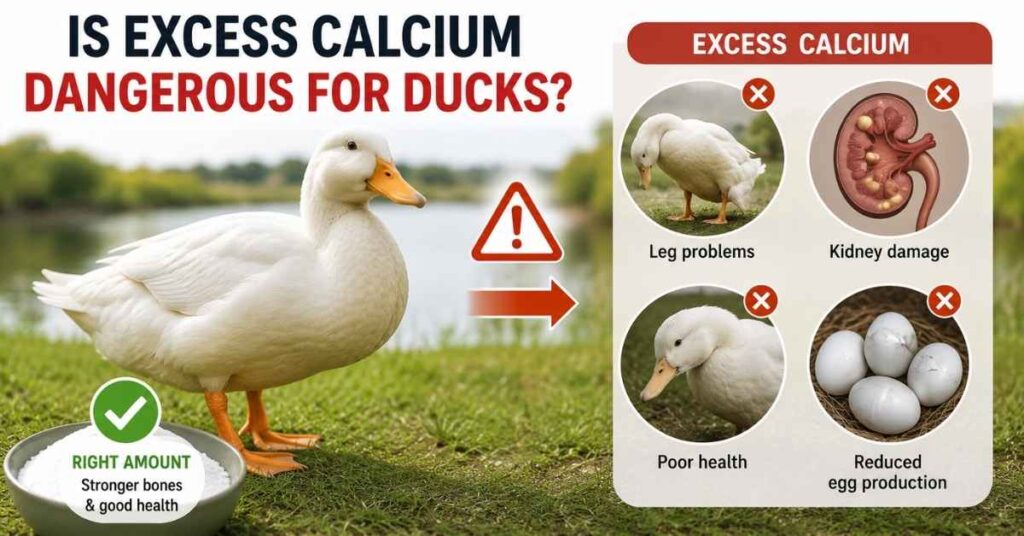
How Layer Feed Contains More Calcium Than Ducks Need
Most layer feeds contain:
- 3–4% calcium
By comparison, many all flock feeds contain:
- around 1% calcium
That difference matters for ducks.
Possible Health Risks From Too Much Calcium
Excess calcium may contribute to:
- kidney stress
- organ strain
- poor nutrient absorption
- metabolic imbalance
- urinary issues
Which Ducks Are Most at Risk?
The highest-risk birds include:
- ducklings
- drakes
- growing ducks
- non-laying ducks
Laying ducks tolerate calcium better because they use more minerals for egg production.
Can Ducks and Chickens Eat the Same Feed?
The Challenges of Feeding Mixed Flocks
A mixed flock creates several challenges:
- different nutritional needs
- competition at feeders
- different feeding habits
- water requirements
Ducks also need constant access to water during feeding because they use water to swallow properly.
Best Feed Option for Ducks and Chickens Together
Most poultry experts recommend:
All flock feed
This feed usually provides:
- balanced protein
- safer calcium levels
- flexibility for multiple species
Then, laying hens can receive:
- separate free-choice oyster shell
This method reduces calcium overload risk for ducks.
How to Feed a Mixed Flock Properly
Best practices include:
- Use all flock feed as the base ration
- Provide oyster shell separately
- Supplement ducks with niacin if needed
- Maintain separate feeding stations
- Ensure constant clean water access
All Flock Feed vs Layer Feed for Ducks
Nutritional Comparison Table
| Nutrient | Layer Feed | All Flock Feed |
|---|---|---|
| Protein | 16% | 17–18% |
| Calcium | 3–4% | Around 1% |
| Niacin Support | Lower | Better balanced |
| Best For | Laying hens | Mixed flocks |
| Safe for Ducklings | No | Usually yes |
Why All Flock Feed Is Usually Better
All flock feed supports:
- ducks
- chickens
- geese
- other poultry species
It provides more balanced flock nutrition without overwhelming ducks with calcium.
Best Alternatives to Chicken Layer Feed for Ducks
Commercial Duck Feed
Duck-specific feed is formulated for:
- waterfowl metabolism
- feather growth
- healthy skeletal development
All Flock Feed
This is the best compromise for mixed flocks.
Homemade Duck Feed Options
Healthy additions include:
- oats
- peas
- leafy greens
- mealworms
- rice
- insects
Emergency Feed Options for Ducks
If duck feed is unavailable temporarily, ducks can eat:
- oats
- cracked corn
- peas
- lettuce
- cucumbers
Still, emergency feeding should not become a permanent feeding strategy.
Foods Ducks Should Never Eat
Toxic Foods for Ducks
Avoid feeding ducks:
- chocolate
- avocado
- moldy feed
- spoiled grains
- excessive salt
Moldy poultry feed may contain aflatoxin contamination, which can seriously harm waterfowl.
Dangerous Feeding Mistakes
Common mistakes include:
- feeding medicated chick starter
- offering dry-only diets
- using spoiled feed
- ignoring water access
How to Transition Ducks Off Layer Feed
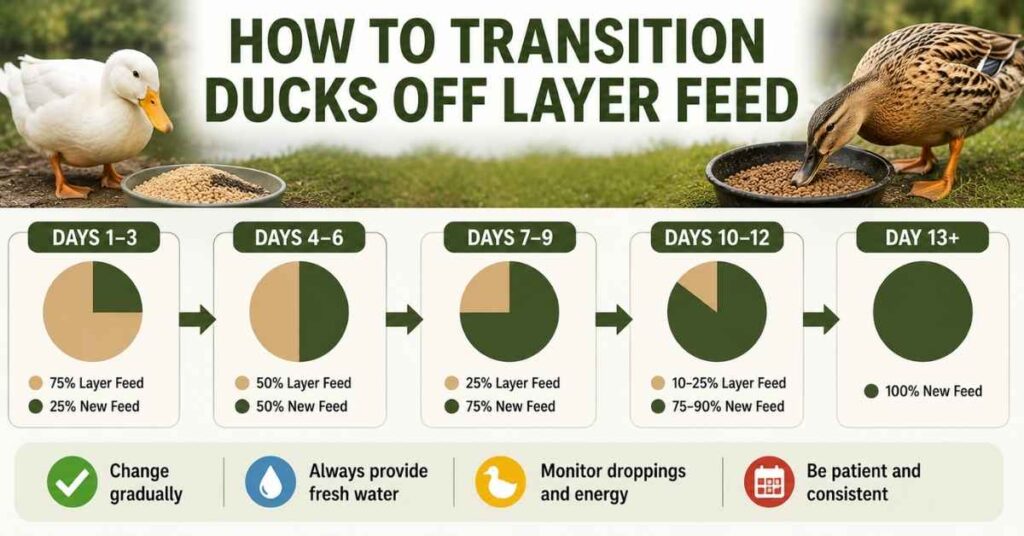
Gradual Feed Transition Method
Sudden feed changes can stress ducks.
A better approach:
- Day 1–3: 75% old feed, 25% new feed
- Day 4–6: 50/50 mix
- Day 7–9: 25% old feed, 75% new feed
- Day 10+: fully transition
Monitoring Ducks During Feed Changes
Watch for:
- appetite changes
- diarrhea
- low energy
- feather issues
Healthy ducks usually adjust smoothly within a couple of weeks.
Feeding Tips for Healthy Ducks
Importance of Water Access During Feeding
Unlike chickens, ducks need water to:
- swallow feed safely
- clean nostrils
- support digestion
Dry feeding without water can cause choking or digestive problems.
Wet Feed vs Dry Feed
Wet feed may:
- improve digestion
- reduce dust
- decrease feed waste
However, wet feed spoils faster and should not sit out long.
Free-Range Nutrition Benefits
Free-ranging allows ducks to consume:
- insects
- grass
- weeds
- snails
- natural protein sources
This improves nutrient diversity naturally.
LEARN MORE: Can Baby Ducks Eat Chick Starter?
Common Myths About Feeding Ducks Chicken Feed
“If Chickens Can Eat It, Ducks Can Too”
This myth ignores species-specific nutrition.
Ducks are waterfowl with different:
- vitamin needs
- mineral requirements
- metabolism
“Layer Feed Is Fine for All Poultry”
Layer feed is specifically designed for egg-laying hens, not all birds.
“Extra Calcium Is Always Good”
Too much calcium can be harmful, especially for:
- ducklings
- drakes
- non-laying ducks
Expert Recommendations for Feeding Ducks
Most poultry nutrition experts recommend:
- species-appropriate feed
- balanced protein
- controlled calcium intake
- niacin supplementation when necessary
For mixed flocks, the safest long-term strategy is:
all flock feed + separate oyster shell
This system supports both chickens and ducks without nutritional overload.
Frequently Asked Questions
Can ducks eat chicken layer pellets every day?
Adult ducks may tolerate layer pellets daily, but long-term feeding is not ideal because of high calcium and lower niacin levels.
Can ducks eat chicken crumble?
Yes, ducks can eat chicken crumble in moderation if it is non-medicated and nutritionally balanced.
Can ducks eat medicated chicken feed?
Generally, medicated chick feed is not recommended for ducks unless approved specifically for waterfowl.
Is all flock feed better for ducks?
Yes. All flock feed is usually safer because it contains lower calcium levels and more balanced nutrition.
Can baby ducks eat layer feed?
No. Baby ducks should avoid layer feed because it may contribute to niacin deficiency and skeletal problems.
How much niacin do ducks need?
Ducklings typically need around 55 mg/kg niacin, which is significantly more than chickens.
What happens if ducks eat too much calcium?
Excess calcium may contribute to kidney stress, mineral imbalance, and long-term health complications.
Can ducks survive on chicken feed alone?
They may survive temporarily, but long-term health and nutritional quality can suffer without proper supplementation.
Do ducks need oyster shell?
Laying ducks may benefit from oyster shell, but it should usually be offered separately rather than mixed into feed.
Conclusion
So, can ducks eat chicken layer feed?
The honest answer is yes — but carefully.
Adult ducks can usually handle chicken layer feed occasionally, especially in mixed-flock environments. However, it is not considered the ideal long-term poultry feed because ducks need:
- more niacin
- different calcium levels
- species-specific nutrition
Ducklings should avoid layer feed entirely due to the risk of:
- leg deformities
- nutritional imbalance
- skeletal abnormalities
- poor growth
For most backyard poultry owners, the best long-term solution is:
all flock feed with separate oyster shell supplementation
That approach keeps both chickens and ducks healthier while reducing the risks linked to excess calcium and poor waterfowl nutrition.