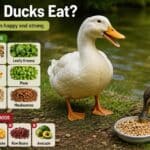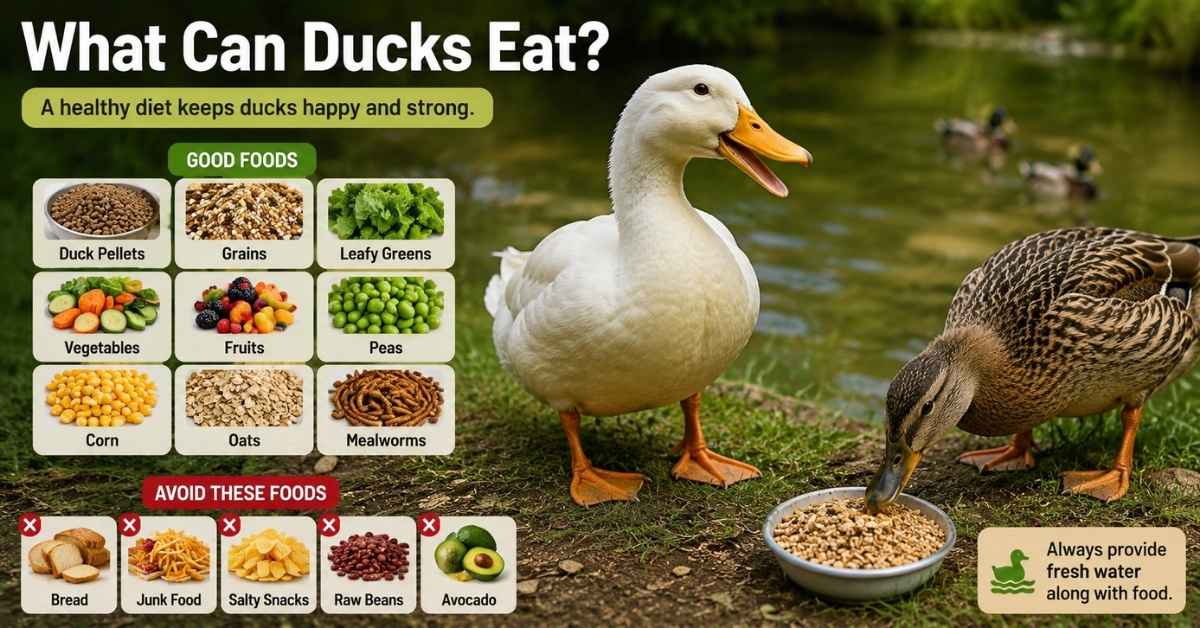
Ducks are natural foragers with surprisingly diverse diets. If you’ve ever asked what can ducks eat, the short answer is that ducks can safely eat vegetables, fruits, grains, insects, aquatic plants, and high-quality duck feed. They also need constant access to clean water for proper digestion and overall health.
Whether you keep backyard ducks, raise ducklings, or enjoy feeding wild ducks at a pond, understanding the right foods makes a huge difference. A balanced diet supports healthy growth, strong feathers, better egg production, and a longer lifespan. This guide explains what can ducks eat and drink, safe treats, human foods, park-friendly feeding options, and foods that should never be offered.
What Can Ducks Eat?
Ducks are omnivores, which means they eat both plant and animal matter. In the wild, they spend much of their day searching for insects, worms, seeds, aquatic vegetation, snails, and small aquatic creatures.
Domestic ducks thrive when their diet combines commercial duck feed with fresh, nutritious foods. Offering variety not only improves nutrition but also encourages natural foraging behavior.
Natural Foods Ducks Eat in the Wild
Wild ducks commonly consume:
- Aquatic plants
- Duckweed
- Algae
- Seeds
- Grass
- Insects
- Earthworms
- Small fish
- Snails
- Crustaceans
These foods provide a balanced mix of protein, carbohydrates, vitamins, and minerals.
What Can Ducks Eat List?
If you’re looking for a quick reference, here is a comprehensive what can ducks eat list.
Vegetables Ducks Can Eat
- Romaine lettuce
- Kale
- Cabbage
- Broccoli
- Peas
- Carrots
- Pumpkin
- Zucchini
- Cucumber
- Swiss chard
- Dandelion greens
- Beet greens
Fruits Ducks Can Eat
- Apples (without seeds)
- Bananas
- Strawberries
- Blueberries
- Watermelon
- Grapes
- Mangoes
- Pears
- Peaches
- Raspberries
Grains Ducks Can Eat
- Oats
- Rice
- Wheat
- Barley
- Corn
- Millet
- Quinoa
- Cracked corn
Protein Sources
- Mealworms
- Earthworms
- Crickets
- Black soldier fly larvae
- Cooked eggs
- Small insects
Aquatic Foods
- Duckweed
- Water plants
- Algae
- Pond vegetation
- Aquatic insects
These foods help meet a duck’s nutritional needs while providing dietary variety.
What Can Ducks Eat and Drink?
Many people focus only on food, but hydration is equally important. When considering what can ducks eat and drink, water should always be part of the conversation.
Safe Drinks for Ducks
Ducks should drink:
- Fresh clean water
- Natural pond water
- Shallow bathing water
Water helps ducks:
- Swallow food properly
- Digest grains and pellets
- Clean their nostrils
- Maintain healthy feathers
- Regulate body functions
Drinks Ducks Should Never Have
Avoid giving ducks:
- Soda
- Coffee
- Tea
- Energy drinks
- Alcohol
- Sugary beverages
- Artificially flavored drinks
Fresh water should always be available whenever ducks are eating.
What Can Ducks Eat Besides Duck Food?
Commercial duck feed is the foundation of a healthy diet. However, many owners wonder what can ducks eat besides duck food.
Fortunately, ducks enjoy many nutritious alternatives.
Healthy Supplements to Duck Feed
- Leafy greens
- Fresh vegetables
- Fruits
- Sprouted grains
- Mealworms
- Earthworms
- Duckweed
- Oats
These foods provide enrichment while supporting natural feeding instincts.
Should Ducks Eat Only Natural Foods?
Natural foods are excellent supplements, but they should not completely replace balanced duck feed. Commercial feed is specifically formulated to provide essential nutrients that may be difficult to supply consistently through treats alone.
Best Vegetables Ducks Can Eat
Vegetables are among the healthiest foods for ducks.
Leafy Greens
Leafy greens provide valuable vitamins and minerals.
Popular options include:
- Romaine lettuce
- Kale
- Mustard greens
- Swiss chard
- Dandelion greens
These vegetables support immune function and feather health.
Root Vegetables
Hard vegetables should be cooked or finely chopped.
Safe choices include:
- Carrots
- Sweet potatoes
- Beets
- Turnips
Vegetables can make up a significant portion of healthy duck treats.
Fruits Ducks Can Eat Safely
Fruit provides vitamins, antioxidants, and hydration. However, because fruit contains natural sugars, moderation remains important.
| Fruit | Safe for Ducks |
|---|---|
| Bananas | Yes |
| Apples (seedless) | Yes |
| Strawberries | Yes |
| Blueberries | Yes |
| Watermelon | Yes |
| Grapes | Yes |
| Mangoes | Yes |
| Pears | Yes |
Tips for Feeding Fruit
- Remove apple seeds
- Cut large fruits into small pieces
- Feed fruit as an occasional treat
- Avoid spoiled fruit
Small portions help prevent excessive sugar intake.
What Can Ducks Eat as Treats?
If you’re asking what can ducks eat as treats, there are plenty of healthy options.
Favorite Duck Treats
- Mealworms
- Green peas
- Corn kernels
- Watermelon
- Blueberries
- Oats
- Chopped lettuce
- Cooked rice
Treats are best limited to approximately 10% of a duck’s overall diet.
Why Moderation Matters
Too many treats can reduce the intake of balanced feed and create nutritional deficiencies over time. Therefore, treats should complement a healthy diet rather than replace it.
What Can Ducks Eat Human Food?
Many people are surprised by what can ducks eat human food safely.
Safe Human Foods for Ducks
- Cooked rice
- Plain oatmeal
- Cooked vegetables
- Fresh fruit
- Unsalted popcorn
- Whole grains
- Cooked pasta
These foods can be offered occasionally as part of a varied diet.
Human Foods to Avoid
Never feed ducks:
- Salty snacks
- Candy
- Sugary desserts
- Fried foods
- Highly processed foods
- Foods containing artificial sweeteners
Simple, natural foods are always the safest choice.
What Can Ducks Eat at the Park?
Feeding ducks can be a fun family activity. However, many people still bring bread, which is not ideal.
If you’re wondering what can duck’s eat at the park, consider healthier alternatives.
Best Foods to Bring to the Park
- Frozen peas
- Birdseed
- Oats
- Cracked corn
- Chopped lettuce
- Duck pellets
- Sweet corn
These foods provide far better nutrition than bread.
Why Bread Is a Poor Choice
Bread fills ducks quickly but provides very little nutritional value. Excessive bread feeding can contribute to malnutrition and poor water quality in ponds and lakes.
What Can Ducks Eat Safely Every Day?
For owners wondering what can duck’s eat safely on a daily basis, balance is the key.
Daily Duck Feeding Plan
A healthy daily diet should include:
- High-quality duck feed
- Fresh clean water
- Leafy greens
- Vegetables
- Protein-rich insects
- Small amounts of fruit
This combination supports growth, reproduction, feather quality, and long-term health.
What Can Ducks Eat and Not Eat?
Understanding what can duck’s eat and not eat is essential for responsible duck care.
Foods Ducks Can Eat
- Duck feed
- Vegetables
- Fruits
- Oats
- Rice
- Corn
- Mealworms
- Earthworms
- Duckweed
Foods Duck’s Should Not Eat
- Chocolate
- Avocado
- Moldy food
- Green potato peels
- Raw potatoes
- Alcohol
- Excessively salty foods
- Candy
- Highly processed snacks
These foods can cause digestive problems, toxicity, or nutrient imbalances.
Nutritional Needs of Ducks
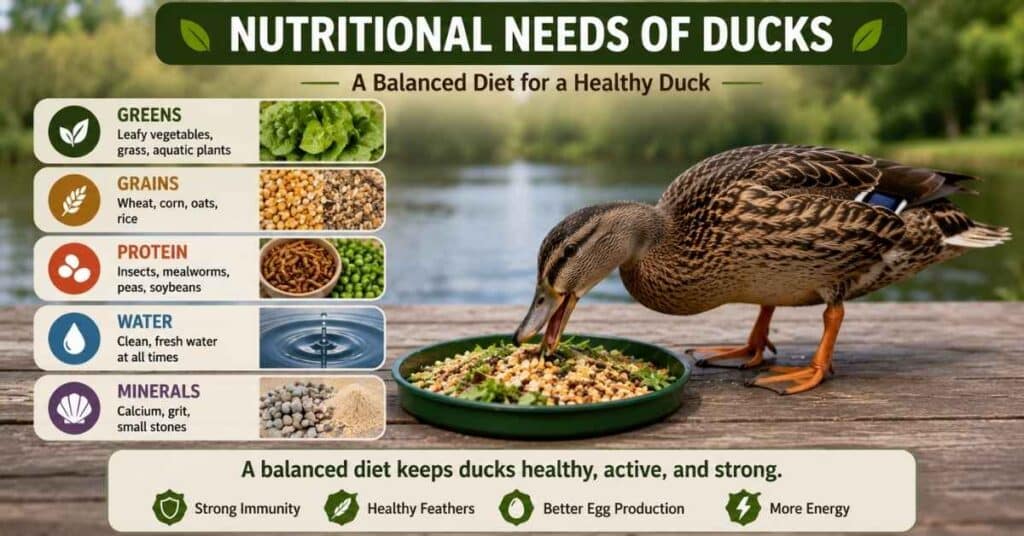
Healthy ducks require a balanced combination of nutrients.
Protein
Protein supports:
- Muscle development
- Feather growth
- Egg production
- Overall health
Calcium
Calcium is especially important for laying ducks.
Good calcium sources include:
- Oyster shell
- Layer feed
- Calcium supplements
Vitamins and Minerals
Fresh vegetables, insects, and quality feed provide essential micronutrients that support immunity and healthy growth.
Feeding Baby Ducks
Ducklings require different nutrition than adult ducks.
What Ducklings Can Eat
- Starter duck feed
- Finely chopped greens
- Small insects
- Crumbled pellets
Young ducks grow rapidly, so balanced nutrition is critical during the first few months.
Foods to Avoid for Ducklings
Avoid:
- Excessive treats
- Sugary foods
- Salty foods
- Large food pieces
A nutrient-rich starter feed should remain their primary food source.
LEARN MORE: Can Ducks Eat Chocolate?
Seasonal Duck Feeding Tips
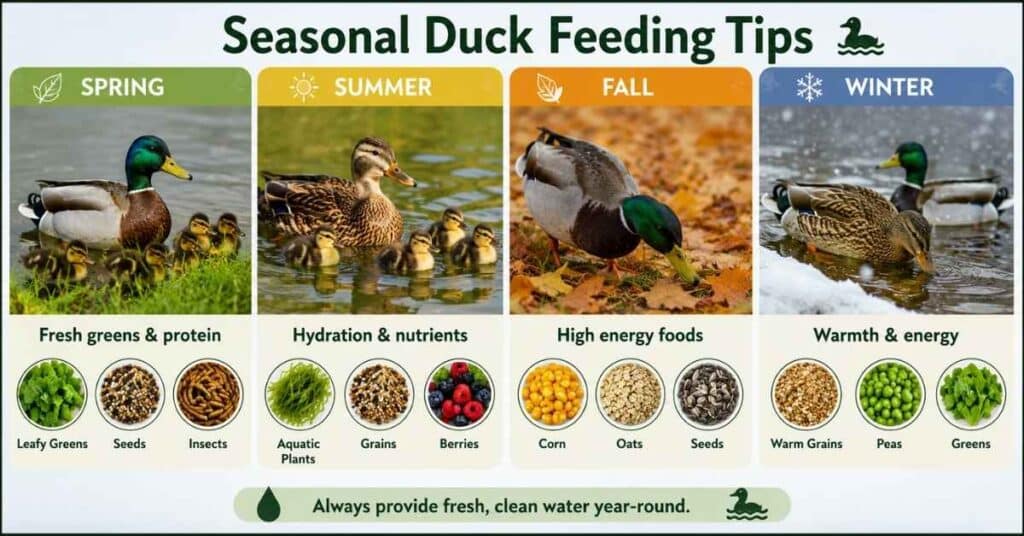
Duck nutritional needs change throughout the year.
Summer Feeding
During warm months, offer:
- Fresh vegetables
- Fruits
- Plenty of water
- Natural forage
Winter Feeding
In colder weather, increase:
- Corn
- Oats
- Whole grains
- Energy-rich feeds
These foods help ducks maintain body temperature and energy levels.
Common Feeding Mistakes to Avoid
Even experienced owners occasionally make mistakes.
Avoid These Common Errors
- Feeding too much bread
- Offering moldy food
- Providing insufficient water
- Overfeeding fruit
- Giving salty snacks
- Ignoring nutritional balance
Small dietary adjustments can significantly improve duck health.
Frequently Asked Questions
What can ducks eat besides duck food?
Ducks can eat’s vegetables, fruits, grains, mealworms, insects, duckweed, and leafy greens in addition to commercial duck feed.
What can ducks eat and drink?
Duck’s can eat fruits, vegetables, grains, insects, and aquatic plants. They should drink clean fresh water every day.
What can ducks eat at the park?
Healthy park foods include peas, oats, birdseed, lettuce, cracked corn, and duck pellets.
What can ducks eat as treats?
Mealworms, peas, blueberries, watermelon, oats, and corn are among the most popular duck treats.
What can ducks eat human food?
Duck’s can safely eat plain cooked rice, oatmeal, vegetables, fruit, and unsalted popcorn in moderation.
What foods are toxic to ducks?
Chocolate, avocado, moldy food, alcohol, green potato peels, and highly salty foods should never be fed to ducks.
Can duck’s eat bread?
Small amounts are generally not harmful, but bread should not be a regular food because it lacks important nutrients.
Do ducks need water while eating?
Yes. Ducks need access to water while eating because it helps them swallow food and digest it properly.
Conclusion
Understanding what can ducks eat is one of the most important aspects of proper duck care. Ducks thrive on a balanced diet that includes quality duck feed, fresh vegetables, fruits, grains, insects, and constant access to clean water. When choosing foods, focus on nutrient-rich options that support health, growth, and natural foraging behavior.
Whether you’re feeding backyard ducks, pet ducks, or wild ducks at a local pond, offering safe and nutritious foods will help them stay healthy and active. By avoiding harmful foods and providing a varied diet, you can ensure your ducks enjoy the nutrition they need for a long and productive life.