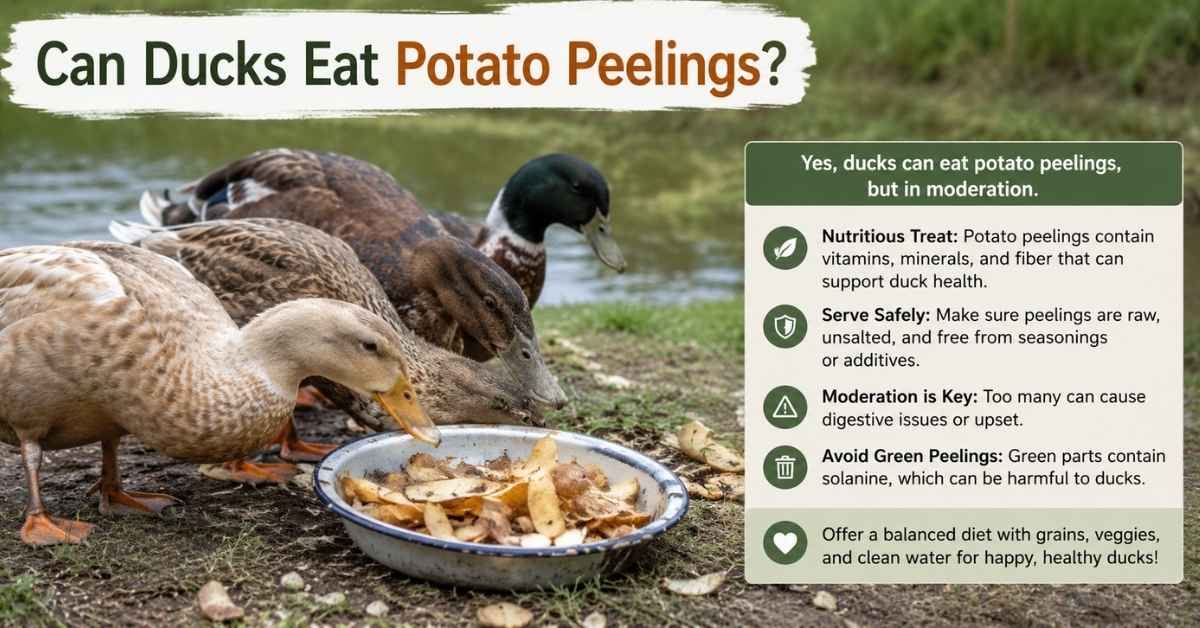
Can ducks eat potato peelings? Yes, ducks can eat cooked potato peelings in small amounts, but raw green potato skins, sprouts, and moldy peelings can be dangerous because they contain solanine, a natural toxin found in nightshade vegetables. Plain cooked potato peelings are generally safe as an occasional duck treat, while green or spoiled potato skins may cause digestive upset and possible solanine poisoning in ducks.
Many backyard duck owners use kitchen scraps to reduce waste and add variety to a duck’s diet. Potato peelings are one of the most commonly questioned scraps because conflicting online advice often makes them sound either completely harmless or highly toxic. The reality is more balanced. The safety of potato peelings depends on how they are prepared, whether they contain green areas or sprouts, and how often they are fed.
Quick Answer: Are Potato Peelings Safe for Ducks?
Here’s a simple breakdown of potato peeling safety for ducks:
| Type of Potato Peeling | Safe for Ducks? | Important Notes |
|---|---|---|
| Cooked white potato peelings | Yes | Feed plain and occasionally |
| Raw potato peelings | Not recommended | Harder to digest |
| Green potato peelings | No | High solanine levels |
| Sprouted potato skins | No | Toxic for ducks |
| Moldy peelings | No | Risk of harmful toxins |
| Sweet potato peelings | Usually yes | Safer alternative |
| Fried potato skins | No | Too salty and oily |
Cooked potato skins should only be an occasional treat and never replace balanced duck feed or proper waterfowl nutrition.
Why Potato Peelings Confuse So Many Duck Owners
One reason this topic creates confusion is that potatoes belong to the nightshade family. Potato skins naturally contain small amounts of glycoalkaloids like solanine, especially near the outer layers and sprouts.
Many articles online fail to explain the difference between:
- cooked potato peelings
- raw potato skins
- green potato peelings
- sprouted peelings
- moldy scraps
As a result, duck owners often receive mixed information that sounds contradictory.
In reality, plain cooked potato peelings without green patches are usually safe in moderation. The biggest danger comes from green skins, sprouts, spoiled potatoes, and excessive feeding.
Can Ducks Eat Cooked Potato Peelings?
Cooked potato peelings are generally the safest form for ducks because cooking softens the texture and makes the starch easier to digest.
Most backyard ducks readily eat:
- boiled potato skins
- steamed peelings
- plain mashed potato skins
- soft cooked scraps
The safest preparation methods include:
- boiling
- steaming
- baking without seasoning
How to Prepare Potato Peelings Safely
When feeding ducks potato peelings:
- remove all green sections
- cut away sprouts
- avoid butter and salt
- serve small cooled pieces
- mix with healthier vegetables if possible
Many experienced duck keepers combine cooked peelings with:
- peas
- lettuce
- kale
- chopped cucumbers
This creates a more balanced vegetable treat.
How Much Potato Peeling Can Ducks Eat?
| Duck Type | Recommended Amount | Frequency |
|---|---|---|
| Ducklings | Tiny amounts only | Rarely |
| Adult ducks | Small handful | 1–2 times weekly |
| Large flocks | Limited portions | Occasionally |
Too many starchy treats can reduce a duck’s interest in balanced poultry feed.
Why Raw Potato Peelings Are Riskier
Raw potato skins are tougher for ducks to digest because of their firmer texture and concentrated starch.
Although a small accidental bite is unlikely to cause severe harm, feeding raw potato peelings regularly is not recommended.
Raw peelings may contribute to:
- digestive irritation
- loose droppings
- reduced nutrient absorption
- stomach discomfort
The larger concern is solanine toxicity.
Understanding Solanine in Potato Skins
Solanine is a toxic compound naturally found in potatoes and other nightshade vegetables. Concentrations become higher in:
- green potato skins
- sprouts
- damaged potatoes
- spoiled potatoes
Ducks are sensitive to toxic foods, especially when consumed repeatedly or in large quantities.
Why Green Potato Peelings and Sprouts Are Dangerous
Green potato peelings should never be fed to ducks. The green color usually indicates increased solanine production caused by light exposure.
Potato sprouts are even more dangerous because they contain concentrated toxins.
Signs of Solanine Poisoning in Ducks
Possible symptoms include:
- lethargy
- weakness
- diarrhea
- poor coordination
- unusual behavior
- reduced appetite
In severe cases, solanine poisoning may affect the nervous system and overall flock health.
What to Do If Your Duck Eats Green Potato Peelings
If your duck accidentally eats a very small amount of cooked peeling with minor green discoloration, there is usually no immediate reason to panic. Monitor the duck closely and provide fresh water.
However, veterinary advice should be considered if ducks consume:
- large amounts of green potato skins
- sprouts
- moldy peelings
- raw spoiled potatoes
Fast action matters more when symptoms appear quickly.
Can Ducks Eat Sweet Potato Peelings?
Sweet potato peelings are generally safer than regular potato skins because sweet potatoes are not part of the same nightshade family associated with solanine toxicity.
They also provide better nutritional value, including:
- fiber
- antioxidants
- beta-carotene
- vitamin A
Best Ways to Feed Sweet Potato Skins
Ducks usually tolerate sweet potato peelings best when:
- cooked
- softened
- chopped into small pieces
- mixed with vegetables
Raw sweet potato skins are less risky than raw white potato peelings but still harder to digest.
Can Ducklings Eat Potato Peelings?
Ducklings require more carefully balanced nutrition than adult ducks. Their digestive systems are still developing, and they need higher protein levels during early growth stages.
Because potato peelings are starchy and low in protein, they should remain an occasional treat only.
Safer Feeding Tips for Ducklings
If feeding potato peelings to ducklings:
- use fully cooked peelings
- offer tiny portions
- avoid seasoning
- feed sparingly
Ducklings benefit much more from:
- starter feed
- chopped greens
- peas
- insects
- balanced waterfowl nutrition
Too many scraps during development can create nutritional imbalance.
Common Potato Peeling Mistakes Duck Owners Make
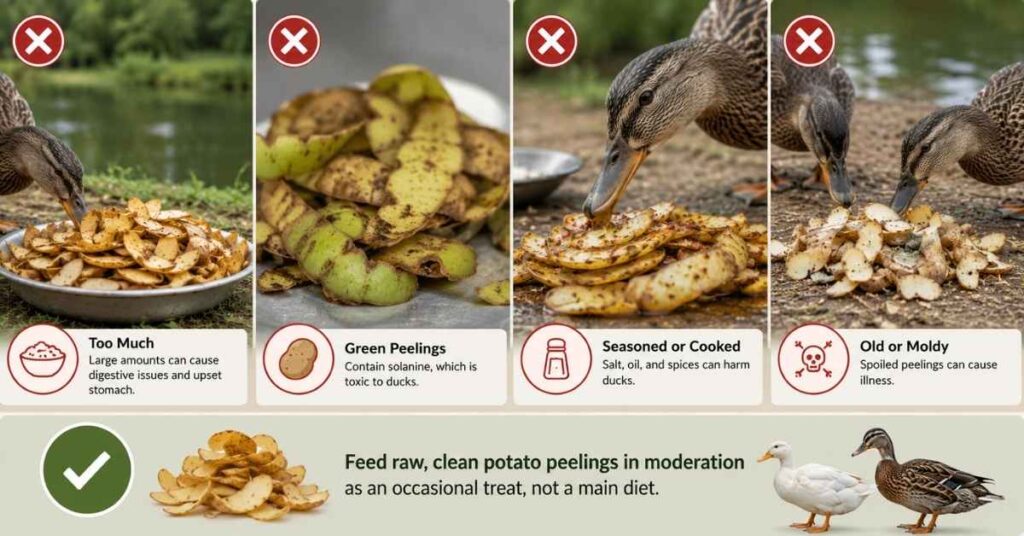
Many backyard duck owners unintentionally create feeding problems by offering unsafe kitchen scraps.
Feeding Green Potato Skins
Green discoloration often means elevated solanine levels.
Giving Moldy Leftovers
Moldy vegetables may contain dangerous toxins and bacteria.
Feeding Salted Mashed Potato Skins
Butter, dairy, garlic, and salt are not ideal for ducks.
Offering Too Many Starchy Treats
Excess treats may reduce consumption of complete duck feed.
Assuming All Vegetable Scraps Are Safe
Some foods remain toxic to ducks even if they seem harmless to humans.
Are Potato Peelings Actually Healthy for Ducks?
Potato peelings contain small amounts of:
- fiber
- potassium
- carbohydrates
However, they are not a complete or highly nutritious duck food.
Why Potato Peelings Should Stay a Treat
Potato skins lack enough:
- protein
- calcium
- amino acids
- niacin
A healthy duck diet should mainly include:
- balanced duck feed
- forage
- insects
- greens
- safe vegetables
Treats should remain a small percentage of overall intake.
Better Kitchen Scraps for Ducks Than Potato Peelings
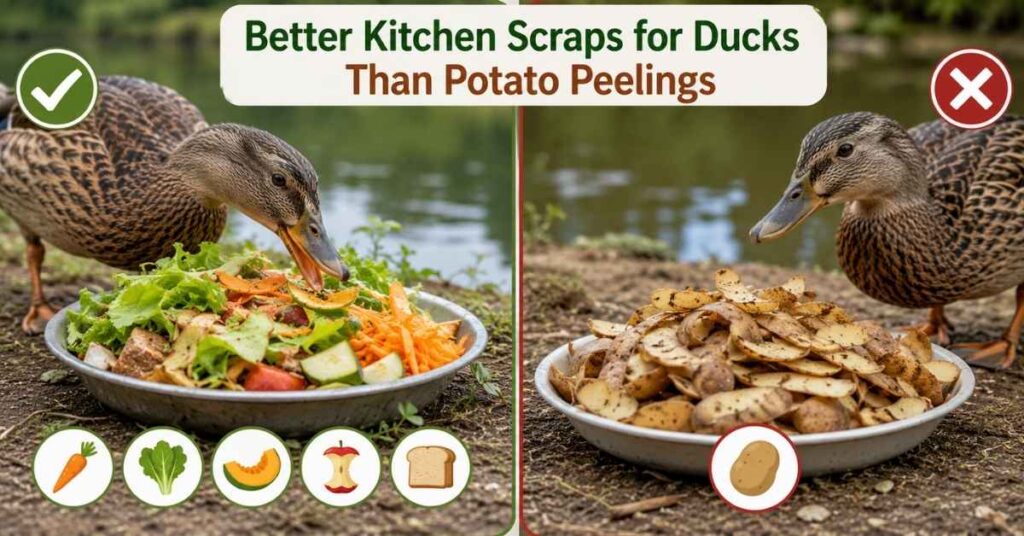
Some vegetables provide better nutritional value with fewer toxicity concerns.
| Food | Safe for Ducks? | Benefits |
|---|---|---|
| Peas | Yes | Excellent protein source |
| Lettuce | Yes | Hydrating and easy to digest |
| Kale | Yes | Nutrient-rich greens |
| Pumpkin | Yes | High fiber |
| Cucumbers | Yes | Good hydration |
| Zucchini | Yes | Low-risk vegetable |
Kitchen Scraps Ducks Should Never Eat
Avoid feeding ducks:
- avocado
- onions
- chocolate
- moldy foods
- raw beans
- heavily processed foods
Understanding toxic foods for ducks helps prevent accidental poisoning and long-term health problems.
Real Backyard Feeding Insights Most Articles Ignore
Experienced duck keepers often notice that ducks strongly prefer soft cooked foods over tough raw scraps. Many ducks ignore raw potato skins completely but eagerly eat warm cooked peelings mixed with peas or greens.
Flock behavior matters too. Dominant ducks usually rush starchy treats first, while timid ducks hang back during feeding time.
Seasonal feeding habits also affect how ducks respond to scraps:
- winter ducks often prefer warm soft foods
- summer ducks consume more hydrating vegetables
These practical observations are rarely mentioned in generic duck feeding articles but make a real difference in backyard flock management.
LEARN MORE: Can Ducks Eat Potatoes?
Safe Potato Peeling Checklist Before Feeding Ducks
Before feeding potato peelings to ducks, confirm:
- the peelings are cooked
- no green patches are present
- sprouts are removed
- there is no mold
- the peelings are plain and unseasoned
- portions remain small
This simple checklist dramatically reduces feeding risks.
Frequently Asked Questions
Can ducks eat boiled potato peelings?
Yes, boiled potato peelings are usually safe in moderation if they are plain and free from green areas.
Can ducks eat raw potato skins?
Raw potato skins are not recommended because they are harder to digest and may contain higher solanine levels.
What happens if ducks eat green potato peels?
Green potato peelings may cause digestive upset and possible solanine poisoning symptoms.
Can ducks eat mashed potato skins?
Plain mashed potato skins are usually safe if they contain no butter, salt, garlic, or heavy seasoning.
Are sweet potato skins safer for ducks?
Yes, sweet potato peelings are generally considered safer and more nutritious than regular potato skins.
Can ducklings eat potato peelings?
Ducklings can eat tiny amounts of cooked peelings occasionally, but balanced starter nutrition is far more important.
Final Verdict
Cooked potato peelings can be a safe occasional treat for ducks when prepared properly, but raw green potato skins, sprouts, and moldy peelings should always be avoided because of solanine toxicity risks. The safest approach is feeding plain cooked potato peelings in moderation while focusing primarily on balanced duck feed and nutrient-rich vegetables.
For most backyard duck keepers, safer long-term treats include peas, leafy greens, pumpkin, zucchini, and sweet potatoes. Proper preparation, moderation, and awareness of toxic potato parts are what truly keep ducks healthy and safe.