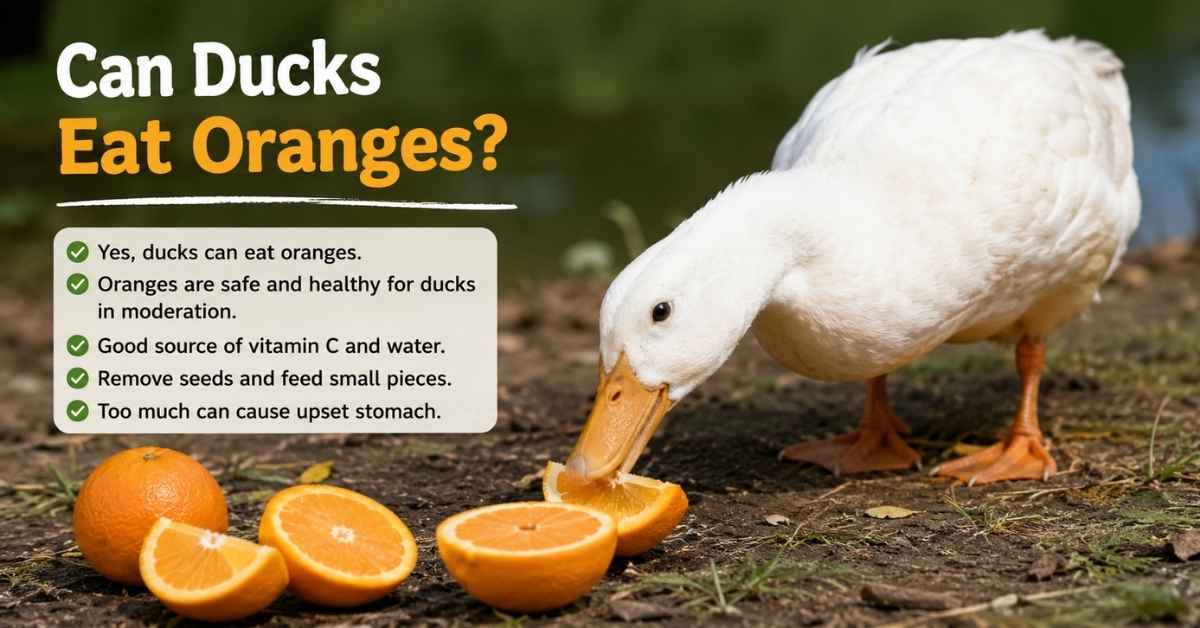
Can ducks eat oranges? Yes, ducks can eat oranges in moderation. Oranges are not toxic to ducks and can provide vitamin C, antioxidants, hydration, and dietary variety. However, because oranges are citrus fruits that contain natural sugars and acidity, they should be offered as an occasional treat rather than a daily food source. Understanding how oranges fit into a balanced duck diet is important, especially if you raise backyard ducks, laying ducks, ducklings, or feed wild ducks.
Many duck owners become confused when searching for answers because some sources claim citrus fruits are safe while others recommend avoiding them. The truth lies somewhere in between. Oranges are generally safe, but there are practical feeding guidelines every duck keeper should know before adding them to their flock’s menu.
Quick Answer: Can Ducks Eat Oranges?
Yes, ducks can safely eat oranges in small amounts.
Safety Verdict
| Factor | Verdict |
|---|---|
| Toxicity | Safe |
| Nutritional Value | Beneficial in moderation |
| Sugar Content | Moderate |
| Acidity | Moderate concern |
| Ducklings | Limited amounts |
| Laying Ducks | Occasional treats only |
| Wild Ducks | Safe occasionally |
| Orange Flesh | Safe |
| Orange Peels | Best avoided |
| Orange Seeds | Remove before feeding |
| Orange Juice | Not recommended |
The safest approach is to offer small pieces of fresh orange flesh once or twice per week as part of a varied diet.
Why Duck Owners Ask About Oranges
Most people don’t search “can ducks eat oranges” out of curiosity. Usually, there is a practical reason behind the question.
Perhaps your duck grabbed a fallen orange from the yard. Maybe you have leftover fruit in the kitchen and want to avoid waste. Some people are looking for healthier alternatives to bread when feeding ducks at a pond.
The confusion often comes from discussions about citrus fruits and calcium absorption. Poultry keepers have debated this topic for years, leading many duck owners to wonder whether oranges are beneficial or harmful.
The reality is that oranges are not poisonous to ducks. The real question is whether they should become a regular part of a duck’s feeding routine.
What Happens When a Duck Eats an Orange?
When a duck eats a piece of orange, the fruit is broken down in the digestive system much like other fruits.
Because oranges contain natural sugars and moisture, many ducks find them appealing. Ducks are naturally opportunistic feeders and will often investigate colorful, sweet foods.
In most cases, a duck that eats a small amount of orange experiences no negative effects. The fruit provides:
- Natural hydration
- Dietary fiber
- Vitamin C
- Antioxidants
- Minor amounts of potassium
If your duck accidentally eats a few orange slices, there is usually no reason to panic. Healthy adult ducks can tolerate occasional fruit treats without issues.
Problems generally arise only when excessive amounts are fed regularly.
Nutritional Profile of Oranges for Ducks
Understanding the nutritional value of oranges helps explain why they can be a useful treat.
Key Nutrients Found in Oranges
| Nutrient | Potential Benefit |
|---|---|
| Vitamin C | Supports overall health |
| Fiber | Aids digestion |
| Water | Promotes hydration |
| Potassium | Supports body functions |
| Antioxidants | Helps combat oxidative stress |
Although ducks can naturally produce their own vitamin C, supplemental vitamin C from fruits may still contribute to overall nutritional diversity.
Hydration Benefits
Oranges contain a high percentage of water. During hot weather, juicy fruits can help support hydration alongside clean drinking water.
This is particularly helpful for backyard ducks during summer months when maintaining hydration becomes more important.
Dietary Variety and Enrichment
One overlooked benefit of fruit treats is behavioral enrichment.
Offering small pieces of orange encourages:
- Natural foraging behavior
- Exploration
- Curiosity
- Environmental enrichment
For pet ducks, this mental stimulation can be almost as valuable as the nutritional benefits.
Potential Benefits of Feeding Oranges to Ducks
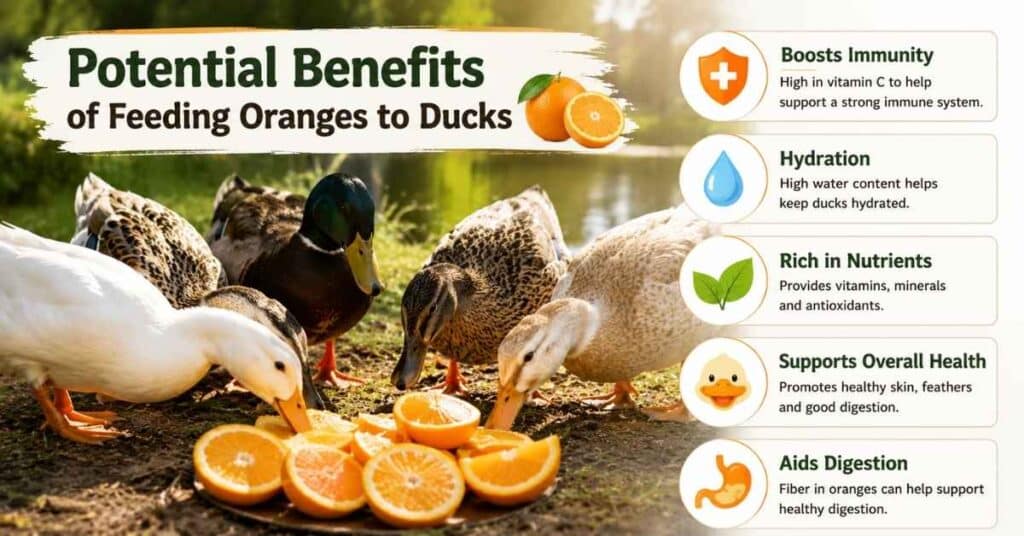
Natural Source of Antioxidants
Oranges contain antioxidants that help protect cells from damage caused by free radicals.
While ducks do not require oranges specifically, antioxidant-rich foods can contribute to overall wellness when included responsibly.
Healthy Alternative to Processed Treats
Many people unknowingly feed ducks foods that provide little nutritional value.
Compared to bread, chips, crackers, or processed snacks, oranges offer significantly more nutritional benefits.
Supports Treat Rotation
Experienced poultry keepers often rotate treats to provide variety.
A healthy treat rotation may include:
- Oranges
- Apples
- Watermelon
- Blueberries
- Grapes
- Leafy greens
- Peas
Using different fruits prevents overreliance on any single treat source.
Encourages Natural Feeding Behavior
Wild ducks consume a wide range of foods, including:
- Aquatic plants
- Seeds
- Insects
- Small fish
- Fruits
Although oranges are not a major part of a wild duck’s natural diet, occasional fruit treats mimic the dietary variety ducks experience in nature.
The Citrus Debate: Why Some Experts Recommend Caution
One reason oranges remain controversial is the long-standing discussion surrounding citrus fruits and calcium absorption.
Where the Concern Comes From
Some poultry resources suggest that excessive citrus consumption may interfere with calcium utilization.
This concern is most commonly associated with:
- Laying hens
- Egg-laying ducks
- Birds with increased calcium requirements
However, many online sources repeat this warning without fully explaining it.
What Duck Owners Should Know
Current practical experience among many backyard duck keepers suggests that occasional orange treats are unlikely to cause problems.
The key word is moderation.
A duck receiving:
- Balanced waterfowl feed
- Proper nutrition
- Adequate calcium sources
is unlikely to experience issues from a few orange segments each week.
What Matters More Than Oranges
Many factors have a greater impact on duck health than occasional citrus treats.
Examples include:
- Poor quality feed
- Lack of clean water
- Overfeeding treats
- Inadequate calcium intake
- Unsanitary living conditions
Focusing on overall flock management is far more important than worrying about a small piece of orange.
Are Oranges Safe for Laying Ducks?
Laying ducks deserve special consideration because producing eggs requires significant amounts of calcium.
Calcium Demands During Egg Production
Eggshell formation relies heavily on calcium reserves.
For laying ducks, the foundation of the diet should always be:
- High-quality waterfowl feed
- Appropriate mineral supplementation
- Access to calcium sources when needed
Feeding Recommendation for Laying Ducks
If you keep laying ducks, oranges should remain an occasional treat rather than a staple food.
A few small orange segments once or twice per week is generally considered a conservative and practical approach.
The bulk of the diet should continue coming from nutritionally complete feed designed for egg-producing birds.
Can Ducklings Eat Oranges?
Ducklings have different nutritional needs than adult ducks. During their early growth stages, they require a diet rich in protein, vitamins, minerals, and energy to support healthy development.
Should Young Ducks Eat Oranges?
Yes, ducklings can eat oranges, but only in very small amounts and only after they are old enough to consume a variety of foods safely.
Young ducklings should primarily eat:
- Starter feed
- Waterfowl feed
- Nutritionally balanced diets
Fruit should never replace their main source of nutrition.
Safe Age to Introduce Oranges
Most duck keepers wait until ducklings are several weeks old and already consuming other foods comfortably before introducing small fruit treats.
When offering oranges:
- Remove seeds
- Remove thick peel sections
- Cut into tiny pieces
- Offer only a few bites
Risks of Feeding Too Much Fruit
Excessive fruit consumption may lead to:
- Digestive upset
- Loose droppings
- Reduced feed intake
- Nutritional imbalance
For ducklings, treats should remain a very small part of the overall diet.
Can Wild Ducks Eat Oranges?
Many people encounter ducks in parks, lakes, and ponds and wonder whether oranges are a better option than bread.
Are Oranges Better Than Bread?
In most cases, yes.
Bread provides very little nutritional value for ducks and can contribute to poor dietary habits.
Fresh fruits such as oranges offer:
- Moisture
- Fiber
- Natural nutrients
- Greater dietary value
However, moderation still matters.
Responsible Feeding Practices
When feeding wild ducks:
- Offer small quantities
- Avoid processed foods
- Remove packaging and waste
- Never leave large piles of fruit behind
Wild ducks naturally obtain much of their nutrition through foraging, aquatic plants, insects, and seeds. Human-provided food should only be supplemental.
Should Wild Ducks Depend on Fruit?
No.
Wild ducks thrive best when they continue to forage naturally rather than relying on human feeding.
Which Parts of an Orange Are Safe for Ducks?
Not every part of an orange offers the same level of safety or nutritional value.
Can Ducks Eat Orange Flesh?
Yes.
Orange flesh is the safest and most commonly recommended part.
Benefits include:
- Natural hydration
- Vitamin C
- Antioxidants
- Dietary fiber
For best results:
- Cut into bite-sized pieces
- Offer fresh fruit
- Remove seeds first
Can Ducks Eat Orange Peels?
Orange peels are not toxic, but they are generally less desirable.
Potential concerns include:
- Tough texture
- Digestibility issues
- Pesticide residue
- Wax coatings
Even organic peels can be difficult for some ducks to process.
Most experienced duck owners prefer feeding only the fruit itself.
Can Ducks Eat Orange Seeds?
Seeds should be removed before feeding.
While a duck accidentally swallowing a seed is unlikely to cause major issues, removing seeds is considered best practice.
This reduces choking risks and improves safety.
Can Ducks Drink Orange Juice?
Orange juice is not the ideal choice.
Reasons include:
- Higher sugar concentration
- Less fiber
- Potential digestive upset
Fresh orange pieces provide significantly more benefits than juice.
How Much Orange Should a Duck Eat?
One of the biggest mistakes duck owners make is offering too much fruit.
Recommended Portion Sizes
| Duck Type | Suggested Portion |
|---|---|
| Small Duck | 1 small segment |
| Medium Duck | 1–2 segments |
| Large Duck | Up to ¼ orange occasionally |
| Duckling | Tiny pieces only |
Treats should never make up a large percentage of the diet.
The 90/10 Rule
A useful guideline for ducks is:
- 90% balanced feed and natural foods
- 10% treats and extras
This helps maintain proper nutrition while still providing variety.
How Often Can Ducks Eat Oranges?
Frequency matters just as much as portion size.
Best Feeding Schedule
For most ducks:
- Once per week = excellent
- Twice per week = acceptable
- Daily feeding = not recommended
Why Daily Feeding Is Not Ideal
Although oranges are safe, daily fruit feeding can:
- Increase sugar intake
- Reduce appetite for balanced feed
- Create nutritional imbalances
Occasional treats are generally healthier than routine fruit feeding.
Signs Your Duck Has Eaten Too Much Orange
Most ducks handle small quantities well, but overfeeding can sometimes cause issues.
Common Signs
Watch for:
- Loose droppings
- Mild digestive upset
- Reduced appetite
- Increased messiness in feces
When to Contact a Veterinarian
Seek professional advice if symptoms include:
- Persistent diarrhea
- Severe lethargy
- Refusal to eat
- Unusual behavior
These symptoms may indicate a different health issue rather than the orange itself.
The Best Way to Introduce Oranges to Ducks
A gradual introduction is always safest.
Step 1: Start Small
Offer a tiny piece of orange.
Step 2: Observe
Watch your duck’s behavior and digestion over the next day.
Step 3: Increase Slowly
If no problems occur, offer another small serving at a later time.
Step 4: Maintain Moderation
Keep oranges as an occasional treat rather than a regular dietary component.
Orange vs Other Fruits: Which Fruits Are Better?
Ducks can enjoy many different fruits safely.
| Fruit | Safe for Ducks | Feeding Frequency |
|---|---|---|
| Orange | Yes | Occasional |
| Apple | Yes | Regular Treat |
| Banana | Yes | Occasional |
| Blueberries | Yes | Regular Treat |
| Watermelon | Yes | Regular Treat |
| Grapes | Yes | Occasional |
| Avocado | No | Avoid |
Oranges vs Apples
Apples generally contain less acidity and are often easier to feed regularly.
Oranges vs Watermelon
Watermelon provides exceptional hydration and is a favorite among many ducks.
Oranges vs Blueberries
Blueberries offer antioxidants while being easy to portion and serve.
Fruits Ducks Should Avoid
Not all fruits are safe.
Fruits and Fruit Parts to Avoid
- Avocado
- Moldy fruit
- Rotten fruit
- Large quantities of dried fruit
- Fruit treated heavily with chemicals
Fresh, clean fruit is always the safest option.
Creating a Healthy Treat Rotation
A varied diet is healthier than relying on a single treat.
Weekly Treat Ideas
Monday:
- Peas
Wednesday:
- Watermelon
Friday:
- Orange slices
Sunday:
- Blueberries
This approach provides nutritional diversity and enrichment.
LEARN MORE: Can Ducks Eat Lettuce?
Real-Life Feeding Scenarios
My Duck Accidentally Ate a Whole Orange
A healthy adult duck will usually be fine.
Monitor for:
- Digestive upset
- Loose stools
- Reduced appetite
Most cases resolve without problems.
My Ducks Refuse to Eat Oranges
This is completely normal.
Just like people, ducks have individual preferences.
One Duck Loves Oranges While Another Doesn’t
Differences in taste preferences are common among backyard ducks.
Can Ducks Eat Oranges Every Day?
Technically they can consume small amounts safely, but daily feeding is not the best long-term strategy.
Moderation remains the healthiest approach.
Common Myths About Ducks and Citrus Fruits
Myth: Oranges Are Toxic to Ducks
Reality:
Oranges are not toxic and can be safely fed in moderation.
Myth: Citrus Immediately Damages Eggshells
Reality:
Occasional orange treats are unlikely to cause noticeable issues in a well-balanced diet.
Myth: Ducks Should Never Eat Acidic Foods
Reality:
Many ducks tolerate small amounts of citrus without problems.
Myth: Wild Ducks Naturally Eat Oranges
Reality:
Wild ducks rarely encounter oranges naturally, though they may consume various fruits in the wild.
Expert Tips for Feeding Fruit Safely
Choose Fresh Fruit
Fresh oranges are always preferable to processed products.
Wash Thoroughly
Washing fruit helps reduce pesticide residue.
Remove Seeds
This improves safety and makes feeding easier.
Keep Treats Limited
Treats should complement—not replace—a balanced duck diet.
Focus on Overall Nutrition
Healthy ducks depend far more on proper feed, clean water, and good flock management than on any specific fruit.
Frequently Asked Questions
Can ducks eat mandarin oranges?
Yes. Mandarin oranges are generally safe in moderation.
Can ducks eat clementines?
Yes. Clementines can be fed as occasional treats.
Can ducks eat tangerines?
Yes. Tangerines are similar to oranges and can be offered in small amounts.
Can ducks eat blood oranges?
Yes, blood oranges are generally safe when fed responsibly.
Can ducks eat frozen oranges?
Small thawed pieces can be offered occasionally.
Can ducks eat dried oranges?
Dried oranges contain concentrated sugars and should be limited.
Are oranges healthier than bread for ducks?
Absolutely. Oranges provide significantly more nutritional value than bread.
Final Verdict: Should You Feed Oranges to Ducks?
Can ducks eat oranges? Yes, ducks can safely eat oranges in moderation. Fresh orange flesh provides hydration, antioxidants, fiber, and dietary variety. While concerns about citrus fruits and calcium absorption have created confusion, occasional orange treats are generally considered safe for healthy ducks when fed as part of a balanced diet.
The best approach is simple:
- Feed small portions
- Remove seeds
- Avoid excessive peel consumption
- Offer oranges occasionally rather than daily
- Prioritize high-quality waterfowl feed
When used responsibly, oranges can be a healthy addition to a varied duck nutrition plan and a much better option than many processed foods commonly offered to ducks.