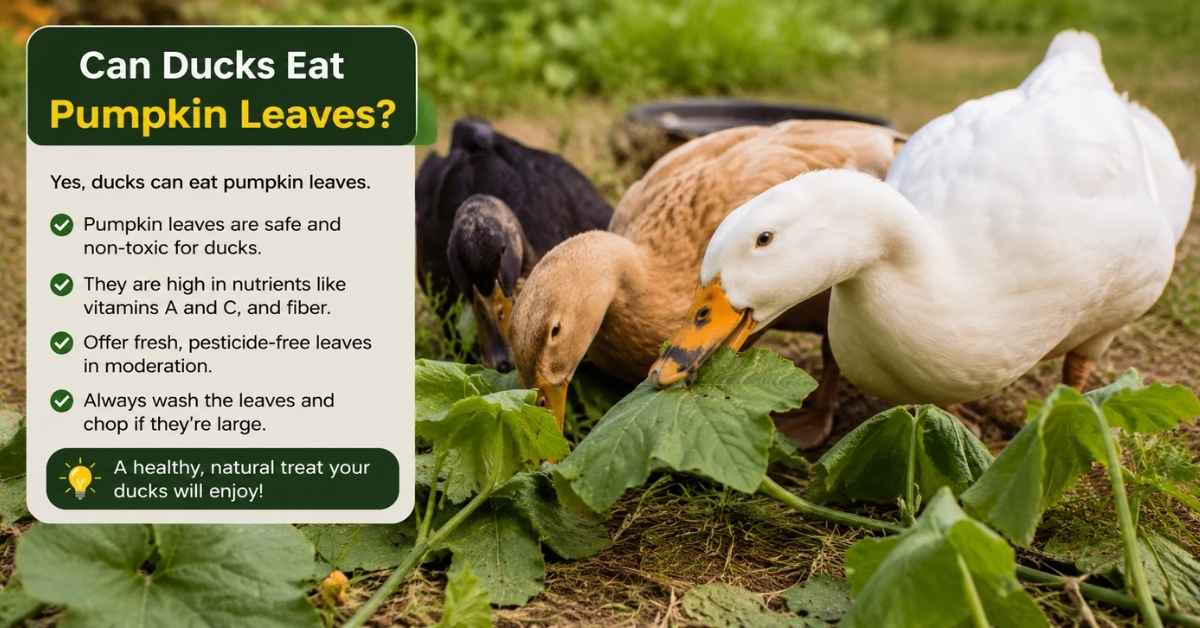
Can ducks eat pumpkin leaves? Yes, ducks can safely eat pumpkin leaves in moderation when the leaves are fresh, clean, and free from mold or pesticides. Pumpkin leaves and tender pumpkin vines are generally considered non-toxic to ducks, making them a natural forage option for many backyard flocks. However, older fibrous leaves, moldy vines, and chemically treated garden plants can create health risks if fed improperly.
Many backyard duck owners become concerned after seeing ducks nibble:
- pumpkin leaves
- pumpkin vines
- garden greens
- squash plants
That concern is understandable because not every garden plant is safe for waterfowl. Some plant leaves are toxic to birds, while others become dangerous once they start rotting or collecting chemical residue. Knowing how to feed pumpkin leaves, pumpkin vines, and pumpkin plant trimmings safely helps protect your ducks from:
- digestive upset
- pesticide exposure
- mold toxicity
- nutritional imbalance
This guide explains everything you need to know about feeding pumpkin leaves to ducks safely, including duckling safety, garden foraging behavior, vine digestion, plant toxicity concerns, and the common mistakes many free-range duck owners make.
Quick Answer
- Yes, ducks can safely eat pumpkin leaves
- Fresh leaves and tender vines are usually safest
- Moldy or pesticide-covered leaves should never be fed
- Ducklings need softer chopped greens
- Pumpkin leaves work best as occasional forage treats
| Pumpkin Plant Part | Safe for Ducks? | Risk Level | Best Feeding Method |
|---|---|---|---|
| Fresh pumpkin leaves | Yes | Low | Chopped strips |
| Tender young vines | Yes | Low | Moderate forage |
| Thick stems | Limited | Moderate | Small pieces only |
| Wilted leaves | Sometimes | Moderate | Inspect carefully |
| Moldy leaves | No | High | Discard immediately |
| Pesticide-treated leaves | No | High | Unsafe for ducks |
Why Duck Owners Search This Question
Most people searching this topic are trying to protect their ducks from accidental harm.
Free-range ducks naturally explore gardens
Ducks instinctively peck:
- leafy greens
- vines
- vegetables
- soft plant growth
This often causes concern when ducks wander near pumpkin patches or vegetable gardens.
Pumpkin plants create confusion
Many duck owners know pumpkin flesh is safe, but they are unsure about:
- pumpkin leaves
- vines
- stems
- flowers
The hidden fear behind the search
The real question many owners ask is:
“Will pumpkin leaves hurt my ducks?”
Fortunately, fresh pumpkin leaves are generally considered safe for healthy backyard ducks when fed properly.
Do Ducks Naturally Eat Pumpkin Leaves?
Yes, ducks naturally forage soft leafy greens.
Ducks instinctively peck fresh vegetation
Free-range ducks commonly eat:
- grasses
- weeds
- tender leaves
- aquatic plants
Pumpkin leaves fit naturally into that exploratory feeding behavior.
Younger leaves attract ducks more
Tender young pumpkin leaves contain:
- more moisture
- softer texture
- easier-to-digest fibers
Older mature leaves often become tougher and less appealing.
Ducks explore plants differently than chickens
Ducks often nibble gradually instead of aggressively tearing plants apart immediately.
Backyard duck owners notice seasonal changes
During warmer months, ducks usually become more interested in:
- fresh greens
- moisture-rich plants
- shaded garden areas
Are Pumpkin Leaves Safe or Toxic for Ducks?
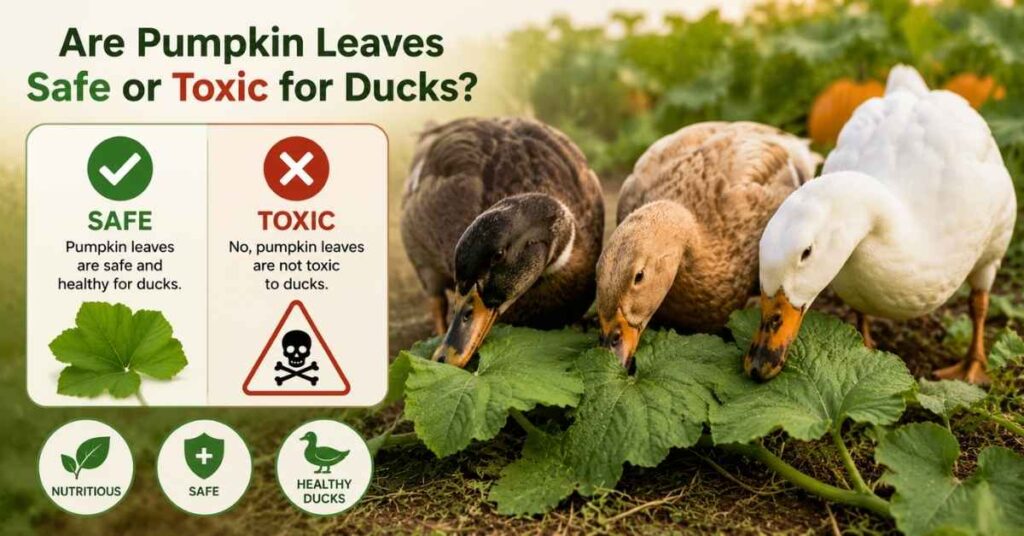
Fresh pumpkin leaves are generally considered safe.
Pumpkin leaves are not naturally toxic
Pumpkin plants belong to the cucurbit family, which also includes:
- squash
- zucchini
- cucumbers
The leaves themselves are not typically poisonous to ducks.
The real dangers come from outside contamination
Most risks involve:
- pesticides
- mold
- spoilage
- chemical sprays
Mold changes everything
Even safe leaves become dangerous when mold develops.
Never feed:
- slimy leaves
- rotting vines
- dark decaying greens
- foul-smelling trimmings
Chemical residue is an overlooked danger
Garden plants sprayed with:
- insecticides
- herbicides
- fungicides
may become unsafe for ducks.
Can Ducks Eat Pumpkin Vines and Stems Too?
Tender pumpkin vines are usually safe in moderation.
Younger vines are easier to digest
Soft flexible vines contain:
- more moisture
- less fibrous material
which makes them easier for ducks to process.
Thick mature stems become tougher
Older stems may feel:
- woody
- stringy
- difficult to chew
Safe ways to offer pumpkin vines
Many backyard owners:
- chop garden trimmings
- scatter vines across the run
- mix leaves with other greens
Ducks may ignore overly fibrous pieces
Not every part of the plant appeals equally to ducks.
What Happens When Ducks Digest Pumpkin Leaves?
Ducks naturally process leafy vegetation surprisingly well.
Ducks digest moisture-rich greens efficiently
Fresh greens provide:
- hydration
- fiber
- environmental enrichment
Fiber supports digestive activity
Moderate plant fiber can help support normal digestion.
Too many greens may still create imbalance
Excessive leafy treats may reduce intake of:
- balanced waterfowl feed
- protein
- essential nutrients
Moldy plant matter creates the greatest digestive risk
Spoiled greens may contribute to:
- diarrhea
- digestive upset
- lethargy
Can Ducklings Eat Pumpkin Leaves?
Ducklings require more caution than adult ducks.
Young ducks have delicate digestion
Ducklings process soft foods better than:
- fibrous stems
- mature leaves
- thick vines
Choking risks increase with large pieces
Oversized leaves may become difficult for young ducks to swallow safely.
Best ways to feed pumpkin greens to ducklings
If offering leaves:
- chop them finely
- use tender young leaves
- supervise feeding
- feed small amounts only
Most experienced duck keepers prioritize starter feed
During early growth stages, ducklings benefit most from:
- waterfowl starter feed
- balanced nutrition
- protein-rich diets
How to Prepare Pumpkin Leaves for Ducks
Preparation improves safety significantly.
Wash leaves thoroughly first
Even homegrown plants may carry:
- dirt
- insects
- chemicals
- bacteria
Chopping leaves helps digestion
Smaller pieces:
- reduce waste
- improve accessibility
- lower choking concerns
Fresh vs cooked pumpkin leaves
Cooked leaves become softer, although most ducks eat fresh greens naturally.
| Preparation Method | Best For | Safety Level |
|---|---|---|
| Fresh chopped leaves | Adult ducks | High |
| Soft cooked leaves | Ducklings | Moderate |
| Whole mature leaves | Less ideal | Lower |
| Garden trimmings | Free-range flocks | Moderate |
Softer greens are usually preferred
Tender greens generally work better than tough fibrous growth.
Fresh vs Wilted vs Moldy Pumpkin Leaves
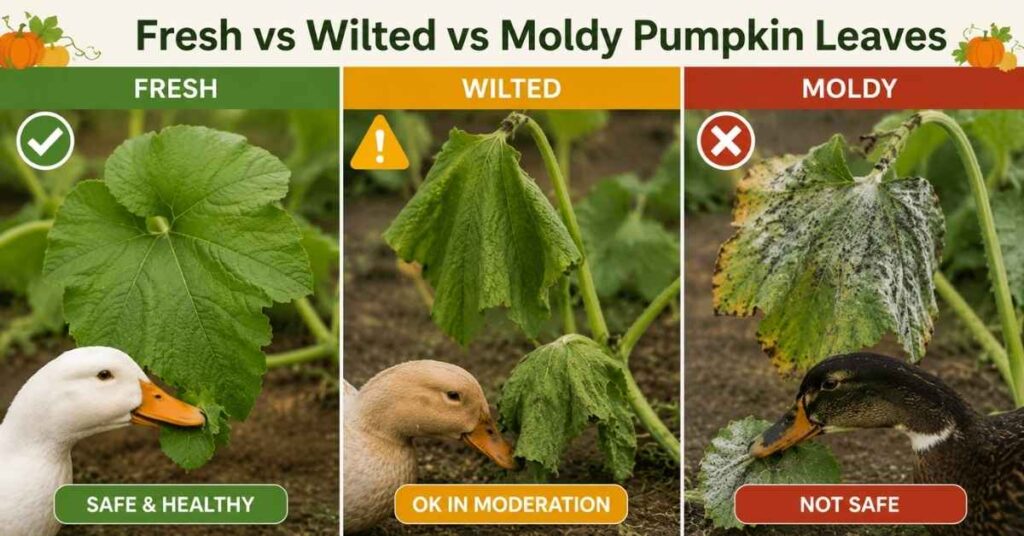
The condition of the leaves matters more than many owners realize.
| Leaf Condition | Safe or Unsafe? | Important Notes |
|---|---|---|
| Fresh leaves | Safe | Best option |
| Slightly wilted leaves | Sometimes safe | Inspect closely |
| Dry brittle leaves | Less ideal | Tough texture |
| Moldy leaves | Unsafe | Possible toxins |
| Rotting leaves | Unsafe | Bacterial risk |
Moisture speeds up spoilage
Warm damp leaves can develop mold quickly.
Signs leaves should never be fed
Avoid leaves with:
- slime
- white fuzz
- dark decay
- sour smell
LEARN MORE: Can Ducks Eat Pumpkin Guts?
Can Ducks Damage Pumpkin Plants?
Yes, ducks can sometimes damage gardens accidentally.
Pecking is usually less harmful than trampling
Many ducks nibble gently, but repeated activity may weaken plants.
Young pumpkin growth attracts ducks most
Tender shoots and young leaves often receive the most attention.
Ducks may flatten vines while exploring
Large flocks can accidentally:
- trample stems
- break vines
- compact soil
Practical ways to protect pumpkin patches
Many backyard gardeners use:
- temporary fencing
- rotational grazing
- raised beds
- supervised foraging
What Experienced Duck Owners Notice About Pumpkin Plants
Backyard flock owners often observe interesting foraging patterns.
Ducks prefer softer younger growth
Tender greens receive far more attention than thick mature vines.
Some ducks ignore pumpkin leaves completely
Individual feeding preferences vary between ducks.
Curiosity plays a major role
Ducks often peck plants simply to explore texture and moisture.
Free-range ducks become more selective over time
Experienced flocks often learn which garden plants they enjoy most.
Are Pumpkin Leaves Nutritious for Ducks?
Pumpkin leaves contain some beneficial nutrients.
Fresh greens provide environmental enrichment
Leafy forage encourages:
- exploration
- activity
- natural feeding behavior
Pumpkin greens contain fiber and moisture
These may help support variety within a balanced diet.
Pumpkin leaves should not replace balanced feed
Healthy ducks still require:
- complete waterfowl feed
- protein
- vitamins
- minerals
Variety matters more than one single plant
A balanced feeding routine remains far more important than any individual treat.
Common Feeding Mistakes Duck Owners Make
Feeding pesticide-covered garden trimmings
Chemical residue remains one of the biggest hidden dangers.
Allowing unrestricted garden access
Large flocks may damage sensitive plants quickly.
Feeding moldy or rotting leaves
Spoiled plant matter should always be discarded.
Assuming all garden greens are safe
Some plant leaves remain toxic to birds.
Replacing proper feed with forage
Greens should supplement nutrition — not replace balanced diets.
Best Ways to Use Pumpkin Leaves as Enrichment
Scatter feeding chopped greens
This encourages natural foraging behavior.
Hanging leafy vines inside the run
Hanging greens promote:
- activity
- curiosity
- enrichment
Mixing pumpkin leaves with vegetables
Many owners combine greens with:
- lettuce
- cucumber
- peas
Enrichment reduces boredom
Active ducks often display healthier flock behavior overall.
Garden Plants Ducks Can and Cannot Eat
| Plant | Safe for Ducks? | Notes |
|---|---|---|
| Pumpkin leaves | Yes | Feed moderately |
| Squash leaves | Yes | Similar to pumpkin greens |
| Cucumber vines | Usually safe | Tender growth preferred |
| Tomato leaves | No | Toxic compounds |
| Avocado leaves | No | Unsafe for birds |
Safe Treat Rules Every Duck Owner Should Follow
Experienced duck keepers follow one important principle:
Greens should supplement — not replace — balanced nutrition
Healthy ducks still require:
- quality waterfowl feed
- fresh water
- protein
- minerals
- balanced diets
Variety supports healthier feeding
Different greens provide:
- enrichment
- dietary diversity
- stimulation
A simple rule prevents most feeding mistakes
If plant material is:
- moldy
- chemically treated
- spoiled
- overly fibrous
it should not be fed to ducks.
Frequently Asked Questions
Are pumpkin leaves toxic to ducks?
No, fresh pumpkin leaves are generally considered non-toxic for ducks.
Can ducks eat pumpkin vines safely?
Yes, tender pumpkin vines are usually safe in moderation.
Can ducklings eat pumpkin leaves?
Ducklings can eat tiny chopped tender greens occasionally, but moderation is important.
Should pumpkin leaves be cooked first?
Fresh leaves are usually fine, although cooking softens tough fibers.
Can ducks eat squash leaves too?
Yes, squash leaves are generally similar to pumpkin leaves in safety.
Will ducks destroy pumpkin plants?
Small flocks may only nibble plants, but larger groups can trample vines and damage gardens.
Are wilted pumpkin leaves dangerous?
Slight wilting is not always harmful, but moldy or rotting leaves should never be fed.
Can ducks eat pumpkin stems?
Tender stems may be manageable, but thick woody stems are harder to digest.
Final Verdict
Can ducks eat pumpkin leaves? Absolutely. Fresh pumpkin leaves and tender pumpkin vines can be safe, natural forage treats for backyard ducks when fed properly. Most healthy adult ducks handle fresh greens well, especially when the leaves are:
- clean
- pesticide-free
- mold-free
- served in moderation
The biggest risks come from:
- spoiled leaves
- chemical residue
- excessive fibrous material
- poor feeding practices
When prepared responsibly, pumpkin leaves can become a healthy enrichment option that supports more natural free-range duck behavior without harming your flock.


